The pine sand floor lacks viscosity, and vehicle loads and plate vibrations allow particles to migrate from high-pressure areas to seams, edges and low points. When a lacuna is formed under the plate, the plate moves under the pull and turn of the tyre and the edge is easily cut down. Connectors can only maintain the relationship between the adjacent plates and cannot prevent the entire road from sliding on the pine sand. Therefore, the sand programme should first control grass-roots patterns and vehicle movements rather than simply increasing the number of connections.
Before laying, the route should be repaired to clear the large ups and downs of loose dunes accumulated by wind, and to determine whether there are more dense layers of sand in the lower part. Depending on the vehicle weight, frequency and duration, the project may require pressured, graded material, earth cloth or grids to form a stable working surface. The width of the planks should cover vehicle deviations and the pine of the sand and avoid the repetition of tyres at the outer edge. The wind-receiving area will also consider the issue of sand cover stitches and marking.
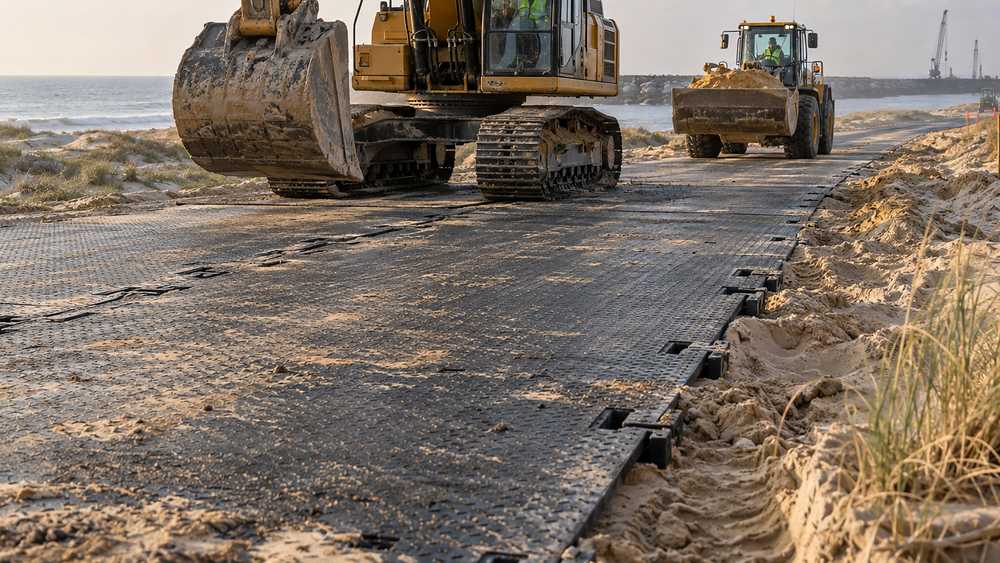
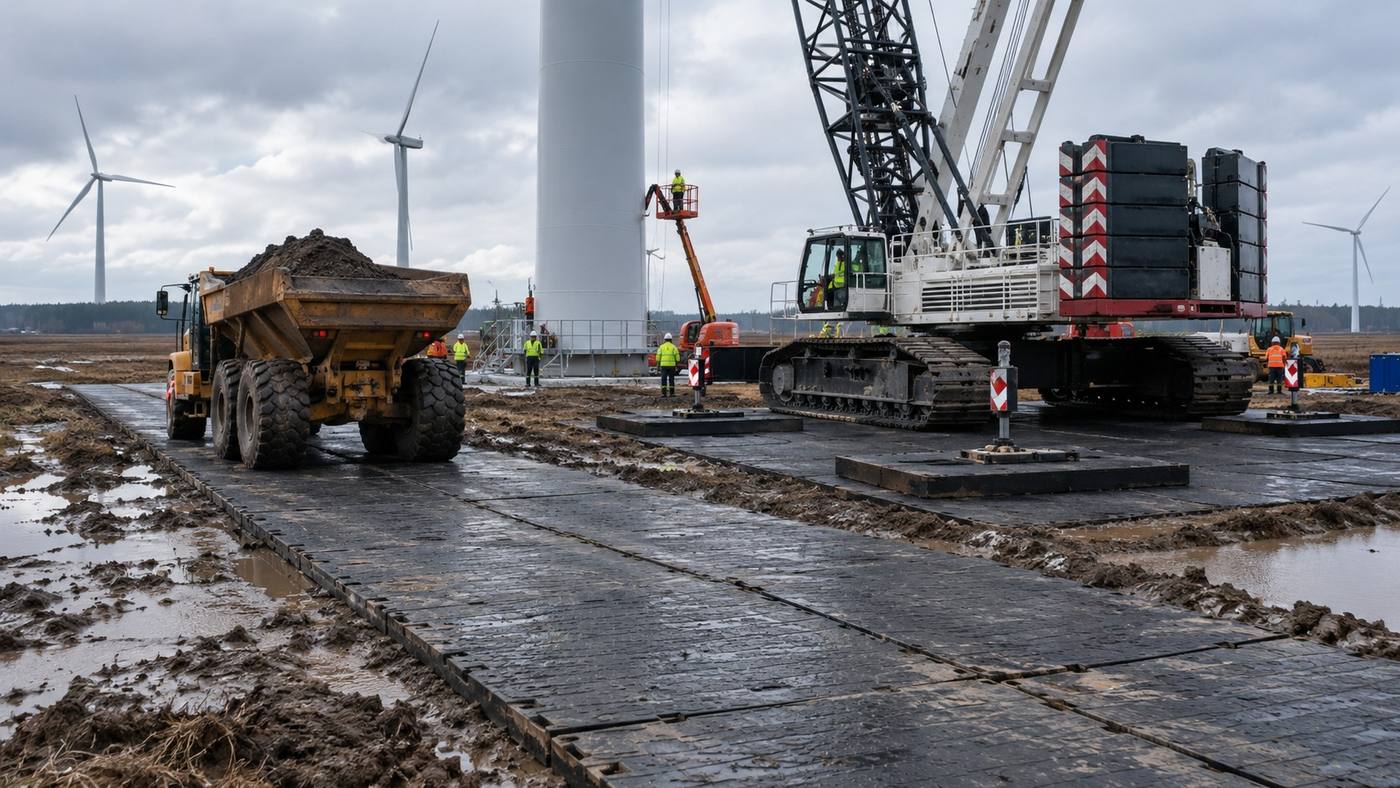
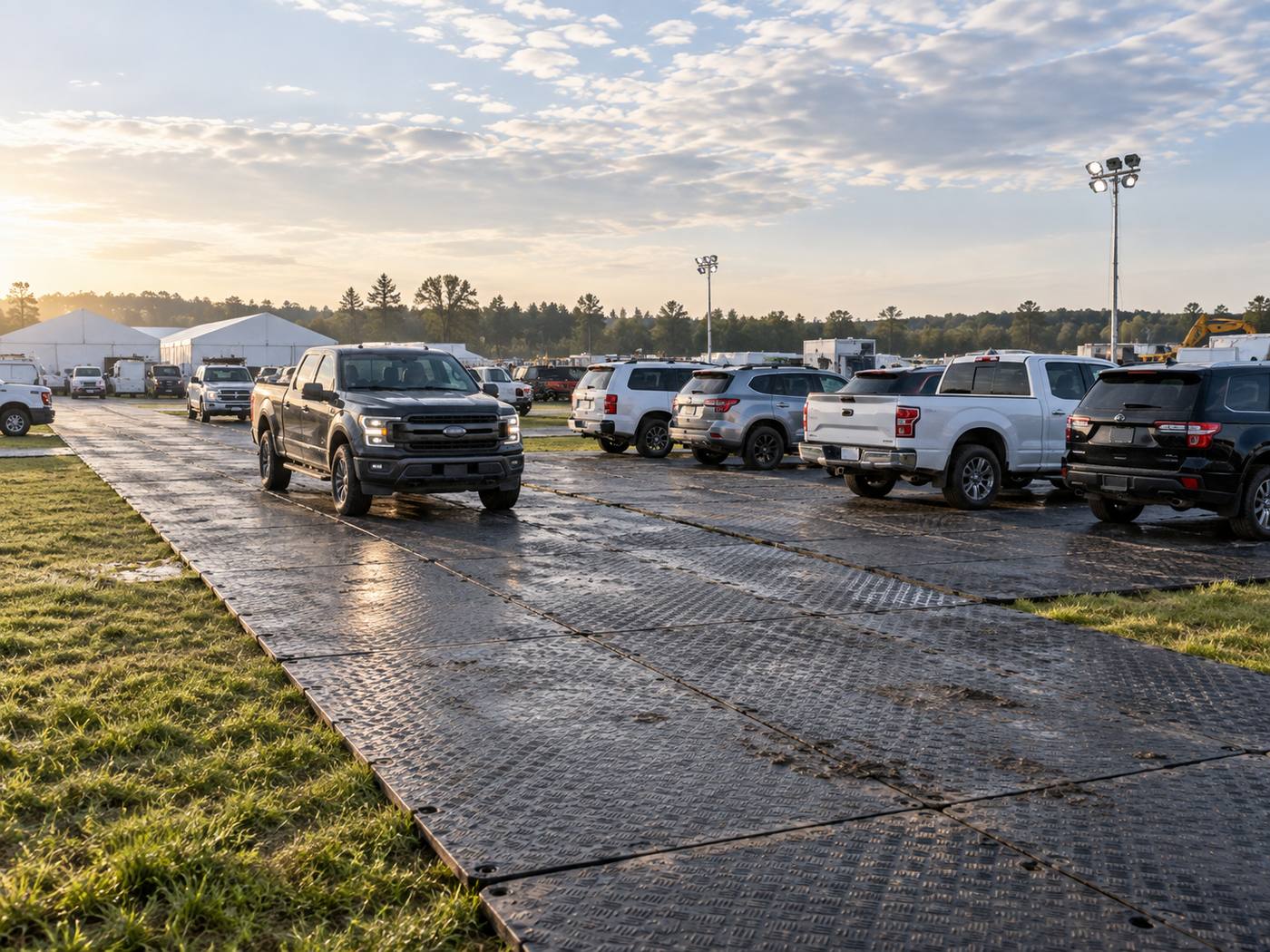
Continuous pavement of roadways on the coastal pine sand floor (new construction site mapping)
It is desirable to start at the end of the stability and to connect to the product in a continuous manner. Curves, ramps and equipment fields should be expanded, as the transfer of tyres would push sand and plates to the outside side at the same time. Drivers maintain a low-speed, large radius turn, with no rapid acceleration or drive-by-air rotation; tracked equipment is not allowed to rotate in situ on narrow-board roads. If the wheel is already out of bounds, it should not be lifted out of its way by pressing the oil and should be handled in accordance with the on-site rescue programme.
The inspection is to monitor the sound or echo under the plate that has been emptied, the scavenging of sand at the seams, the sinking of the edges and the horizontal deviation of the whole section. Cleans up sand particles on the surface of the sheet, restores the texture and reduces the amount of fine sand as a roller. In the event of a continuous shift, the sections should be closed, the grass-roots level restored and traffic adjusted, and the repulsion of the sheet can only improve the appearance for a short time. Coastal or sand projects also need to check whether the route has been reunified after the wind.
The request for price provides the depth of the sand layer, the water-bearing state, the slope, the sand conditions, the axle load of the vehicle, the type of tyre or belt and the daily number of cars. The vendor may recommend the thickness of the sheet, the texture and the connection, but the compaction method and ground-based treatment are determined by the project technical staff. An understanding of the shift is from particle transport and cut-off accumulation to choose a more efficient combination of measures than “heavy plates”.
Need for further evaluation of the actual project?
Applications, sizes, quantities, site photographs or drawings and delivery destinations are sent, on which we can identify more suitable products and processing programmes.