Whether a one-way or a two-way street depends first and foremost on the organization of the transport, rather than simply comparing the number of panels. When the route is short, well-sighted and vehicles can be released one-way through movement control, single-lane alignment with secure waiting areas usually saves more material. It would be more advantageous to have double lanes or to have a wider meeting point if there was a continuous flow of vehicles, a long back-up distance or no safe waiting space at the scene during peak hours. The most dangerous situation is the nominal routing of a one-way road, but the connivance of a vehicle to meet on a soft side led to a wheel on one side leaving the board and crushing the edge of the road.
The vehicle ' s physical exterior, wheel range, back-wheel trajectory and turn radius are used to determine the width. When the multi-axis dirt vehicle turns, the wheel cuts inside, and if the plate is laid only on the front track, the inside side side is repeatedly pressed. On both sides of the road, driving errors and margin safety balances are also to be maintained, and fences, drains and temporary lighting cannot enter the vehicle envelope. Double lanes are also not the same as a full line and can be used in a controlled single line in a direct section, with a broad segment of sufficient length to block the sight, before, after the ramp and in the loading and unloading area.
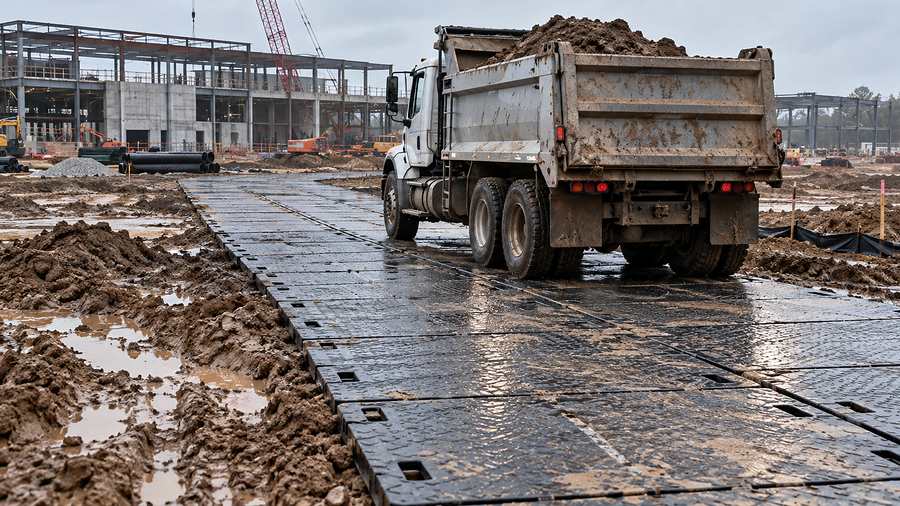
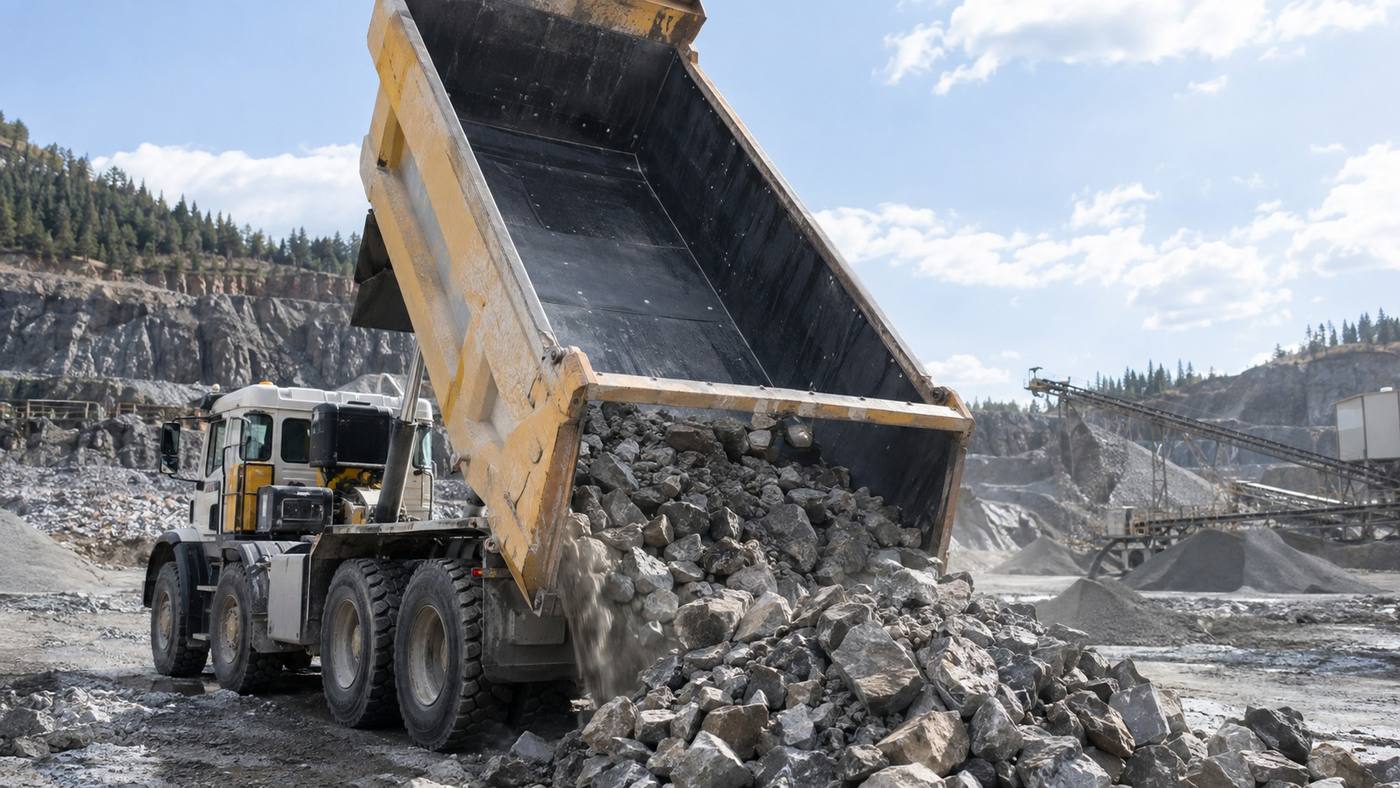
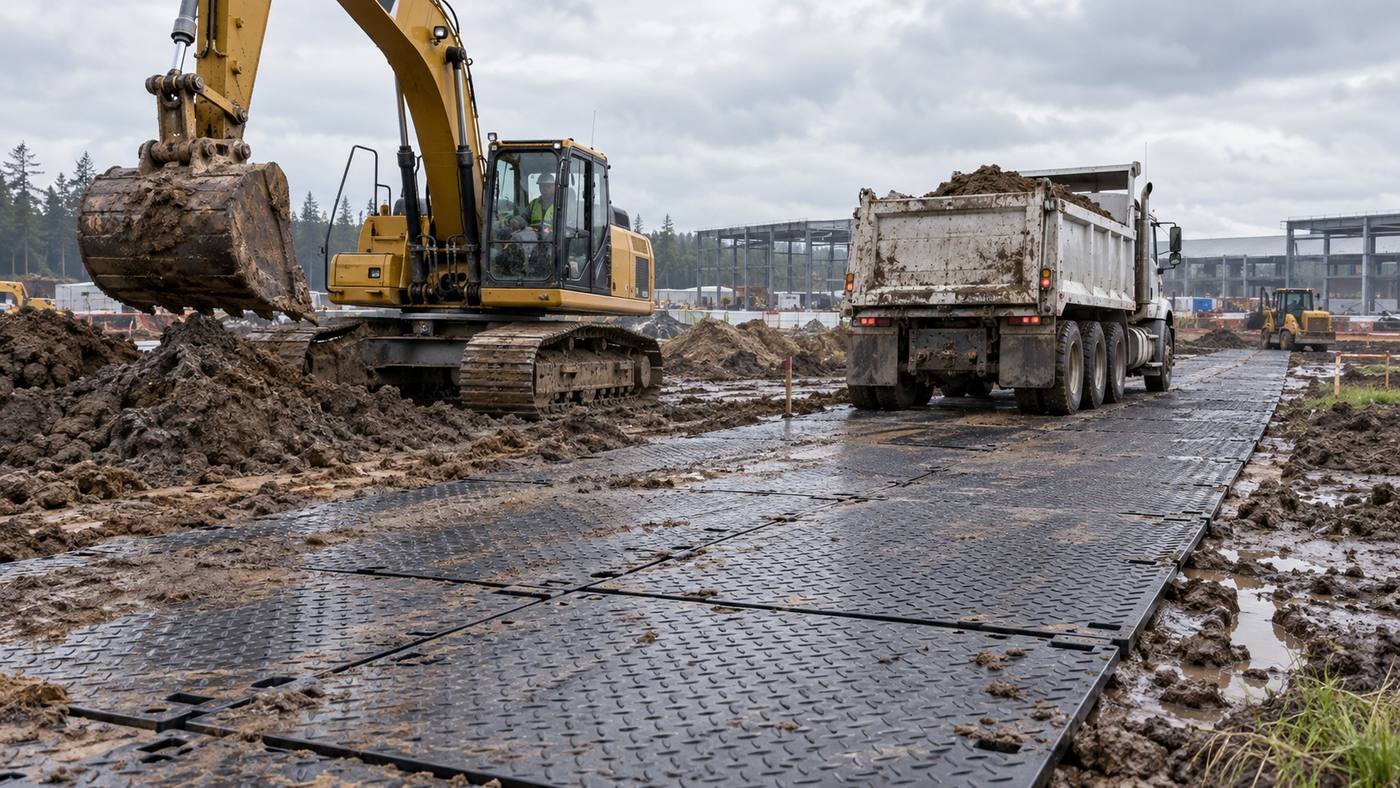
Bus full of dross entering construction sites along temporary paved roads (new construction site map)
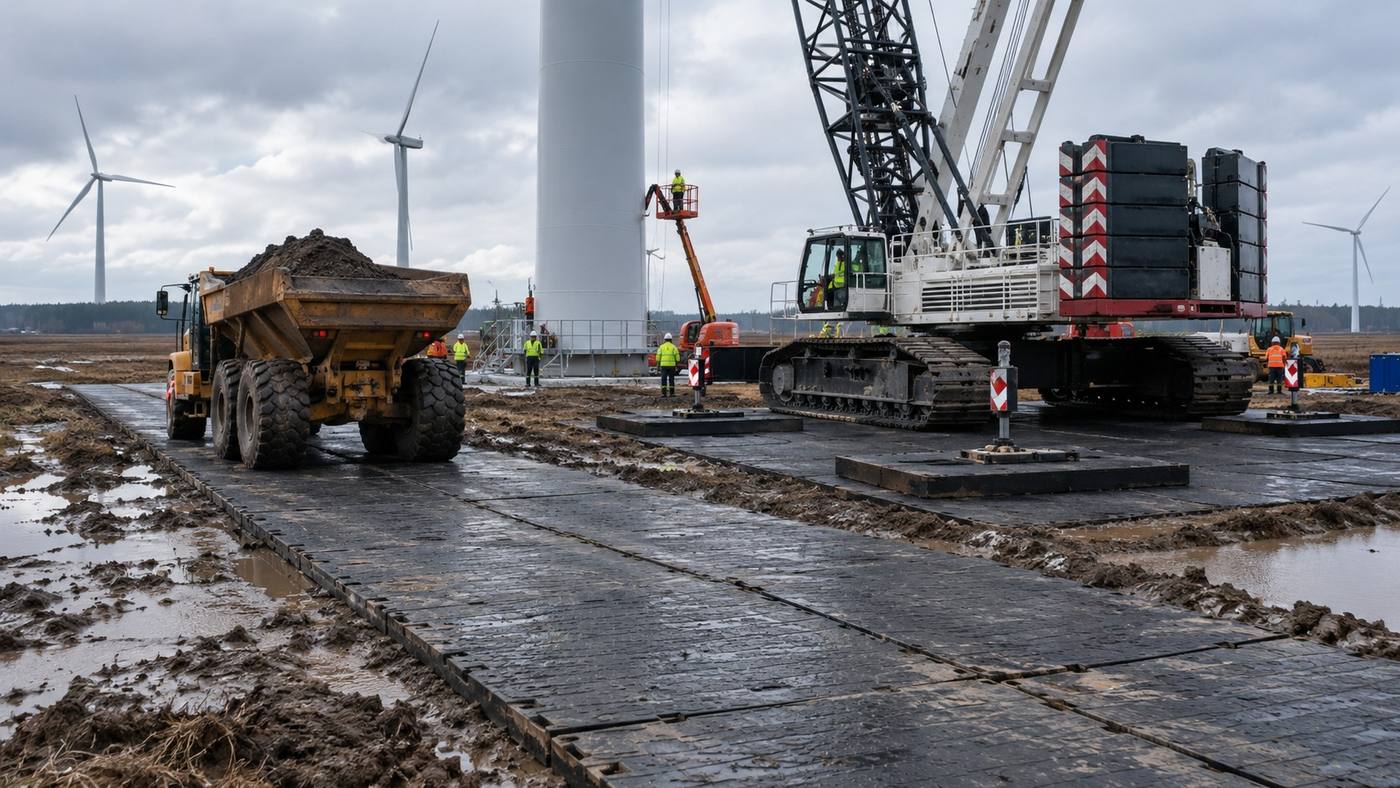
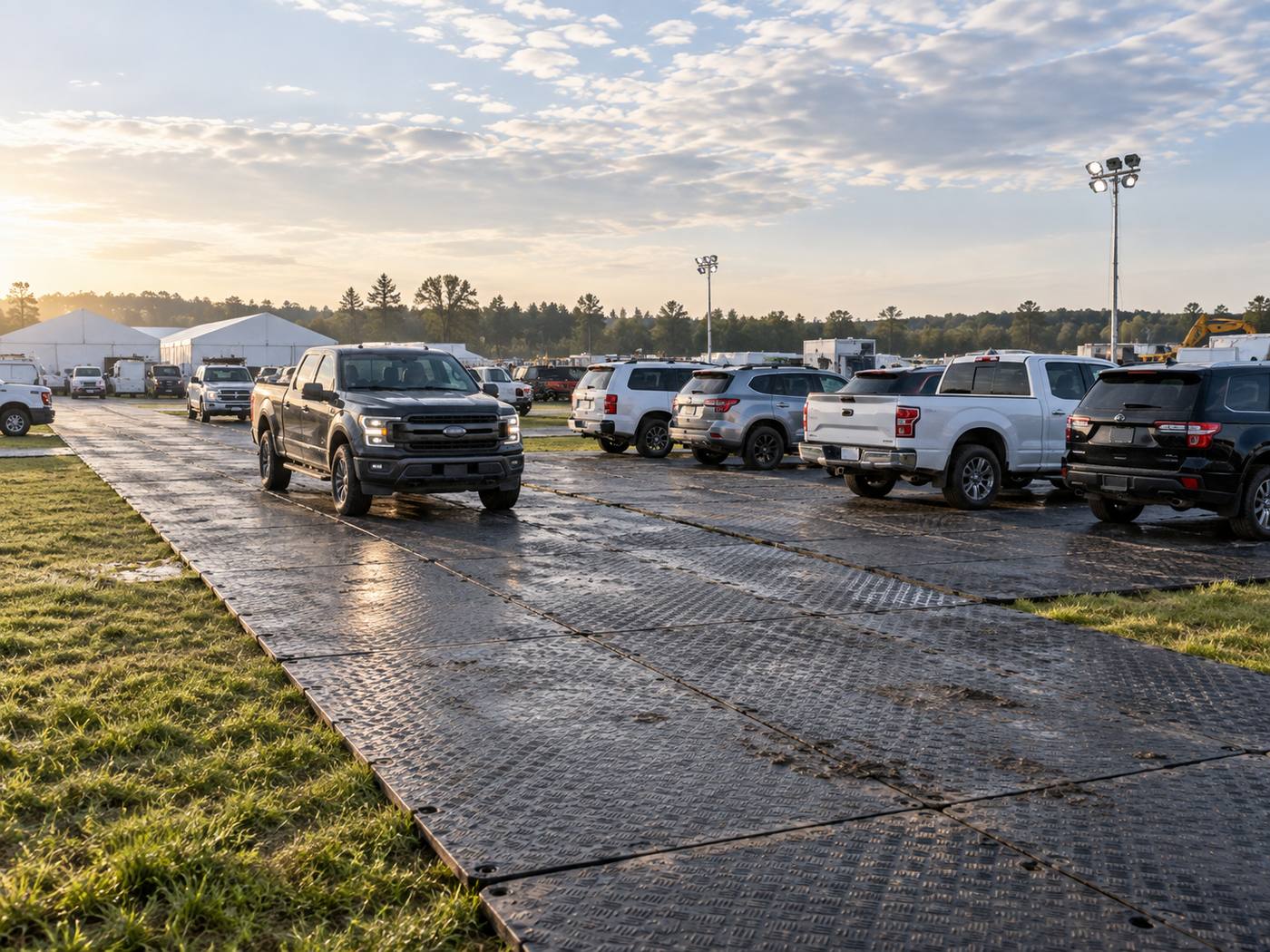
The sheeting structure should be aligned with the direction of the traffic. The long side follows the direction of the car, staggers and connectors continue to help to reduce the impact of tyres on the end of the plate; however, specific panels still need to be combined with product holes and plant requirements. The repeat loads are higher in car areas, swing areas and heavy waiting areas, vehicles will also be turned and braked and the floor and laid areas should be strengthened separately. It is prohibited to use two narrow wheel belts as double lanes, since a minor deviation of the vehicle would allow the tyre to be placed on a plate or unprotected ground.
Operation management can reduce vehicle demand by booking, one-way cycle and wireless command. Road entrances should have clear priorities and speed limits, with full and empty vehicles organized along different routes. Each shift inspects sedimentation, shift and slurry accumulation outside the bends, car points and waiting areas, which are exposed earlier than in the middle of the line. In the event of an increase in traffic, road capacity should be re-checked, rather than defaulting that there would still be sufficient excess of the original programme.
The request shall provide the size of the vehicle, the maximum axle load, the daily and peak vehicle number, the two-way flow, the length of the road, the width of the available site, the turning position and the handling beat. The vendor calculates the number of pavements, connectors and spare plates on this basis and allows for a comparison of the cost of a full-line double-lane with a single-lane plus point. The final traffic organization is confirmed by the project management and security team, and reasonable traffic design tends to reduce congestion and marginal damage more than simply adding plates.
Need for further evaluation of the actual project?
Applications, sizes, quantities, site photographs or drawings and delivery destinations are sent, on which we can identify more suitable products and processing programmes.