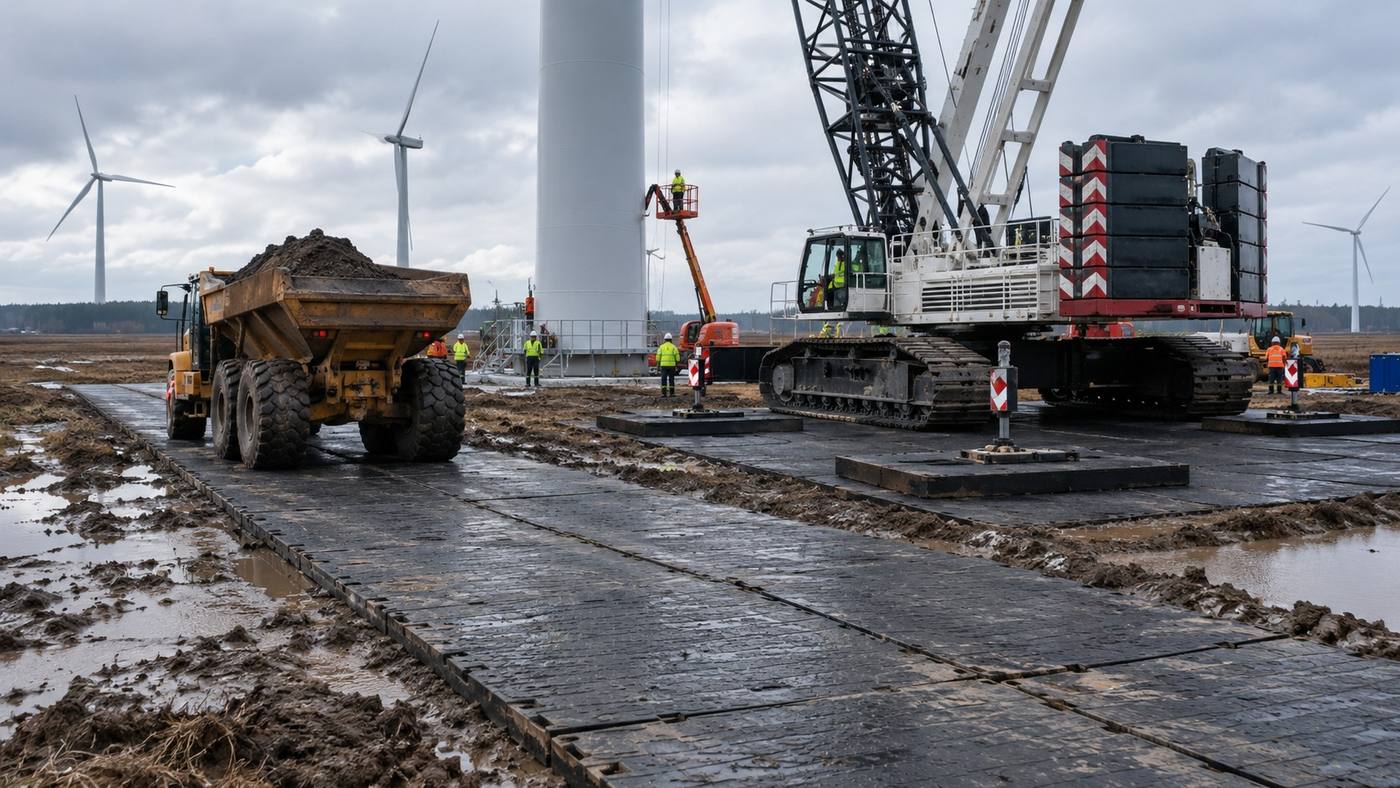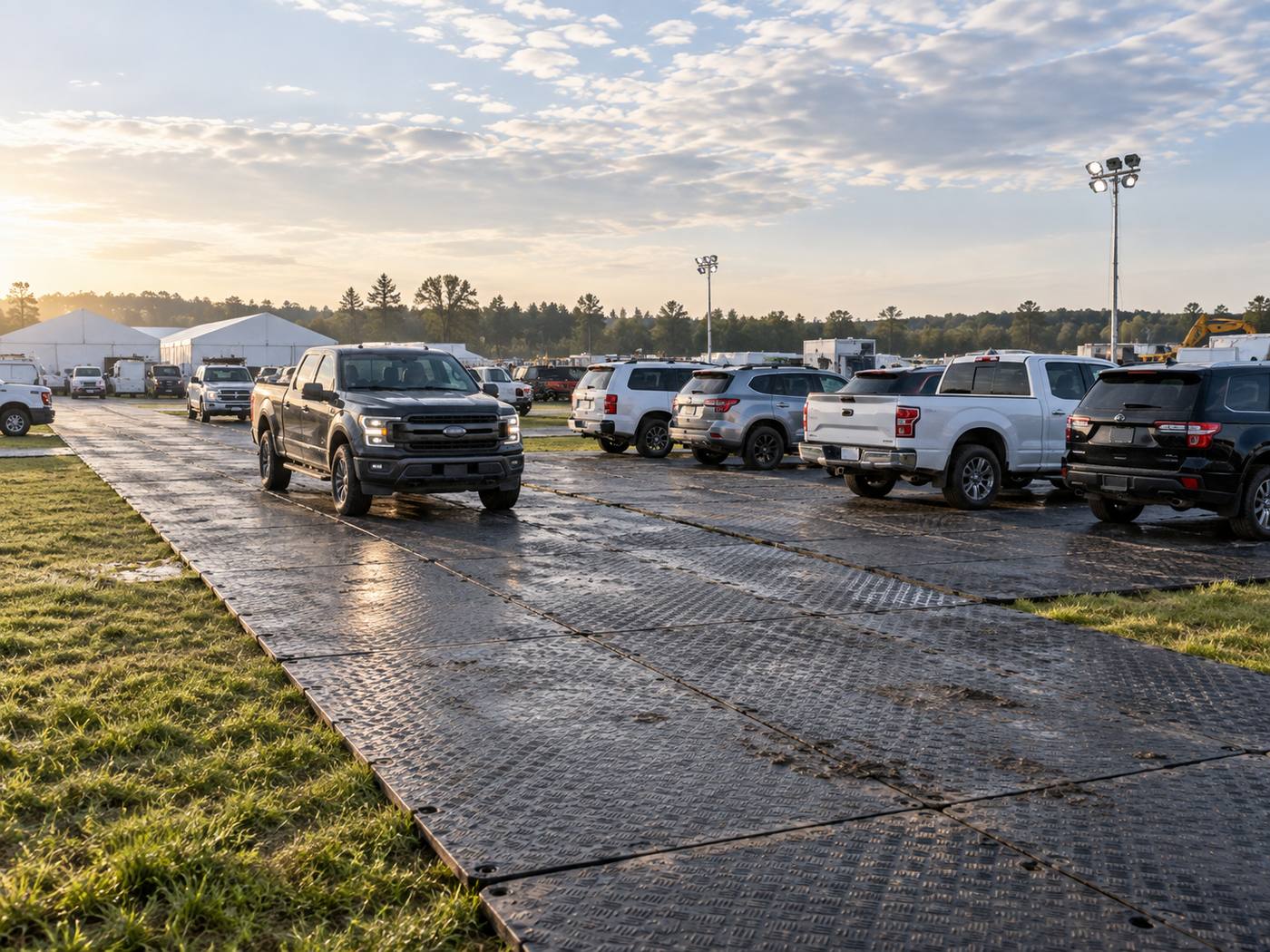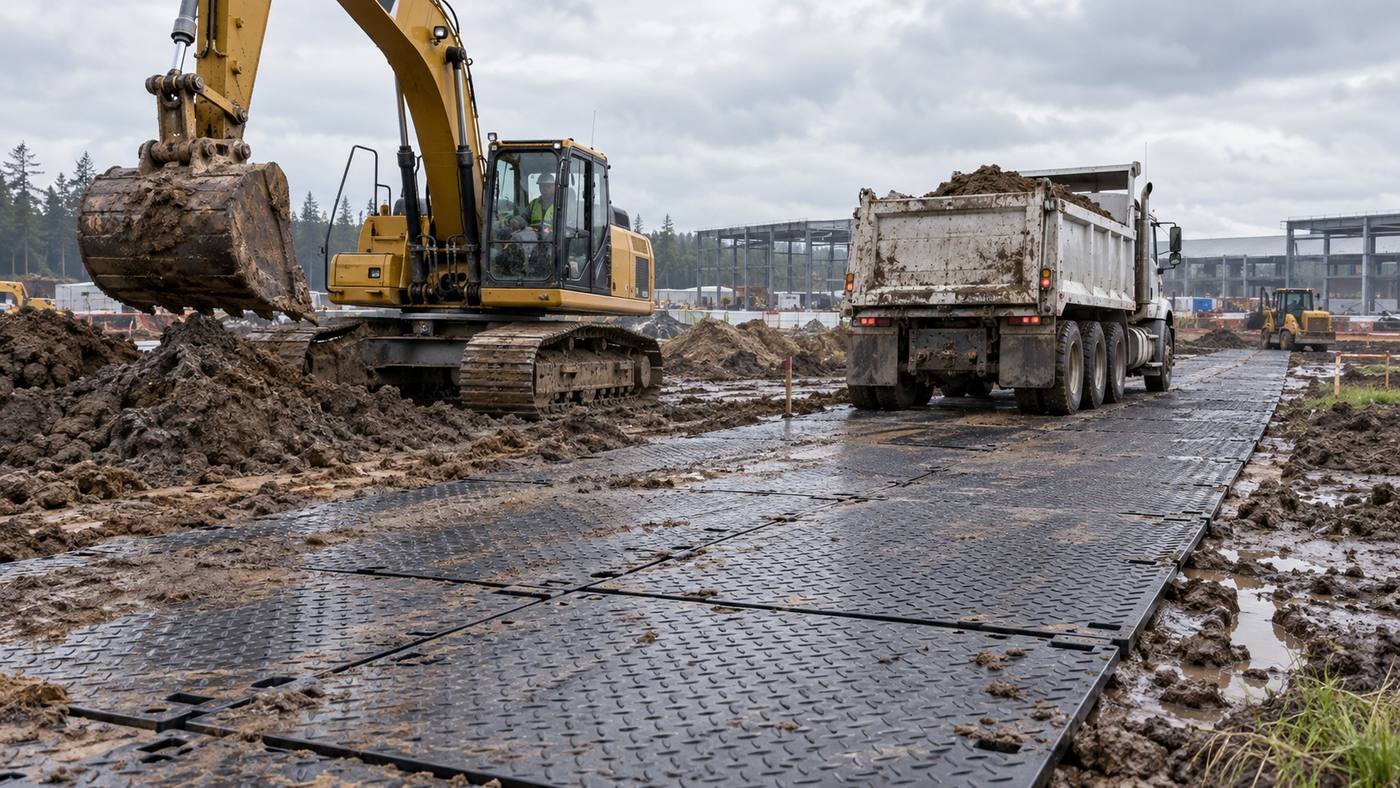
Most rainy season projects should begin with the establishment of basic drainage and then the laying of temporary road blocks. Road-painted areas are able to disperse wheel pressure, separate tyres from soil, but do not eliminate water that continues to enter the route. If runoff on the slopes, water pumped from the base pits or car wash water continues to flow to the passageway, the plate will gradually saturate and the previously solid floors may be softened. The so-called “drain first” does not mean that permanent drainage must be completed, but rather that it must first be clear where and where the water comes from and ensure that the water is not laid in the middle of the road.
Water sources can be divided into rainfall surfaces, underground seepage, construction drainage and vehicle washing. Facial currents are usually handled through troughs, lateral drainage and rational slopes; at local lows, catchment pits can be set up and pumped; and water from base pits or car wash areas should be separated. The drainage facilities must not weaken the edges of the road or allow vehicles to cross unconsolidated trenches. After the initial drainage has been completed, the sludge is cleared, the baths are filled and a continuous base is formed, so that the pavement board can pass the load to a more stable range.
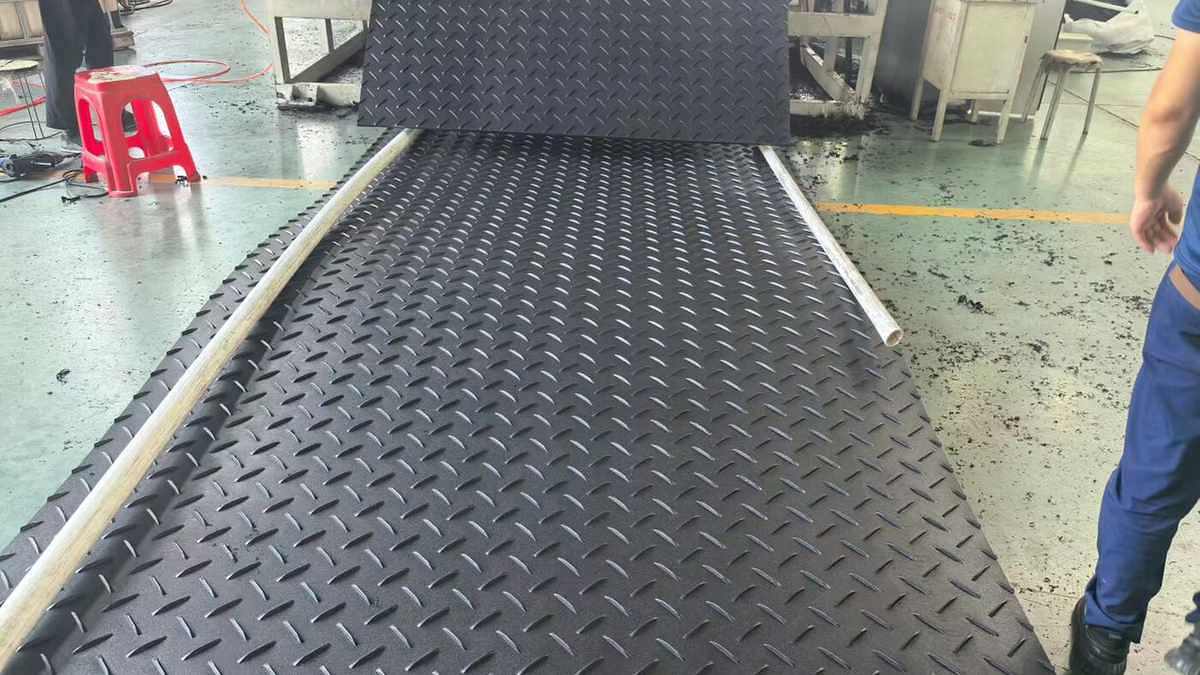
Road-painted production in rain-fed environments and draught-past-past-past-past-past-past-past-past-painted materials
Some projects, for time-consuming purposes, allow simultaneous drainage and sheeting after short periods of light rain, but must move forward from the dry and stable end and keep the safe operating surface of the construction equipment. Personnel should not be allowed to stand beneath the plates to pull mud or adjust the connectors while the vehicles are still moving. The sutures and links of the plates are not drainage ditches, from which the mud moves at high speed over time. The ramp should also control the flow speed and avoid suspense of the edges.
The management of the rainy season requires clear conditions for decommissioning. In the event of large-scale surface drift, continuous slurries, slippages of vehicle tyres, emptying of edges or water levels covering the seams, the section of the road should be closed. Nor can the heavy load be restored immediately after the rain stops, as the recovery of saturated soil is usually lagging behind. The project can record sedimentation and traffic changes by means of fixed points, analysing rainfall, pumping time and vehicle quantities together to determine whether to supplement the grass-roots level, expand or reduce traffic intensity.
The procurement phase should provide the duration of the rainy season, the depth of water accumulated after a single heavy rainfall, road ramps, ground type and maximum vehicle condition. The supplier thus selected the HDPE pavement thickness, surfacing and connection options, but the size of the drain, the stability of the slope and the ground-based treatment should still be determined by the project technical staff. The provision of controlled access to water, followed by continuous cover of vehicles, is the basic order in which temporary roads are maintained during the rainy season.
Need for further evaluation of the actual project?
Applications, sizes, quantities, site photographs or drawings and delivery destinations are sent, on which we can identify more suitable products and processing programmes.