The polymer leg cushion may have a certain elastic graft under the load, but it is not normal to look only at “how many bends”. The material and thickness of the mattresses, the retroactivity of the legs, the position of the legs, the continuity of the ground support and the recovery of the unloaded. Minor, symmetrical and recoverable deformations may be designed as a response; a problem may be identified in terms of area, contour or grass-roots areas, where a clear crease, local dent, edge lifting, albinism or de-mounting remain bent.
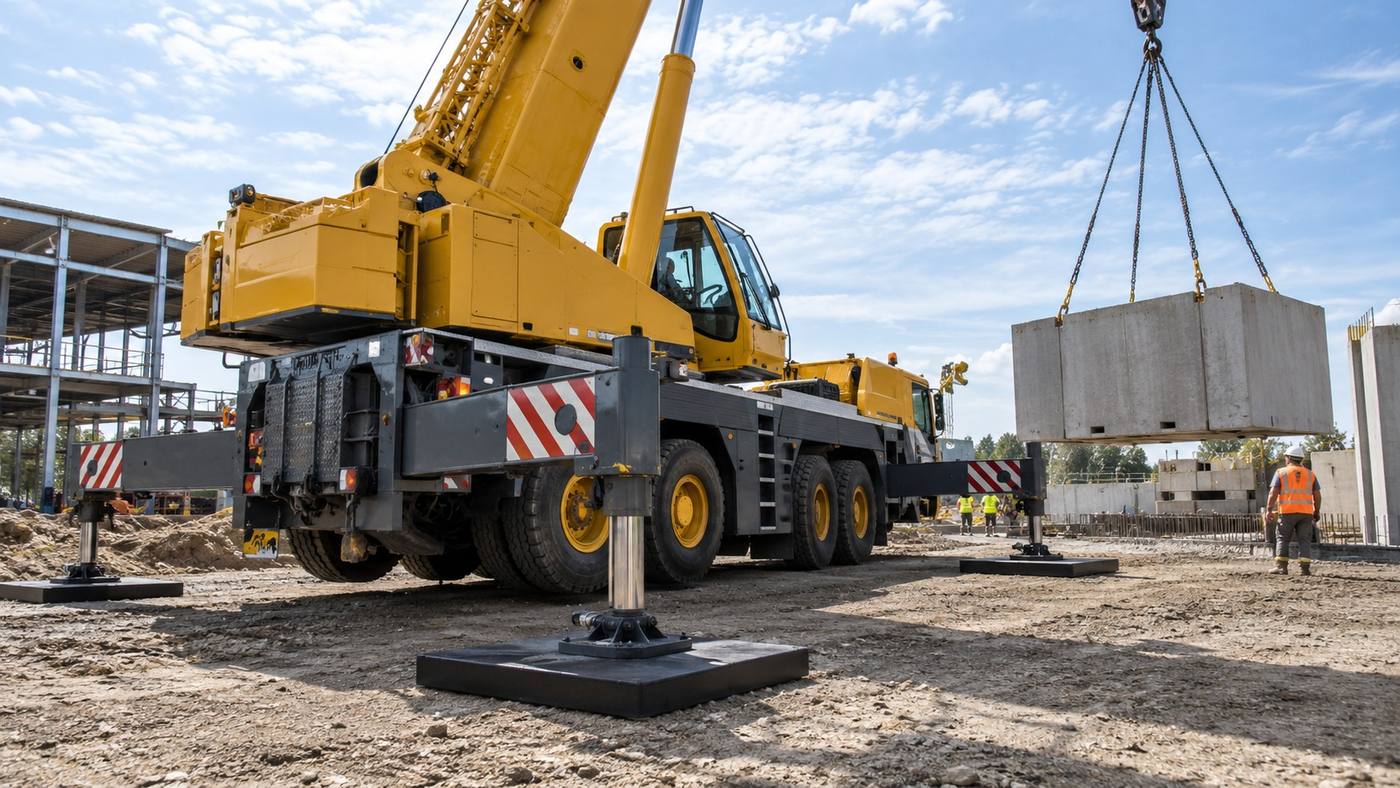
Check under the mat first. Soft spots, pits, pebbles and loose pads will leave the plates empty or partially pressurized, even if they are large and do not evenly spread. Checks whether the foot is centered, whether part of the leg exceeds the edge of the plate, and whether the actual reversibility of the leg is higher than the selected input. When the crane turns around, the leg loads change and the maximum bend cannot be explained by the static receiving status or the average mass of the machine.
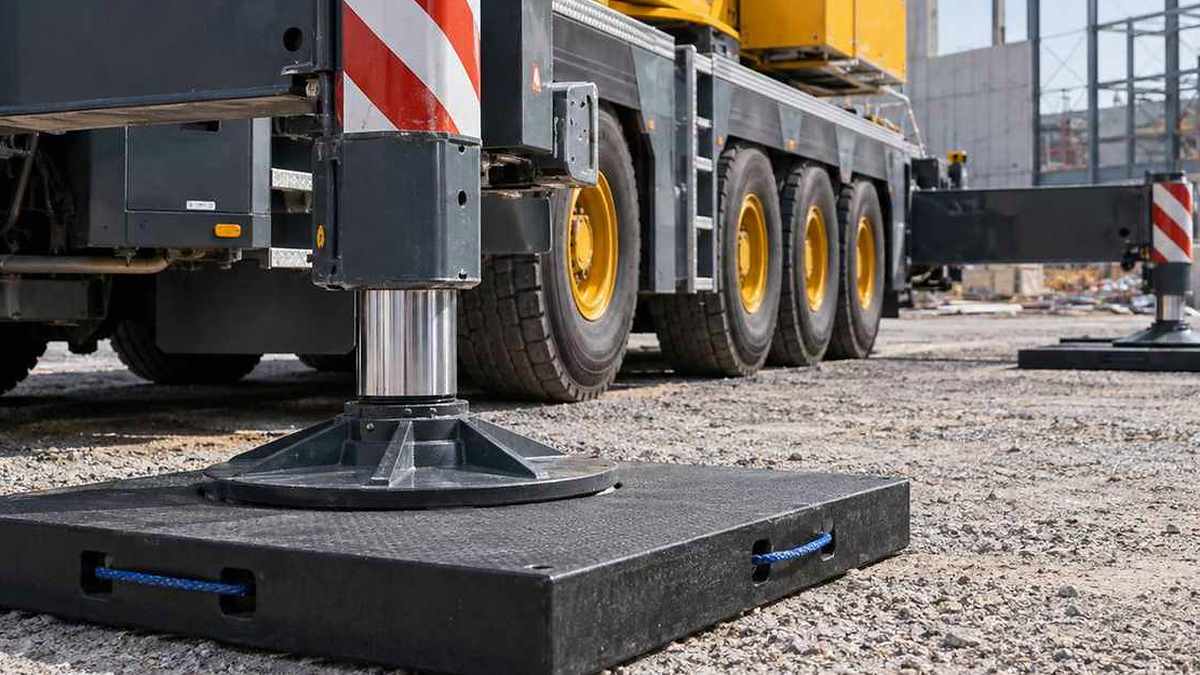
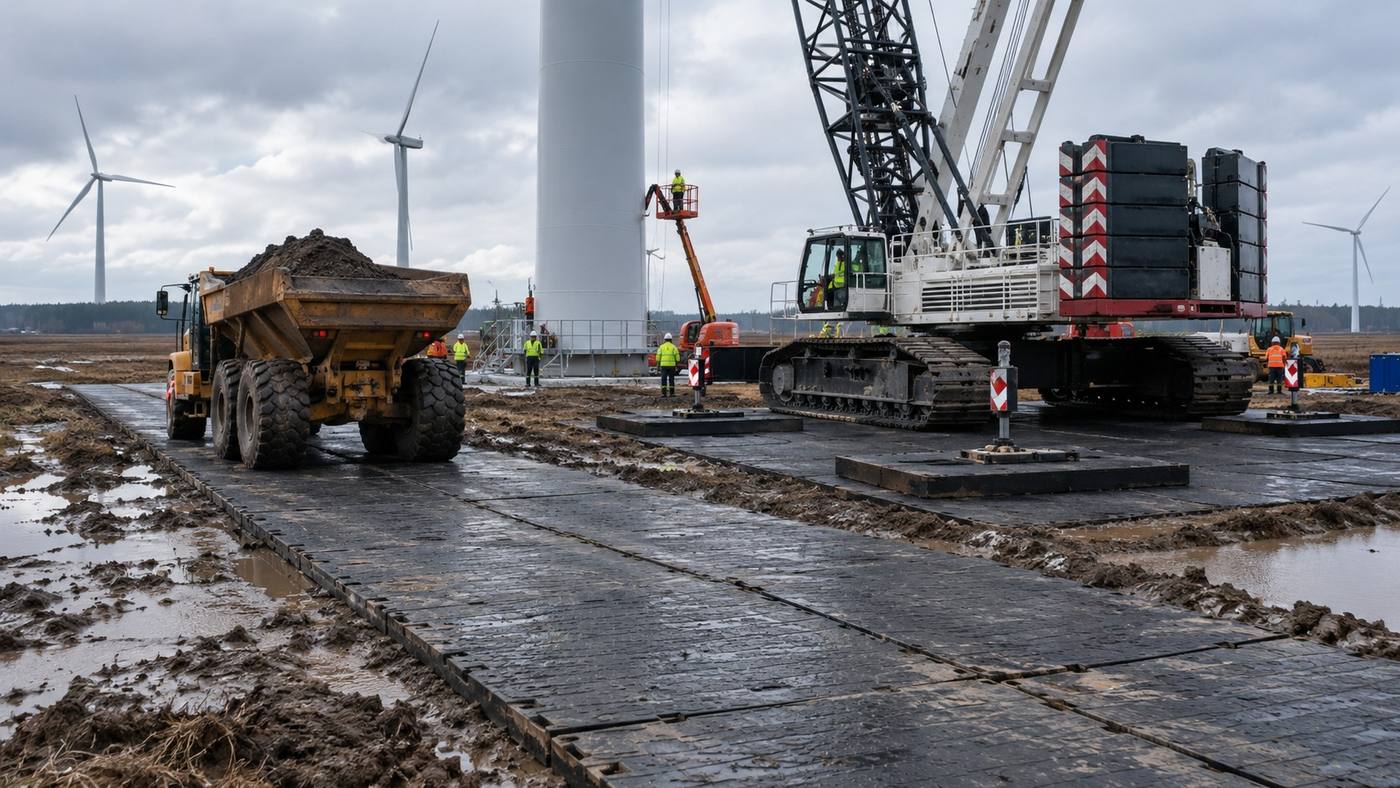
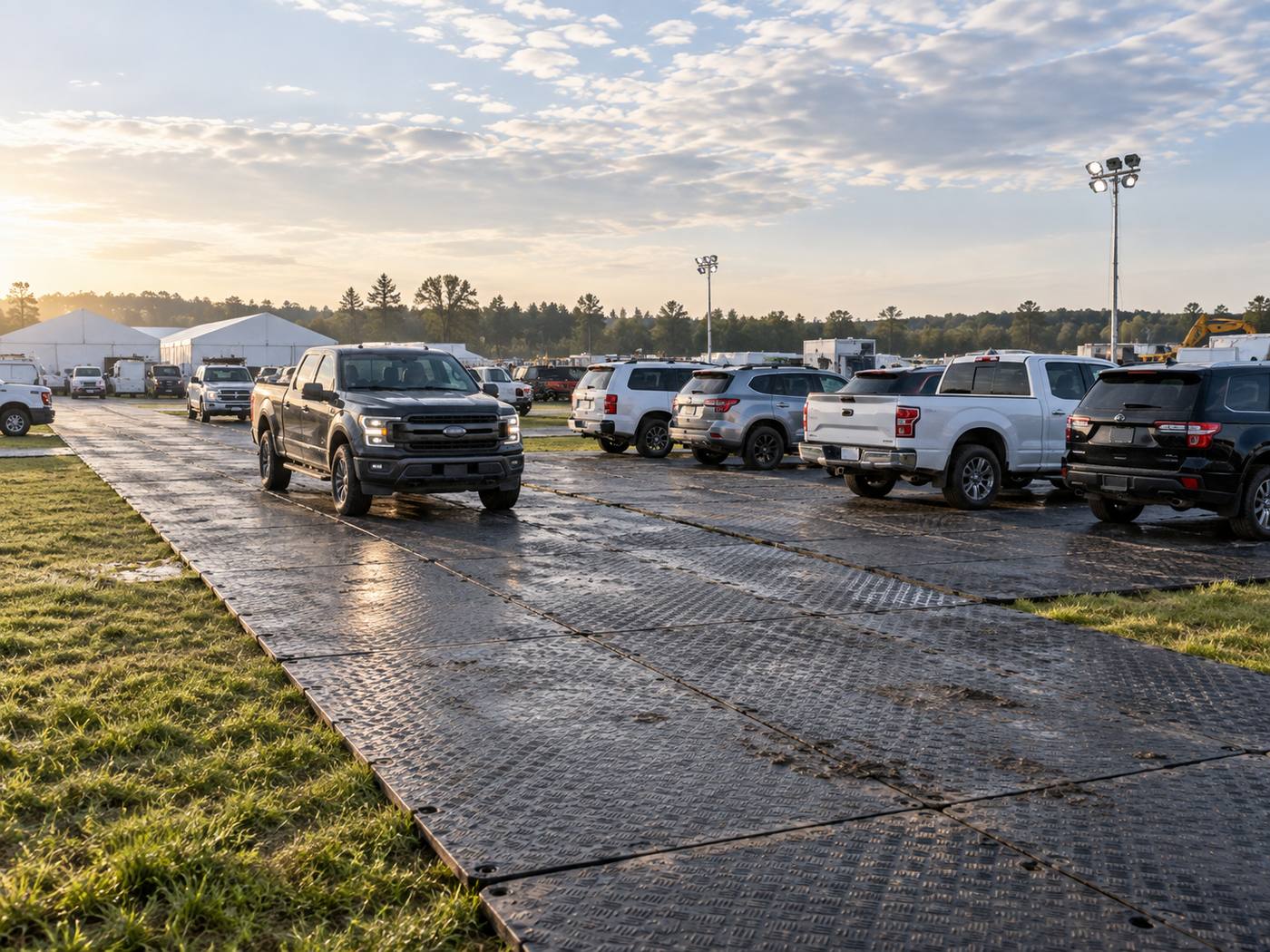
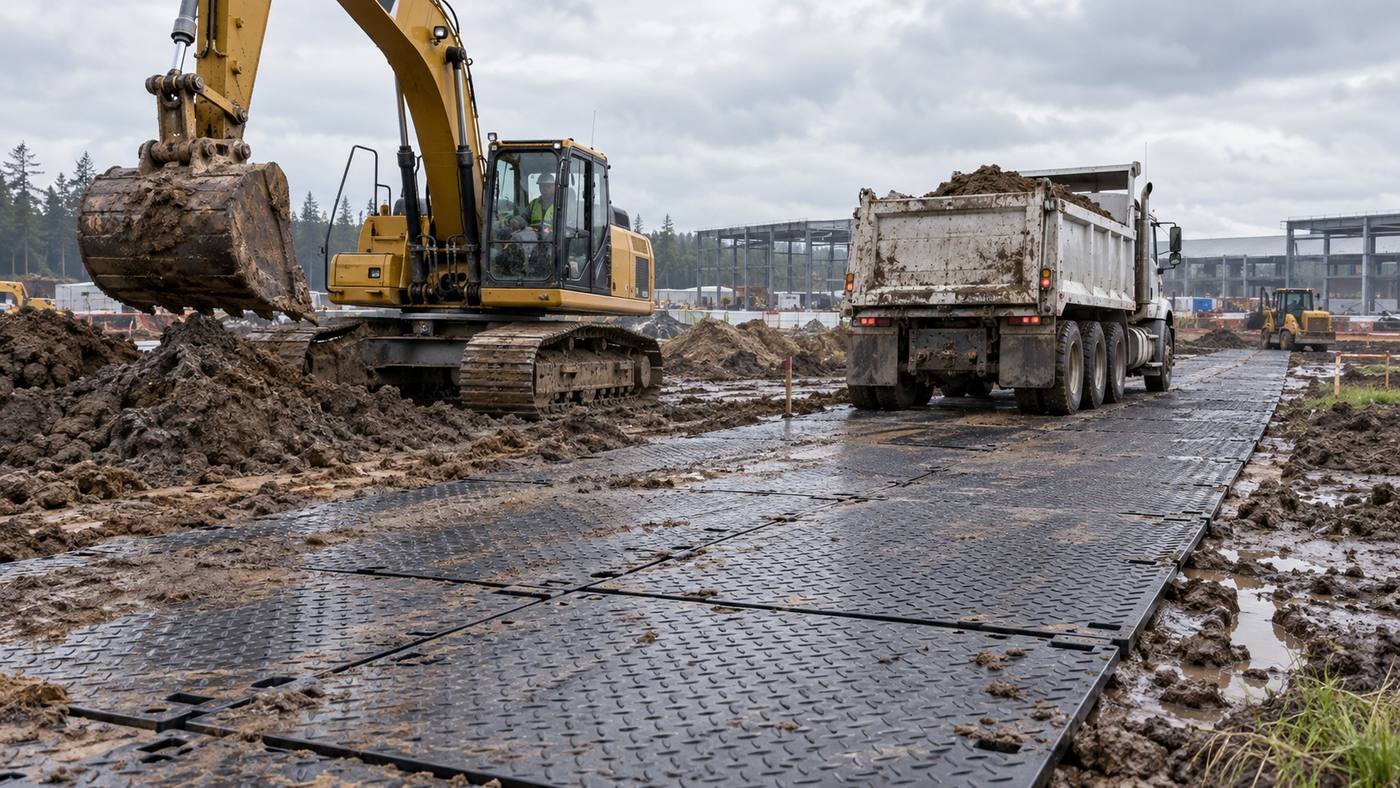
Hustler leg pads maintained large area support under the construction load (input material for the Genesis Network).
In the event of an abnormal bend in the operation, the situation should be suspended or reduced by the suspension programme, assessed by the person in charge on the ground, and not adjusted by hand or tools to reach the pad when carried. Once the ground has been identified, the surface and edge of the mattresses are inspected for cracks, cuts, heat damage or chemical contamination. The permitted scratches, inspection standards and test conditions provided by the manufacturer should be preferred and different polymer numbers and structures cannot be applied to each other.
Precautionary measures include the selection of areas by maximum retroactivity of legs and approval of ground-based loads, ensuring that the thickness and intensity are sufficient, using the basis of continuous flatness and maintaining a middle leg. Each time a pre-cleaning pad is used to make the cracks and damage visible; the storage is supported by a flat level, avoiding long-term bending or proximity to high-temperature sources. For the suspension fleet used by the HF, the pads can be numbered and the results of each anomaly, load and maintenance can be recorded.
Feedback to suppliers on bending issues is provided with mat size thickness, materials, use of temperature, retroactivity of legs, foot size of legs, ground photographs and post-dismount state. Sending only one photograph with it is usually not sufficient to judge. Recoverable scratches are separated from permanent damage and can be traced back to the ground and ground to determine whether to continue, adjust or replace the mattress.
Need for further evaluation of the actual project?
Applications, sizes, quantities, site photographs or drawings and delivery destinations are sent, on which we can identify more suitable products and processing programmes.