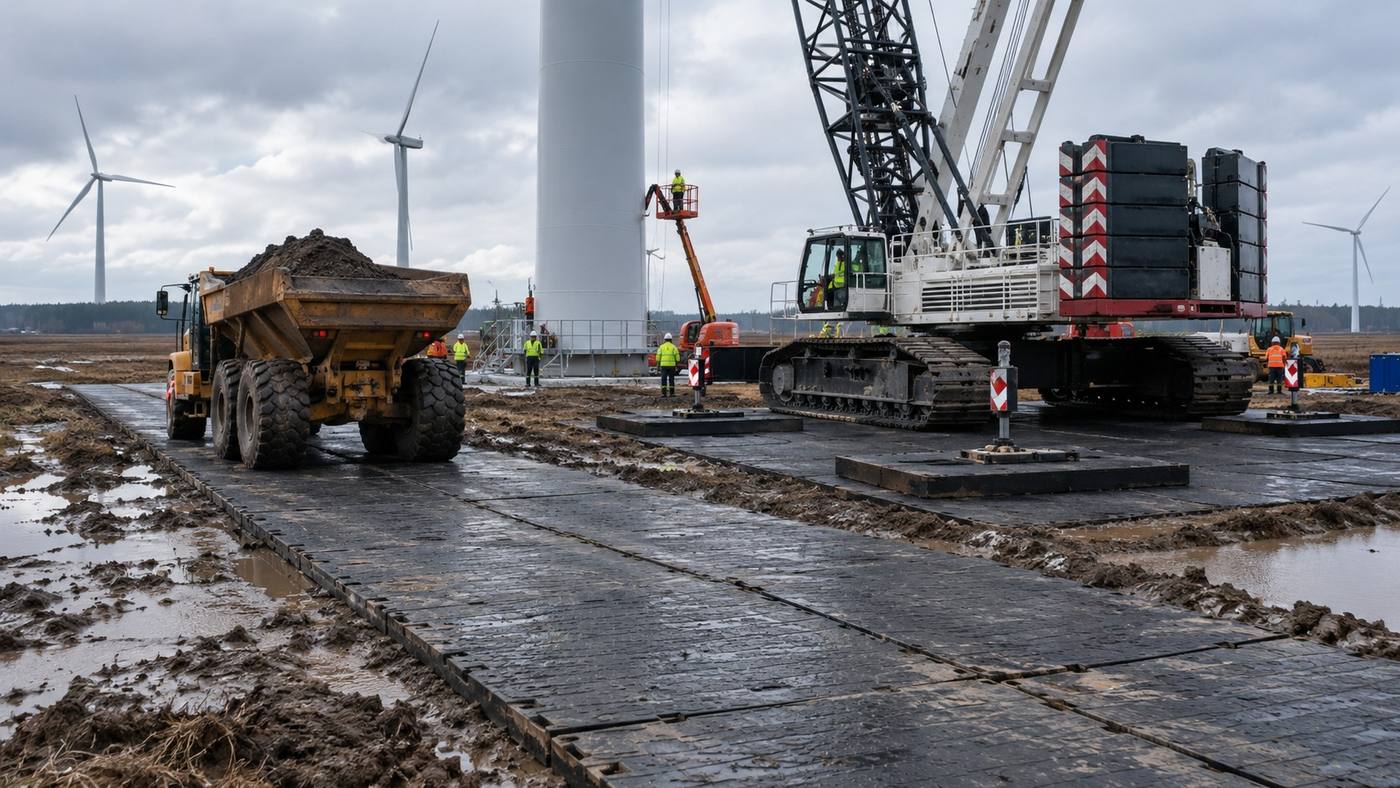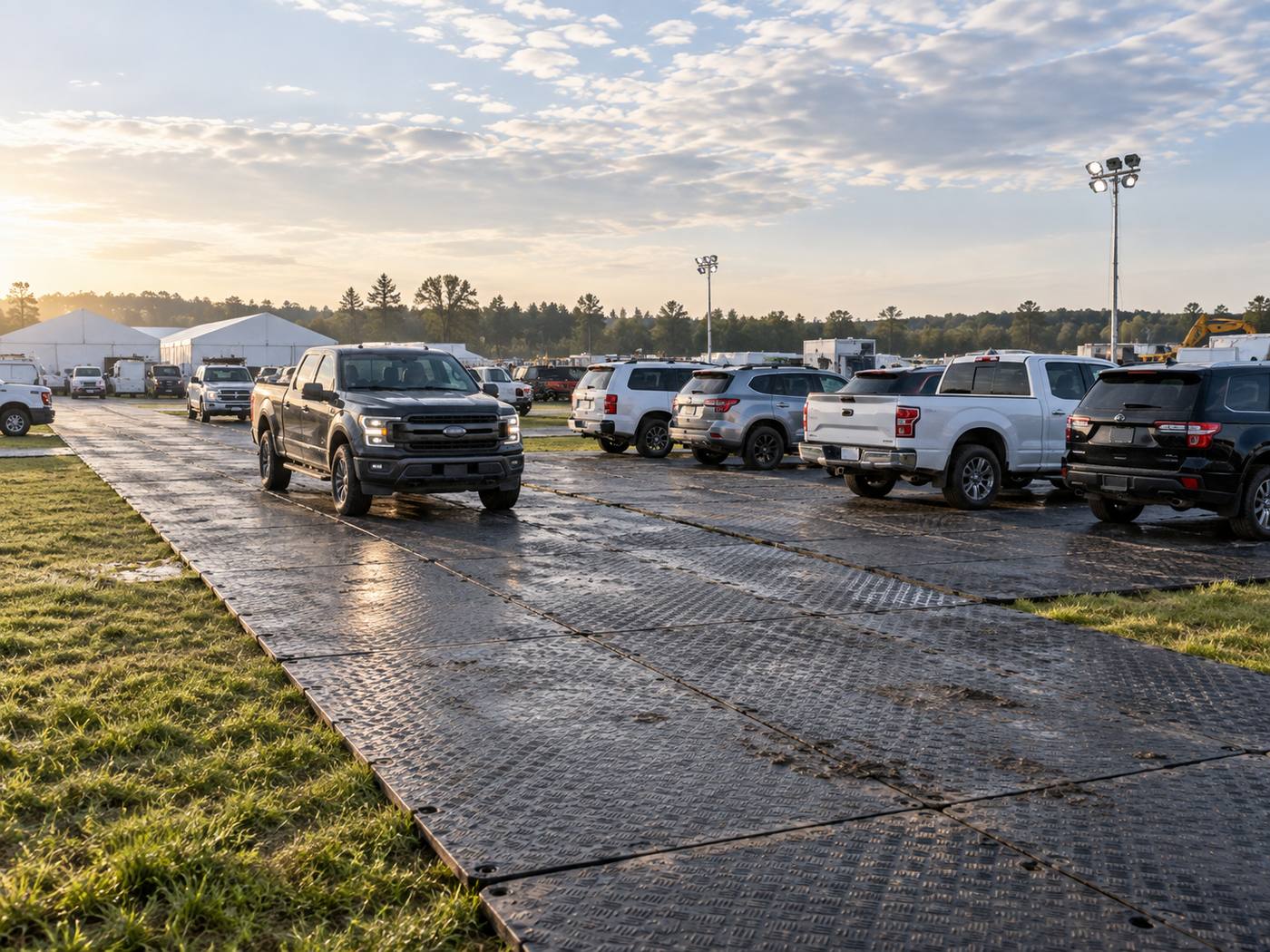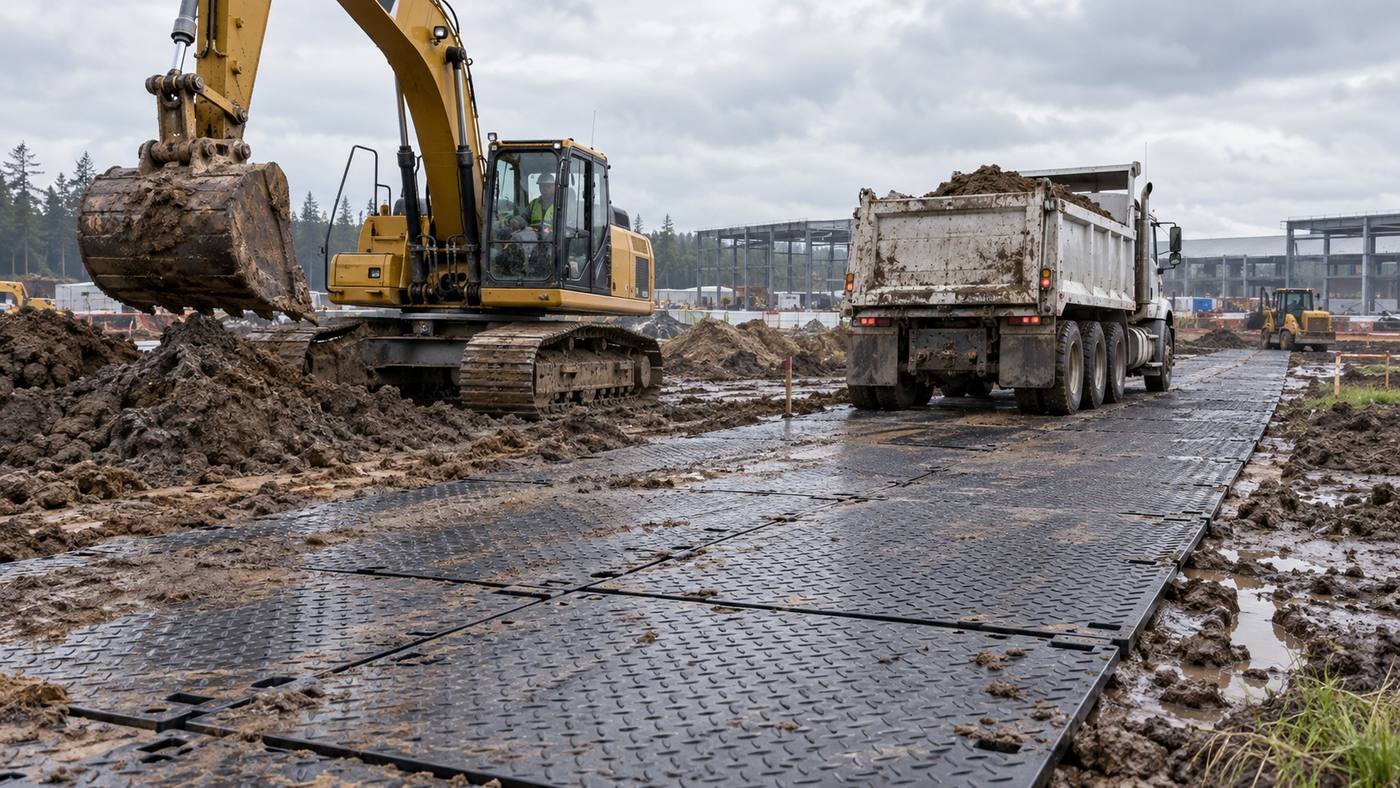
The caryards and tipping areas bear both the weight of the vehicle and the lateral shears resulting from the low-speed shift, which are usually easier to lift up, move boards and edges of damage than the line segments. Vehicles are slowing down, waiting, reversing and re-starting, and the load stays longer. If only two straight-line plates are so broad that they do not cover the actual wheel and revolving range, the back axle or the wheel will still cut to the soft soil and then take the mud to the surface and push the adjacent plate.
The planned area should be based on the convection trajectory of the maximum and widest vehicle, taking into account the inside and outside of the head and the command personnel safety zone. The point of call should be sufficiently long to allow the two vehicles to slow, parallel and accelerate within the panel; as much as possible, the turn-off should be used to avoid driving the wheel in its direction. If the available space is limited, one-way traffic and booking can reduce the need for turnovers, but small platforms cannot be used to force vehicles to take risks.
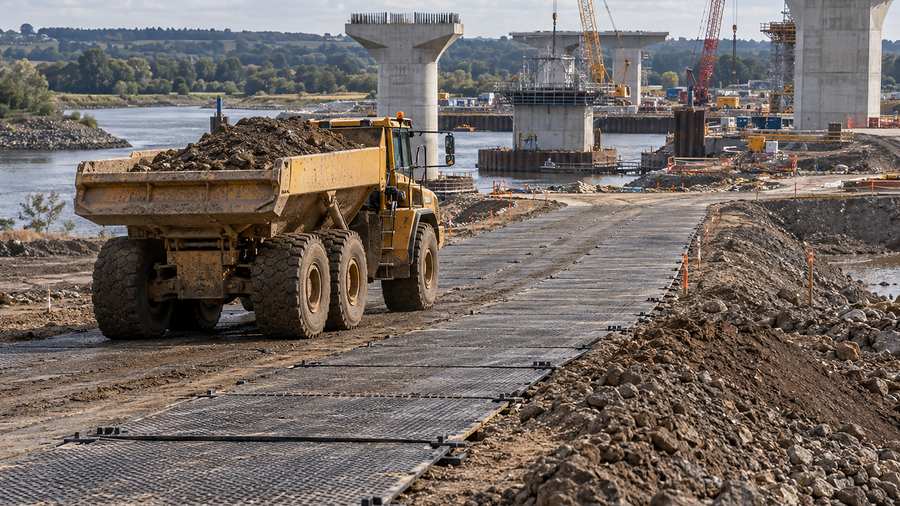
Plankted platform for heavy vehicles turning around at the bridge construction site (new construction site scene)
Grassroots reinforcement should cover the entire platform and smooth the transition to connecting roads. The co-location of local hard blocks with soft areas can distort the plates, with low surfaces that can easily accumulate water as vehicles shift. The pavements may be staggered and continuously connected, with specific panels implemented by product systems; the edges of the platform should be far from the impact of gutters, slopes and underground structures. A small number of pads should not be used to support the turning centres, nor can it be assumed that an additional floor would replace the grass-roots treatment.
In use, the number and movement of vehicles entering the platform at the same time should be limited, with clear direction, stop lines and command signals. The daily focus is on the turning centres, the outer wheel tracks, the platform entrances and drains, and the recording of panel shifts, seams open and grass-roots slurry. When it is found that the vehicle has to be pressurized repeatedly to complete the shift, the site or traffic programme should be adjusted, as the continued increase in car numbers will only magnify the cut.
The project provided the supplier with axle range, turn radius, full-load axle load, planned pattern, available site sizes and ground photographs to estimate accurately the number of pavements and connections. Engineers are also required to confirm the security of the slopes and underground installations. The need for a larger continuous area, more even grass-roots level and more stringent transport organization, as compared to the direct segment, together determines its durability.
Need for further evaluation of the actual project?
Applications, sizes, quantities, site photographs or drawings and delivery destinations are sent, on which we can identify more suitable products and processing programmes.