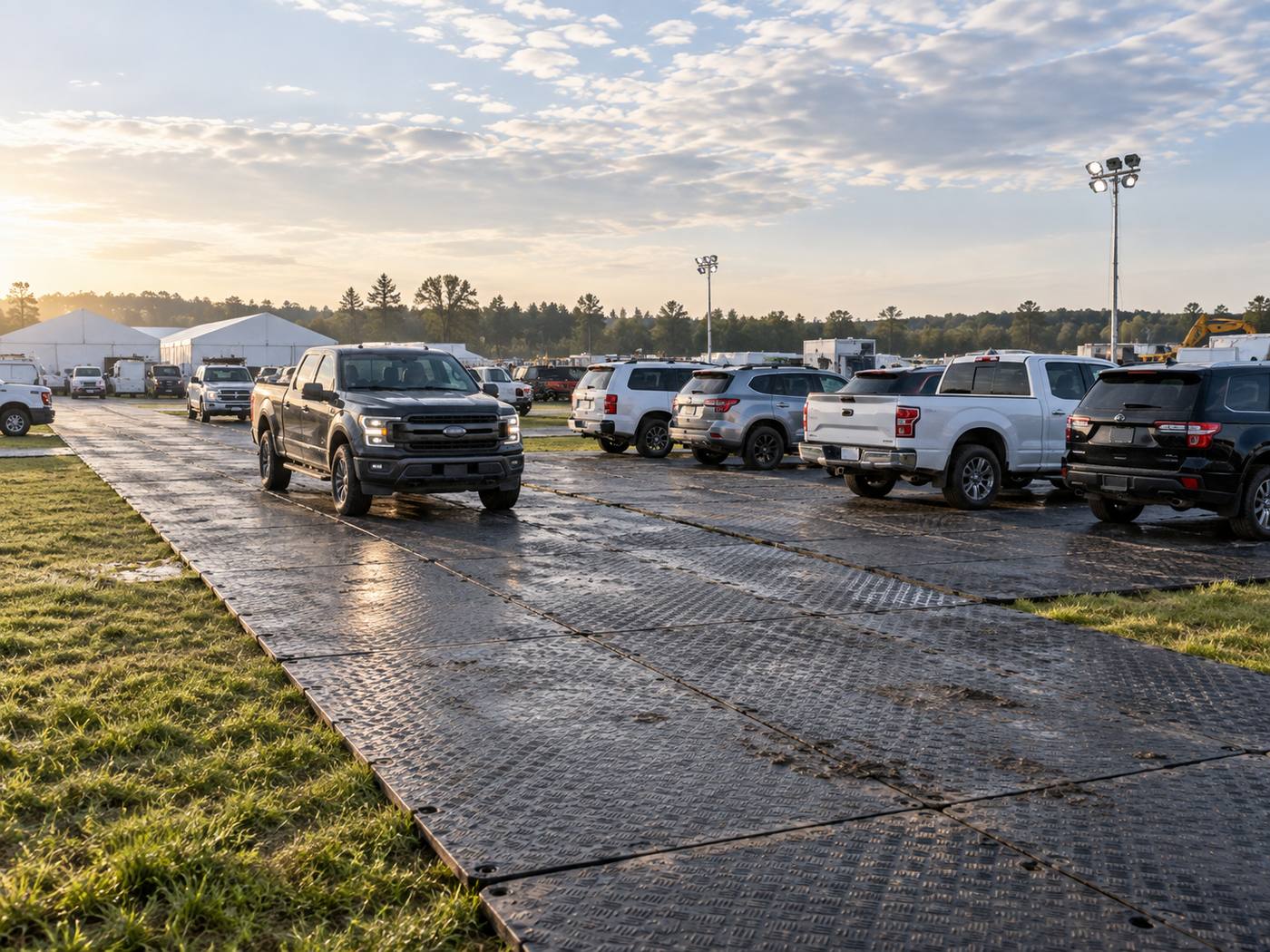
High-value landscape lawn or sport lawn has two types of requirements for temporary traffic: a no-fall, no-cut root area for vehicles and a minimal-covered light, temperature and aerobic changes. Road-painted panels can spread wheel pressure and isolate tyres, but the length of continuous coverage can still cause grass leaves to fall, surface moisture or heat up. The programme therefore needs to be clear about allowing damage, time for use and recovery cycles, and not only to promise “no scratches in the back of the lawn”.
Pre-laying should be preceded by site maintenance staff to identify grasslands, root area structures, irrigation pipelines, nozzles, drainage vents and near-term water content. When the soil is saturated, even if the panels are flat, vehicle loads can crush deep roots. The route should be chosen in better-drained and less-rotated locations to minimize the total length; HF entrances, turnovers and docking points could expand the protection coverage and avoid the movement of tyres across the board. The floor must be clean and there are no sharp stones or hard blocks to crush the grass.
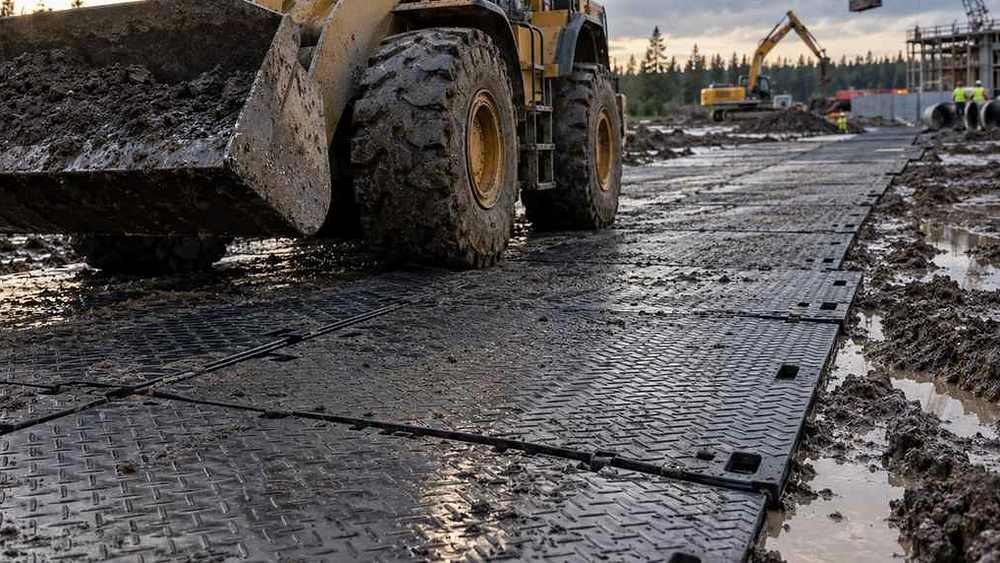
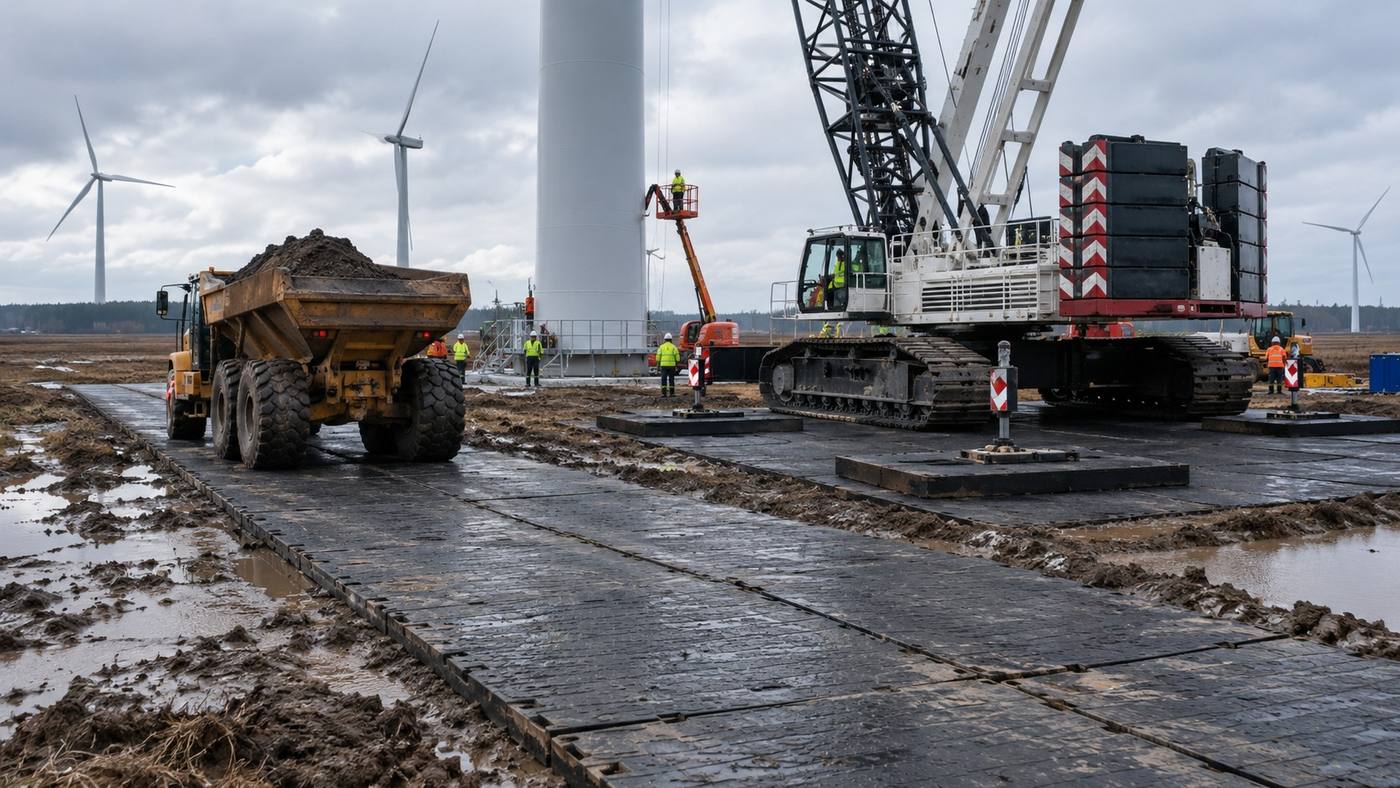
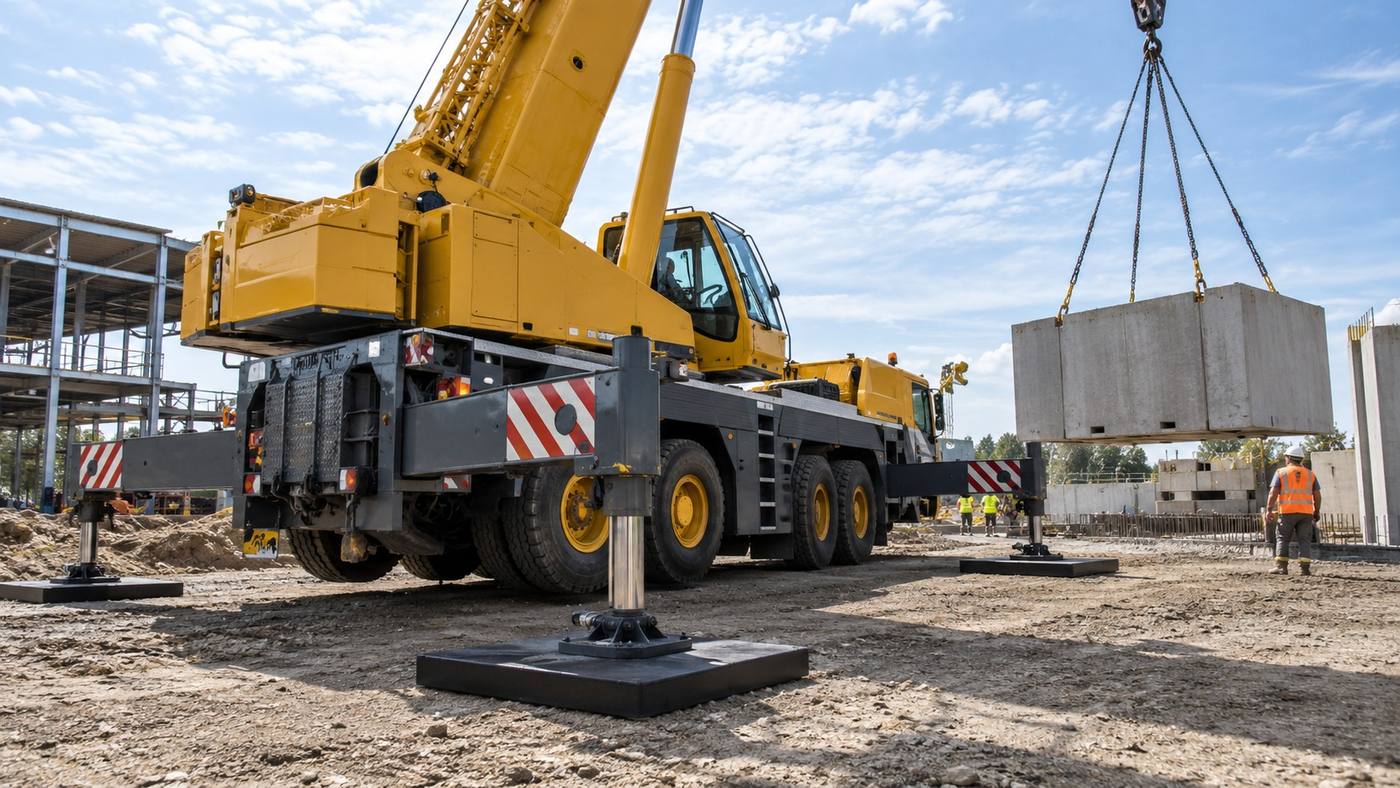
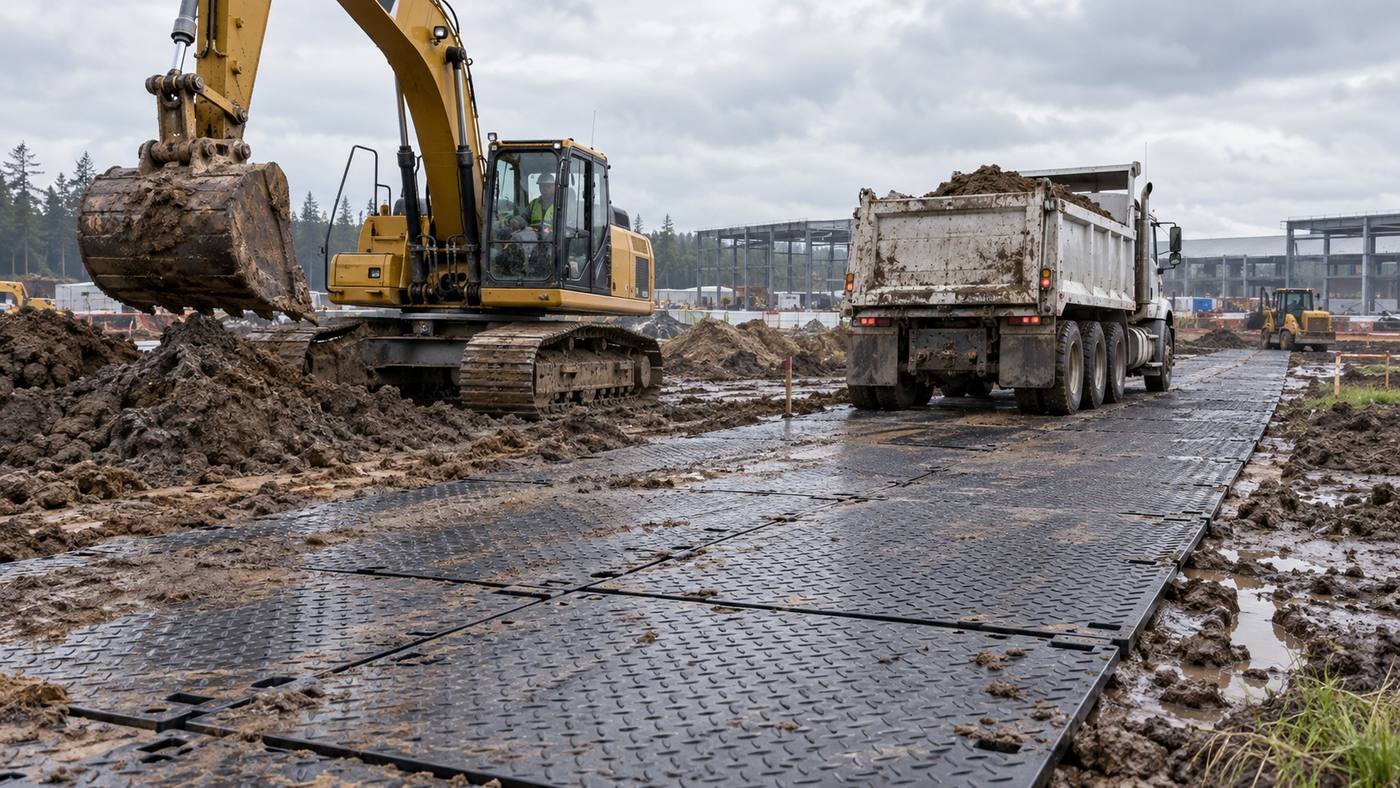
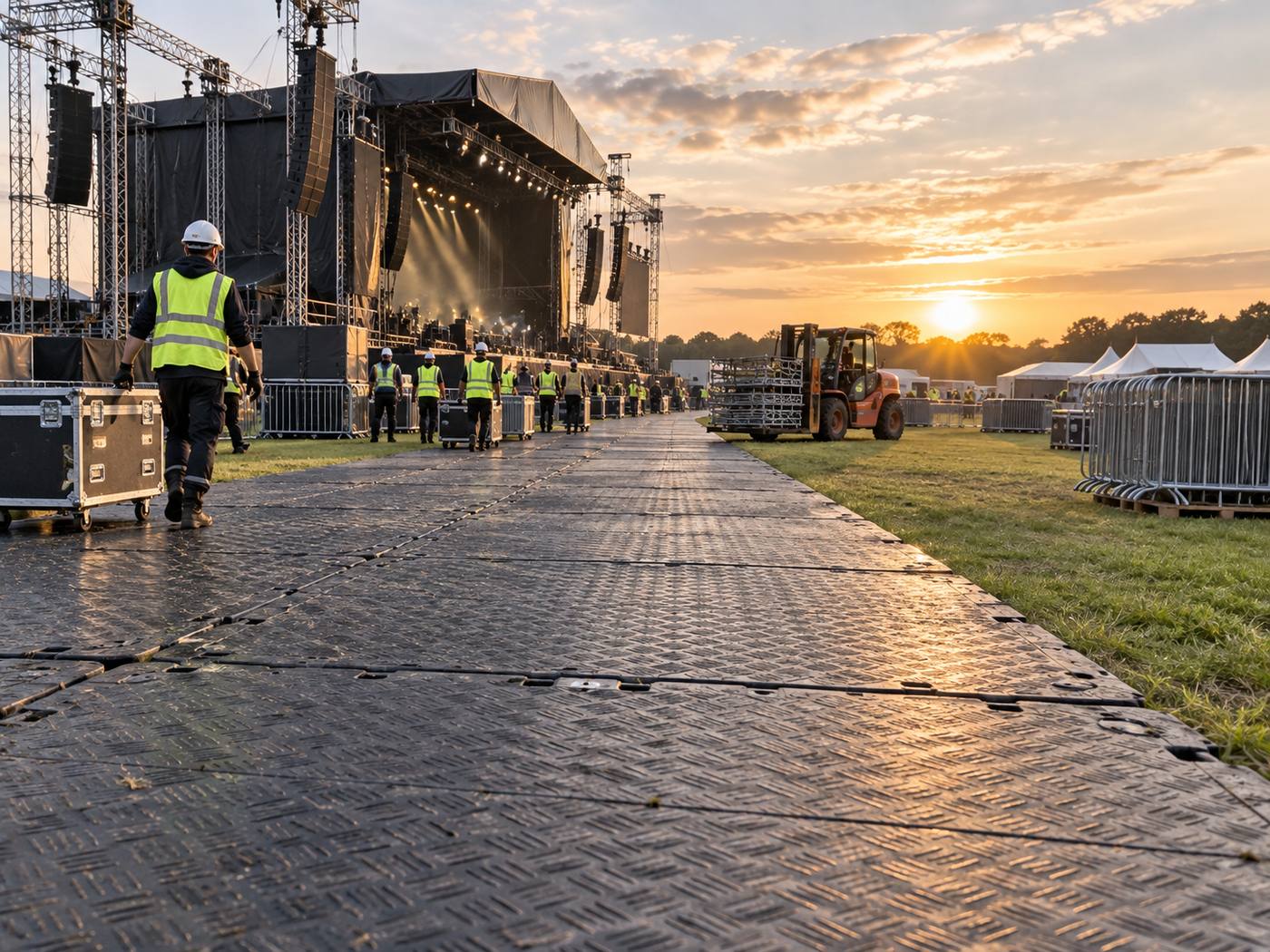
Engineering equipment around the meadows and the application of temporary pavements (contribution of materials for the plastic network)
It is important to limit the weight, speed and frequency of passage during operations. Vehicles are kept in direct motion, no brakes and no in situ shifts, and heavy vehicles are not allowed to park on the lawn for long periods. If the project lasts for more than one day, the area may rotate when conditions permit or a short-term check may be arranged, provided that it is detached from traffic. Open hours should be reassessed after rain, irrigation and high-temperature weather, and vehicles should not be centralized in the most vulnerable lawn to catch up.
The checks included plate-side bruises, sews on the ground, water under the plate, flavouring of herbs and tasting. When the root zone is found to be under pressure or water drainage is blocked, traffic and coverage are reduced and maintenance personnel decide on air, earth or other rehabilitation measures. The evacuation site is to be removed from the remote end to the exit and a continuous recovery route is to be maintained; the sheeting is lifted and the sand removed in a timely manner so that the moving equipment is not allowed to pass directly through the newly exposed soft lawn.
The request is for a lawn type, area of use, axle load of vehicles, daily number of vehicles, days of coverage, rainwater and irrigation schemes and restoration standards. The supplier may recommend the size of the plate, the texture, the mode of connection and the single mass, and the site is responsible for the physiological and conservation judgement of the lawn. Carrying and venting are not addressed by a single material indicator, but by reducing coverage, controlling traffic, managing water-bearing rates and regulating outages.
Need for further evaluation of the actual project?
Applications, sizes, quantities, site photographs or drawings and delivery destinations are sent, on which we can identify more suitable products and processing programmes.