Road conversion and expansion projects often require that construction vehicles repeatedly cross established road shoulders, central partitions or green areas. Unprotected turnovers and entry and exits can lead to the destruction of tracks, kernels, drainage congestion and the bringing of mud into open traffic. Road-painted panels could create clear temporary surfaces, but should be used to confirm shoulder structures, underground drainage, fence infrastructure, communication lines and greening irrigation, avoiding protecting the surface but crushing hidden facilities.
The route should give priority to the use of structurally strong positions and incorporate vehicle turn radiuss, internal wheel differentials and traffic guidance into the plane. Cricket roads are transitioned from the established hard floor to high steps on the asphalt edge; soft shoulder areas are reinforced and evened according to load needs. The drainage vents, edges and culverts must not be blocked by plates for long periods, the necessary cross-structures should be specifically designed, and the normal HDPE plates cannot be used as supportable grate covers.
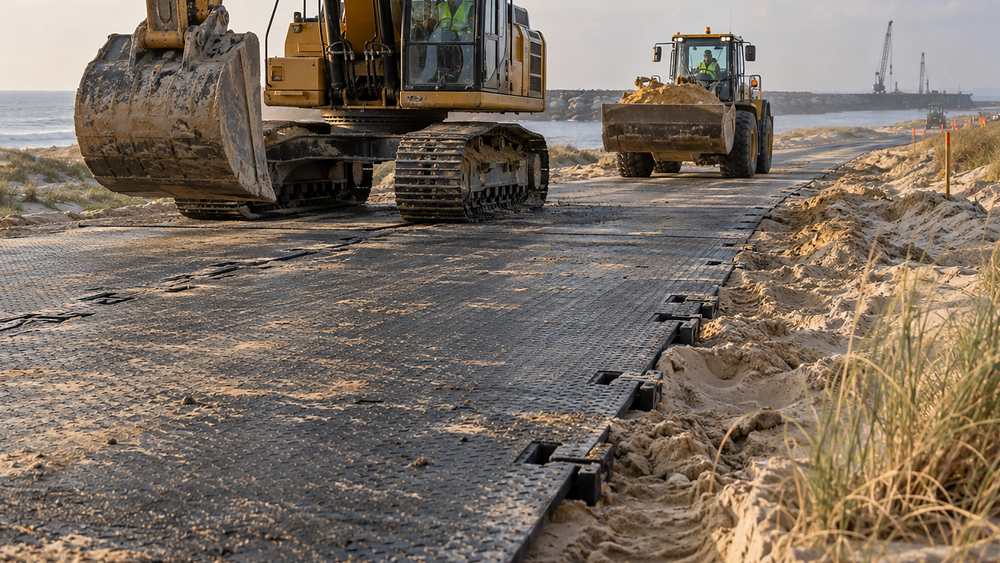
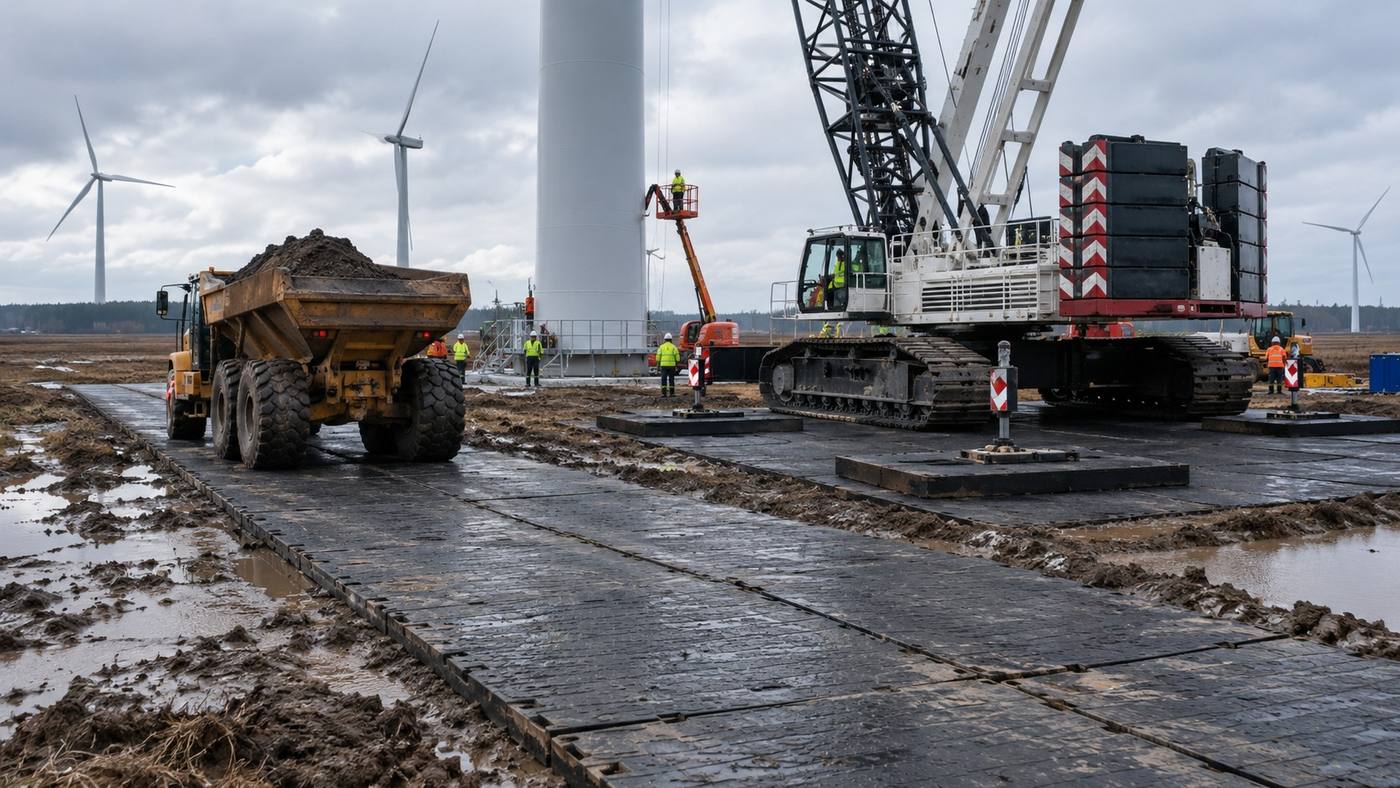
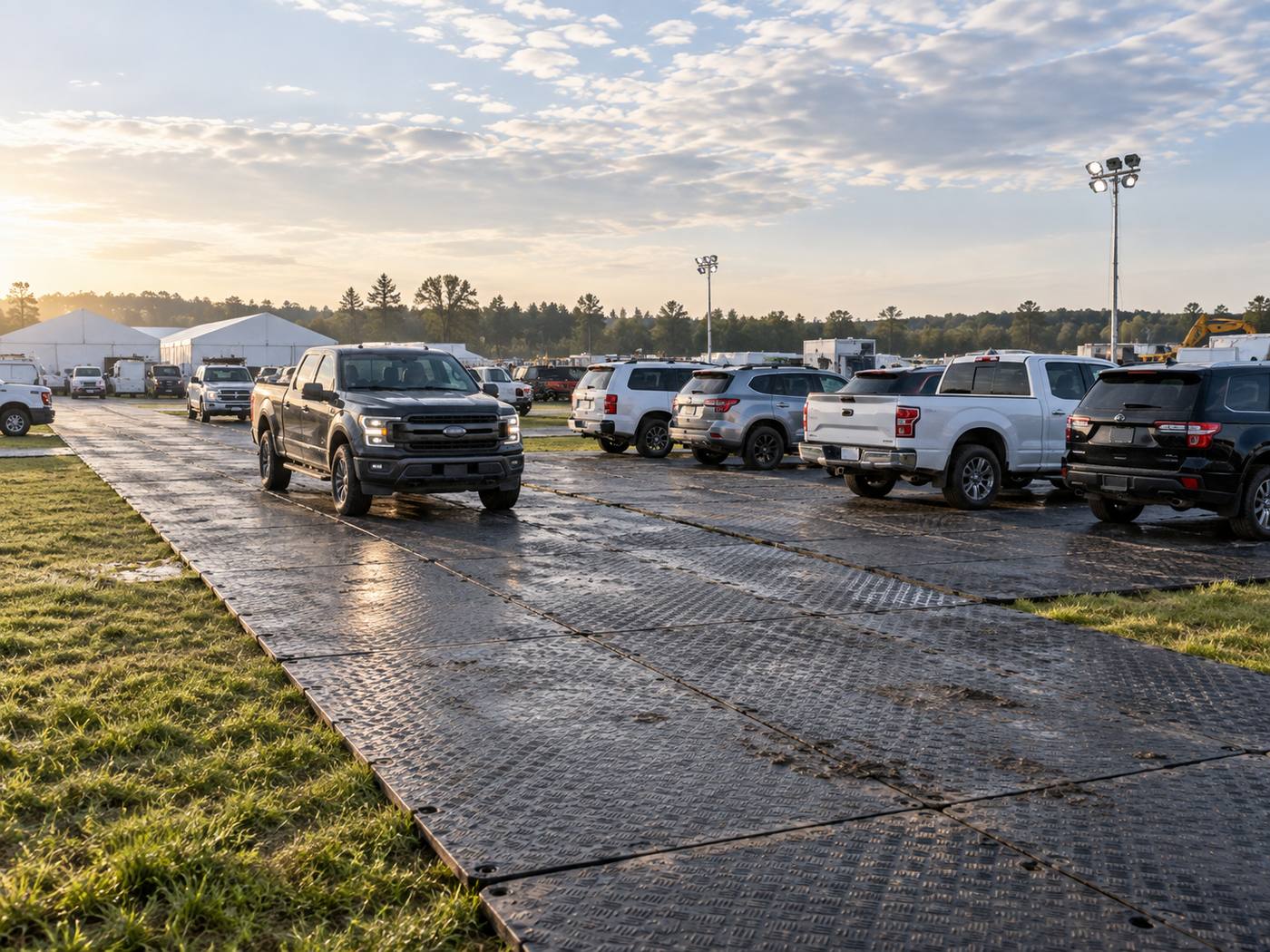
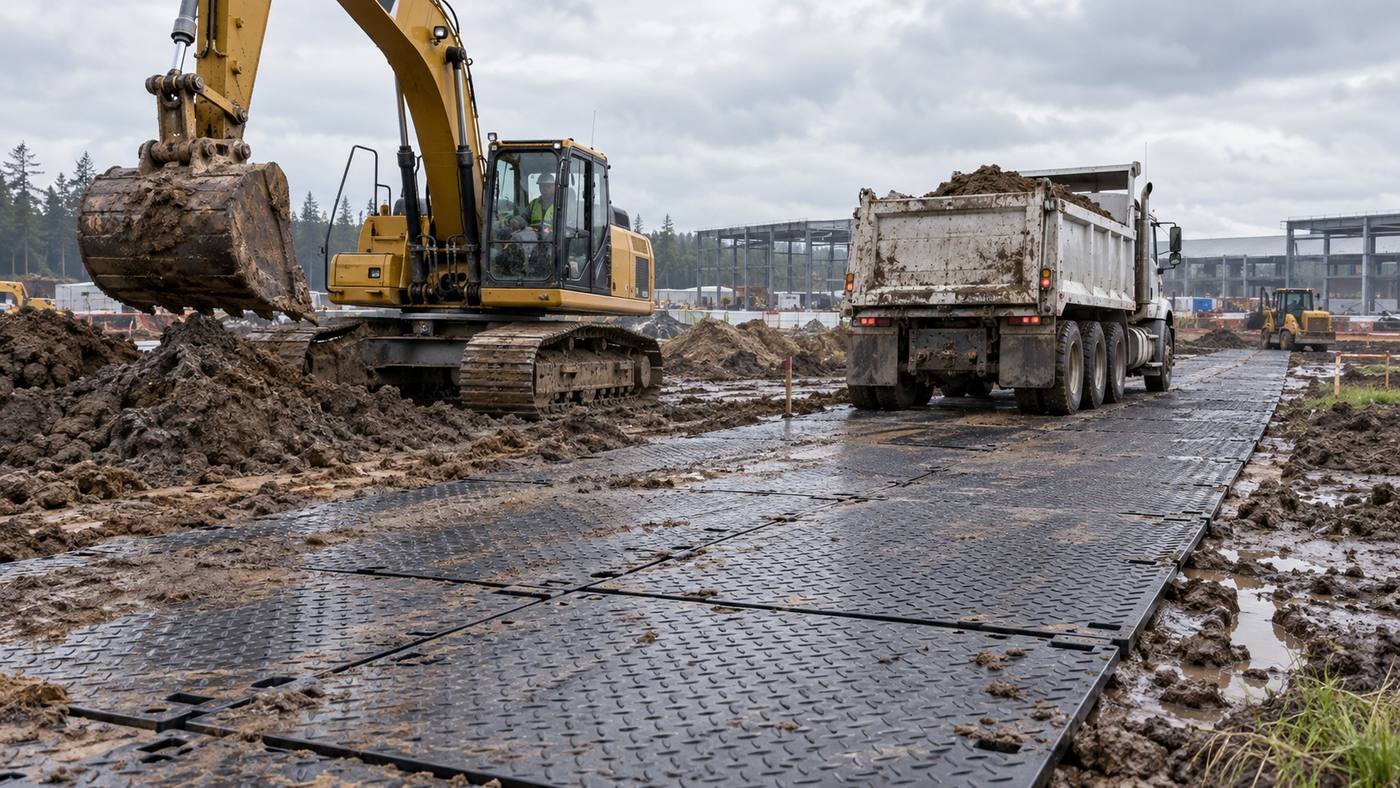
Temporary pavement route for heavy vehicles along the road extension area (new construction site map)
The green belt construction should clearly allow for time coverage and restoration standards. Clearing of acute impurities and marking of root protected areas, nozzles and shallow burial facilities, vehicles travelling at low speed and prohibiting the rapid turn on narrow grasslands. Access points, high-frequency cross-sections and material offloading points were expanded to prevent tyres on one side from crossing the side. Land and rubble are cleared in a timely manner and open roads and ground frictions are maintained.
Each day, the asphalt is checked for stitches, shoulder depositions, plate shifting, drains and traffic signs. Increased review after heavy rainfall, changes in transport organization or first entry of large equipment. The extraction site is to be transported at a long end to the export of recycled plates to avoid the greening of newly recovered transport equipment; it is then cleared, grounded and accepted by road and garden management units.
The request for quotations will provide axle load, entry/exit geometry, shoulder structure, type of greening, length of laying, duration and swing plan. The supplier may make proposals for the plates, connections and quantities, and transport and protection of established facilities are approved by the project unit. The impact of the expansion on the operation of established roads could be reduced by placing ground protection and guidance, drainage and rehabilitation in the same programme.
Need for further evaluation of the actual project?
Applications, sizes, quantities, site photographs or drawings and delivery destinations are sent, on which we can identify more suitable products and processing programmes.