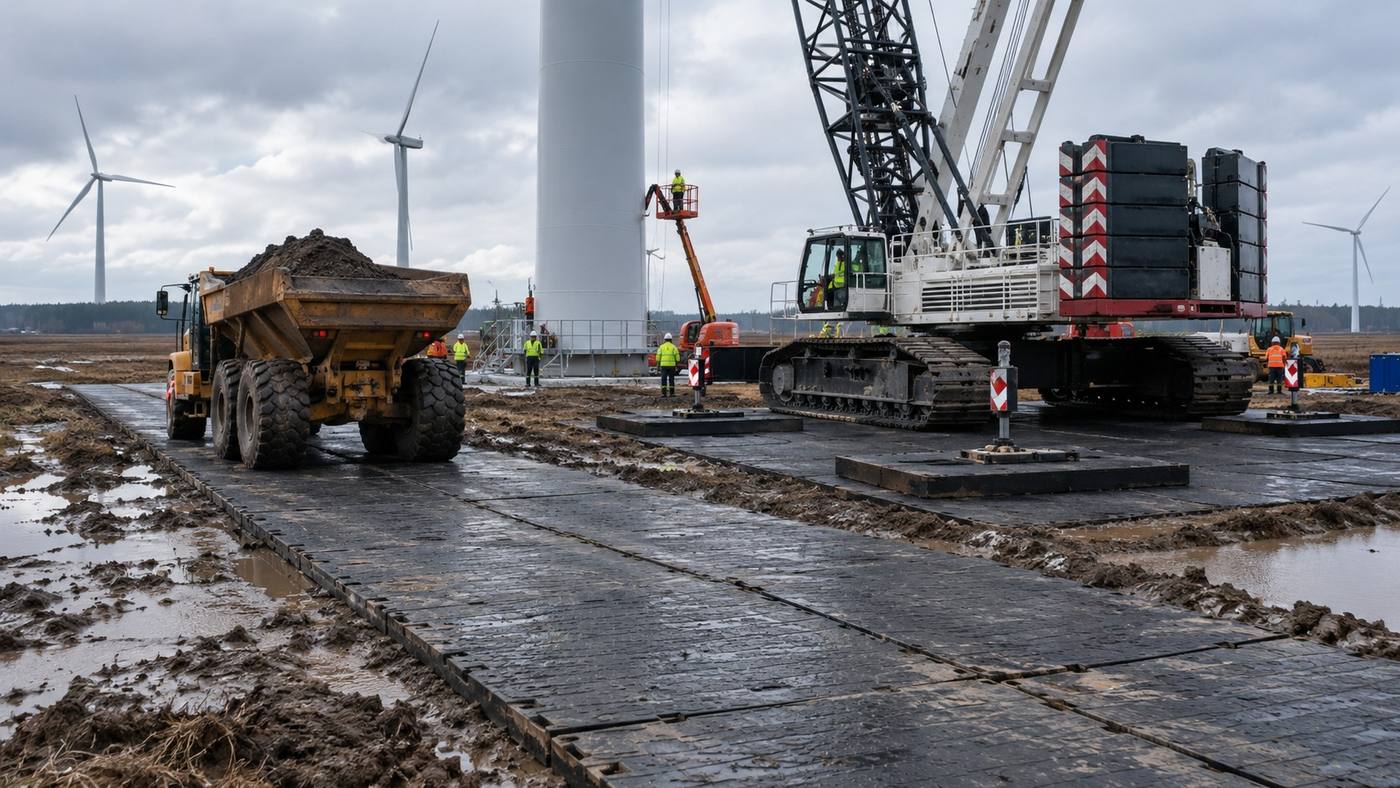
The shift of the board from the high swing construction corridor is mostly due to the accumulation of repeated cutting. Each start-up, brake-and-direction shift of a vehicle may be small, but hundreds of cycles can be followed by sutures, road deviations and sprawling. The process is accelerated by oversliding of the grass-roots surfaces, water accumulation, fine rolls and loose connections. Therefore, the transfer of control should not be made by just twisting the connector, but by managing both the grass-roots, panel and driving movements.
The preparation should be preceded by the preparation of a continuous plane and the removal of rollers, steel bars and mudslides under the plate. The plates are connected in the product design direction, and the long edges are coordinated with the main traffic direction, and the seams avoid, as far as possible, the flash brakes, turnovers and uphill steps. The HF area could be expanded to allow for sufficient space for the vehicle to modify and reduce the outer edge of tyre crushing. The type of connector, the direction of the installation and the method of securing shall be consistent, and the mixing of non-matched parts is liable to result in an imbalance of perforation.
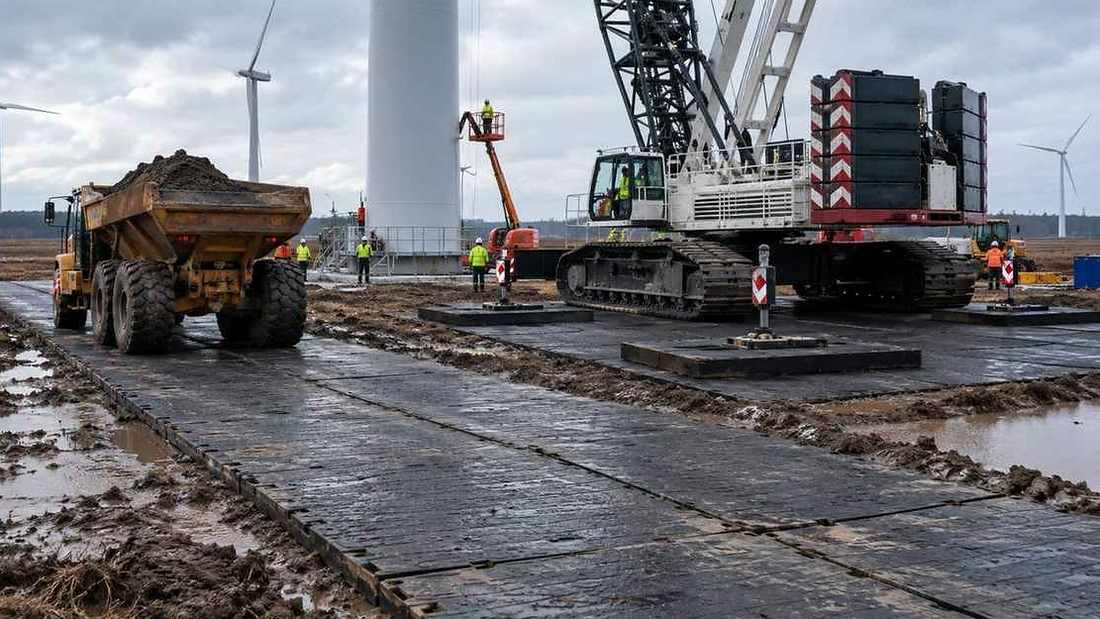
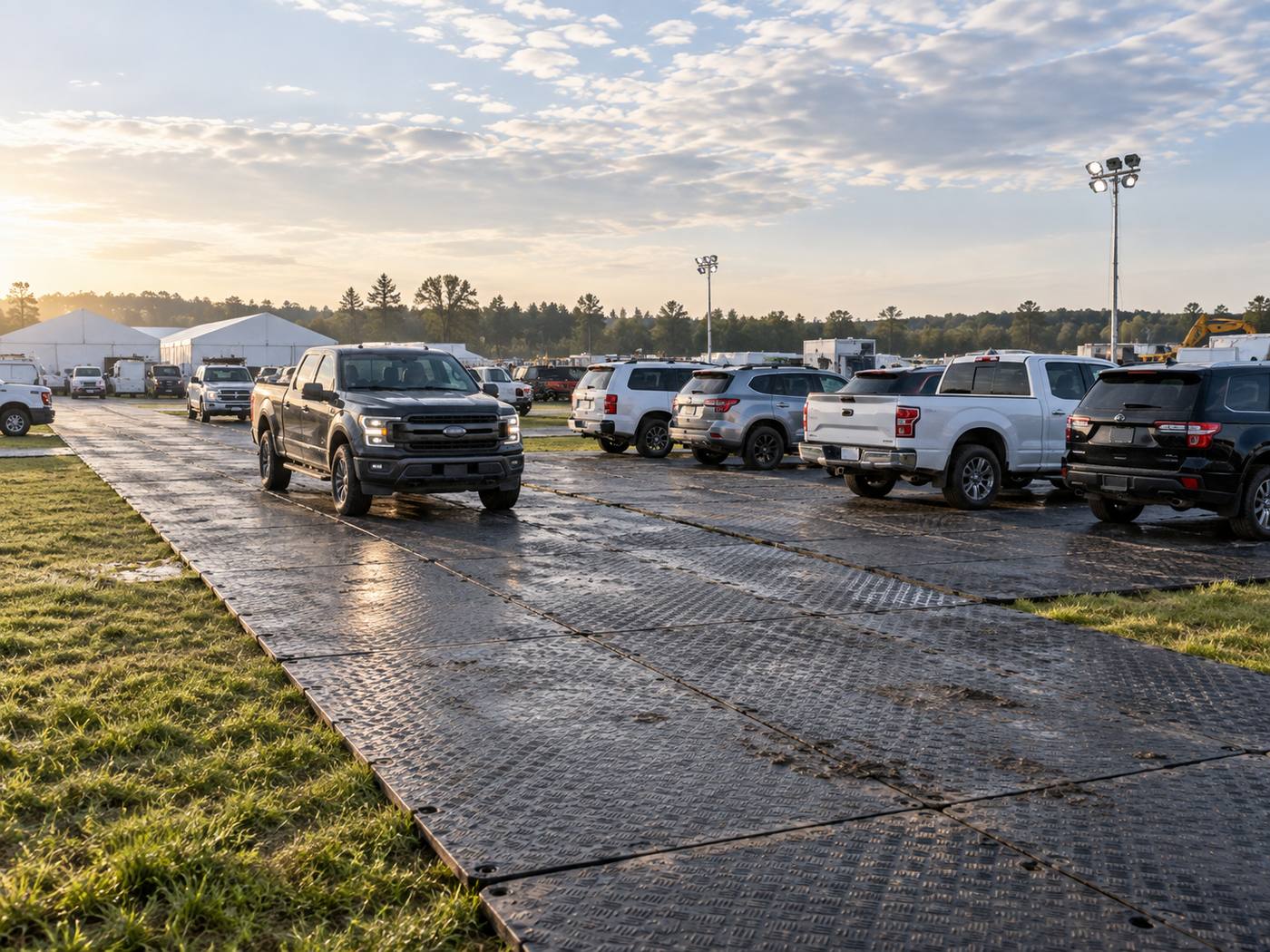
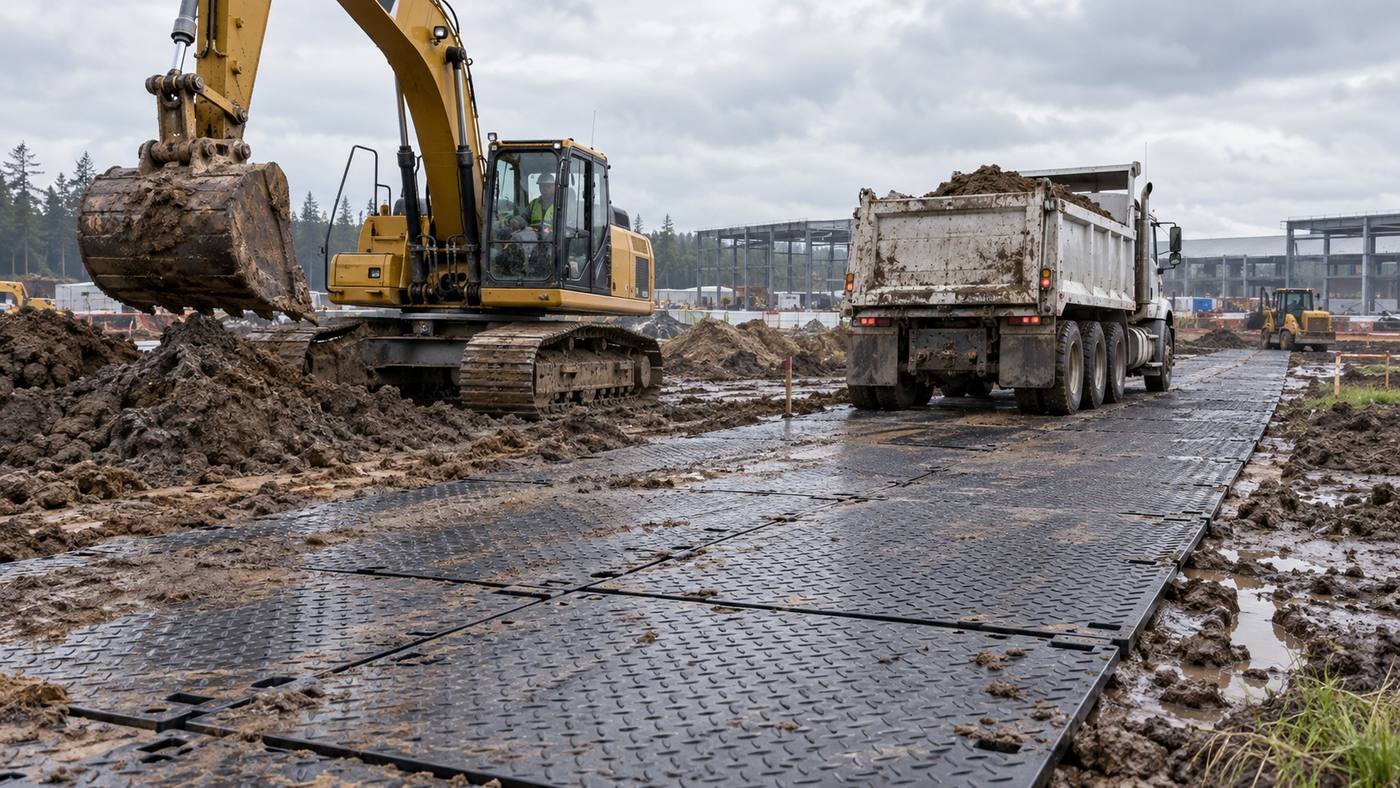
HDPE pavement board connected continuously in high-speed sub-construction lanes (materials for the Genesis Network)
There is a need to reduce unnecessary cutting during the operational phase. Sets a stable speed limit, distance and route, and prohibits the in situ movement of the plate, the brakes or the movement of the wheel. The waiting areas and loading and unloading points should be set up separately, as centralized parking and start-up of vehicles would form a local high cycle. The mud, sand and gravel on the plate need to be cleaned in a timely manner; the contaminants may be reduced by friction and may enter the seams, making it impossible for the plates to fit properly.
The offset should be quantified. Fixed benchmarks can be set on both sides of the road to record horizontal and vertical deviations, seam width and maintenance time by plate. If the shift is always concentrated on the same slope or bend, the transport organization or base should be adjusted instead of being pushed back to its original position. The inspection should also include the connection of the contours, the cleavages and the edges of the edges, as these signs indicate that damage to the plate has already begun.
The request should provide daily vehicle circulation, running shifts, maximum axle load, brake and turn positions, road slopes, grass-roots materials and planned life cycles. On this basis, the supplier may recommend options for high turnover thickness, texture and connectivity, with a back-up percentage. By stabilizing the grass-roots level, reducing cut-off and establishing place transfer records, temporary roads can be maintained in the long cycle of construction rather than through frequent stoppages.
Need for further evaluation of the actual project?
Applications, sizes, quantities, site photographs or drawings and delivery destinations are sent, on which we can identify more suitable products and processing programmes.