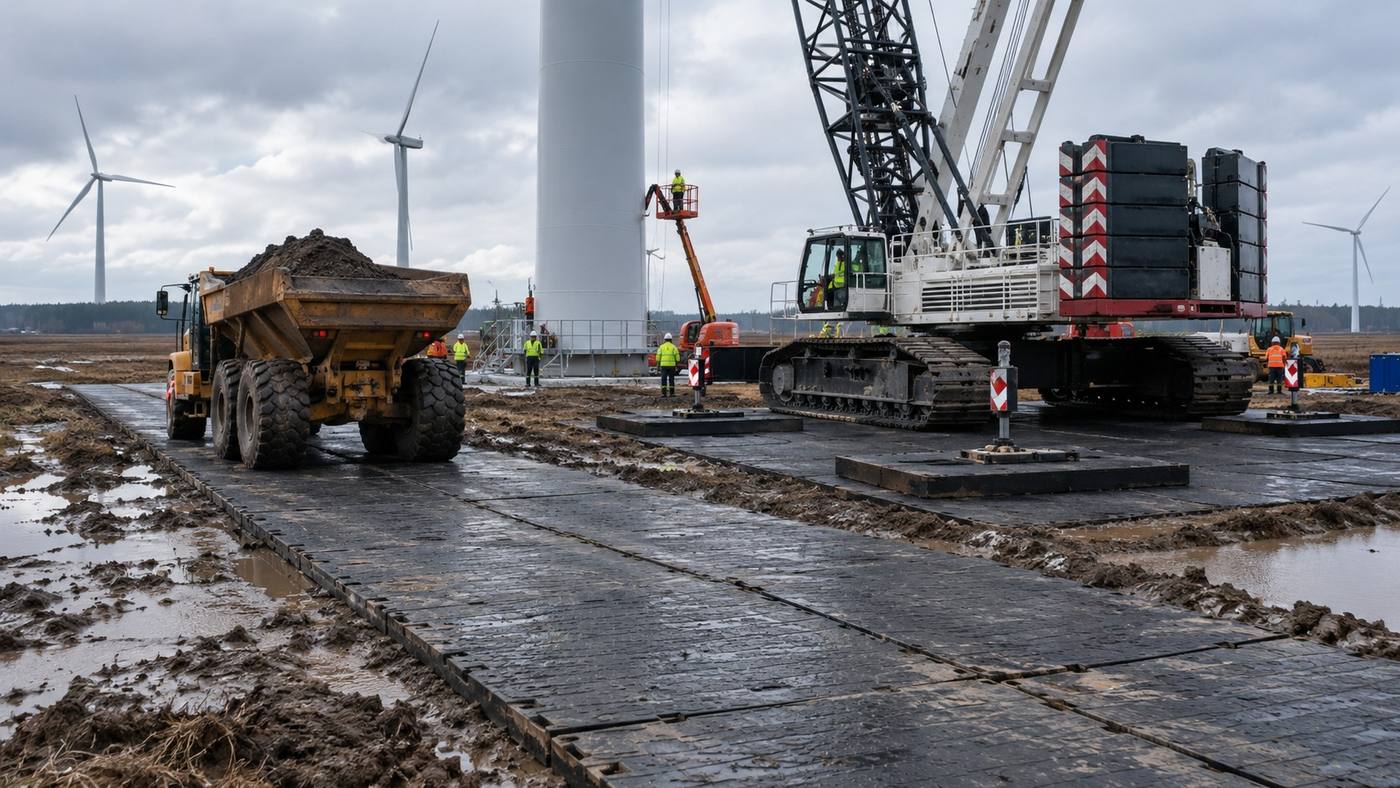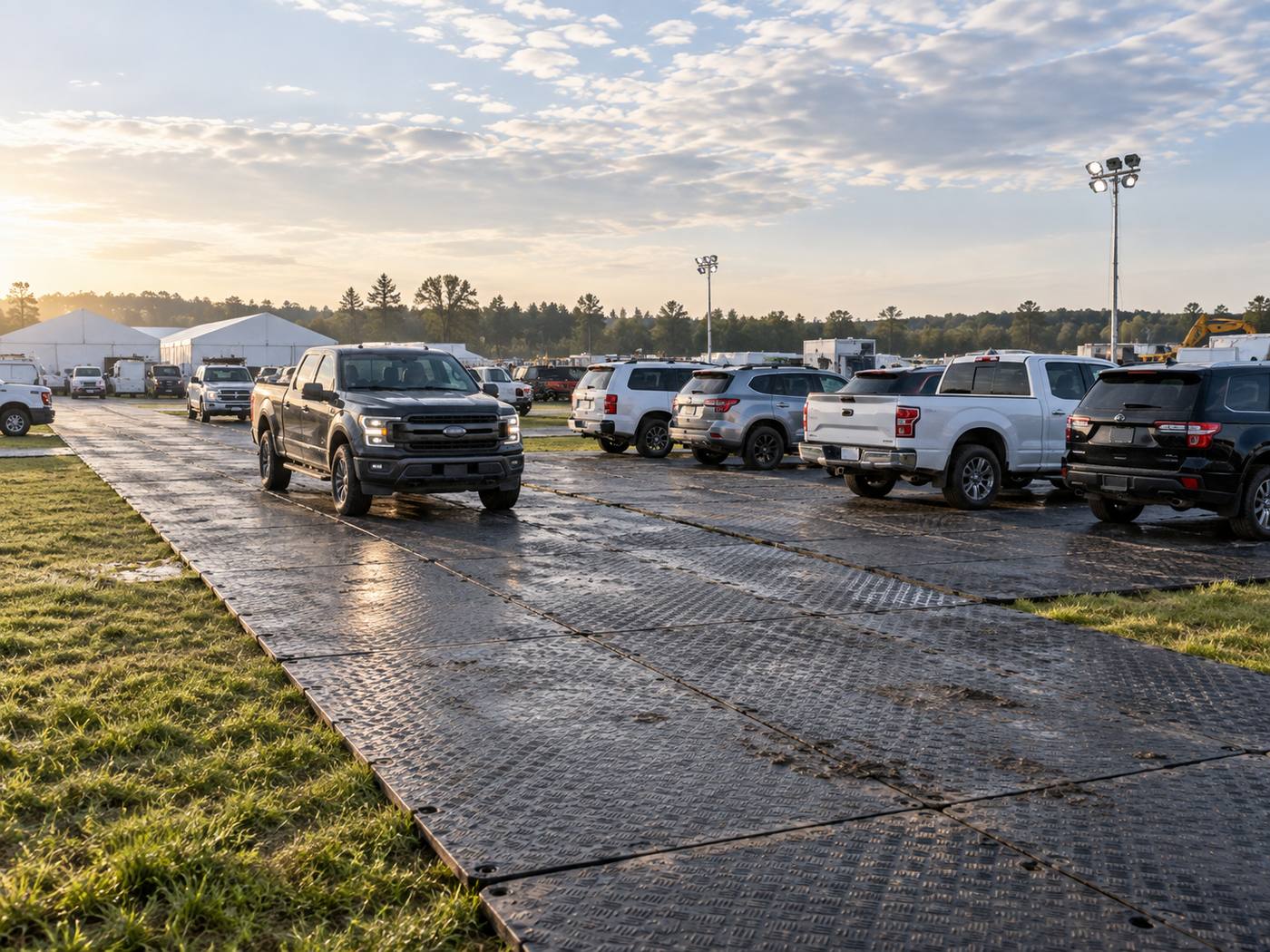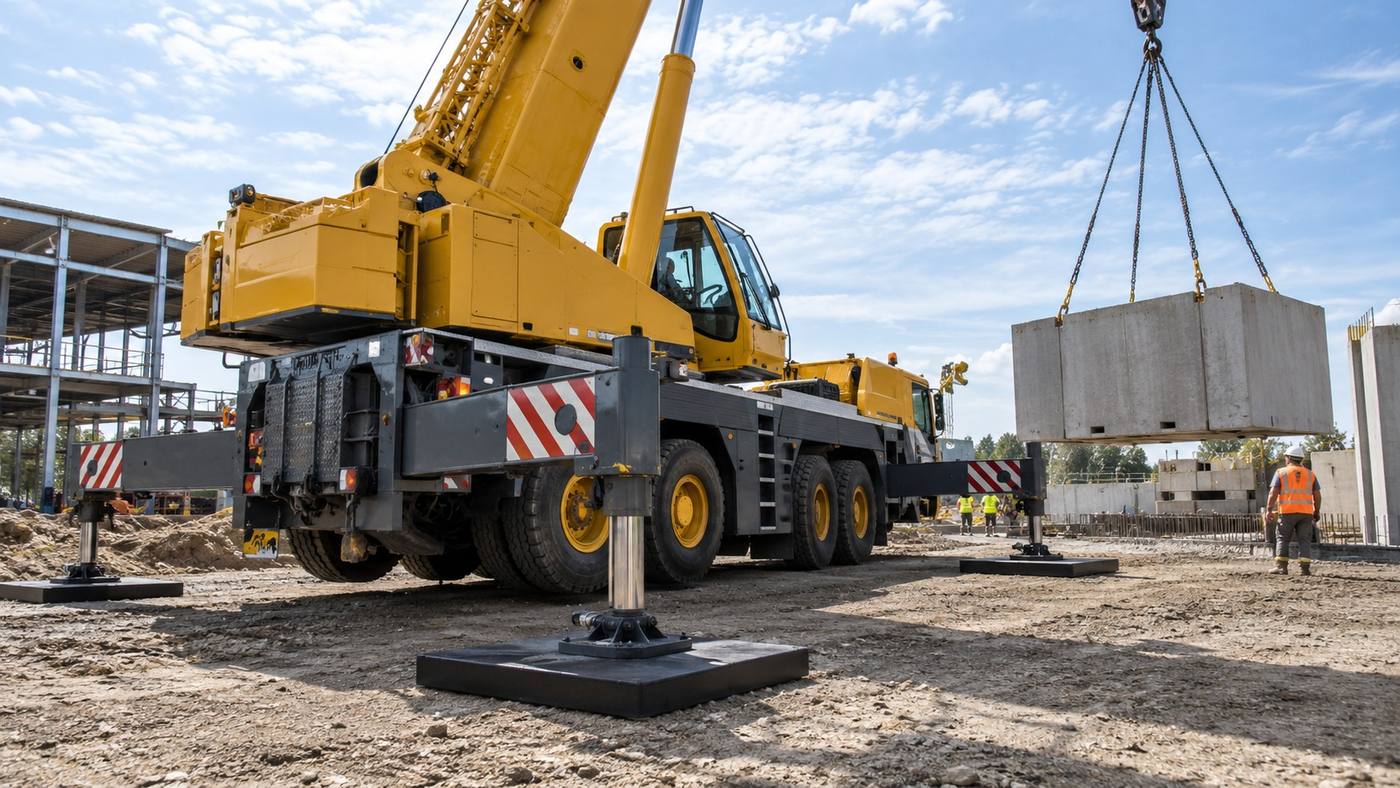
When choosing the thickness of the pavement, the total weight of the vehicle is only preliminary information, and more crucial is the maximum single axle or single-wheel load and the area of the tyre area. For vehicles of the same total weight, the number of axes, tire pressure and tyre sizes differ widely. The plates need to spread the wheel over a larger surface, and their scratches are affected by the breadth and continuity of the grass-roots. Therefore, thickness cannot be determined directly through a common “how many tons to how many mm” table.
The project shall first collect the full load of axle weight, the quantity and specification of tyres, the tyre pressure, the wheel range, the axis range and the most adverse deviation. Resize and retrofit the tracks if they are available. It then investigates ground type, water-bearing rate, mollusc depth, slope and drainage, distinguishing between crushed rock, hard soil, backfilling, wet clay and pine sand. The hard grass-roots slabs are primarily responsible for surface protection and evaporation on wheels, while the soft grass-roots may have cross-blank bends that are more sensitive to thickness and base handling.
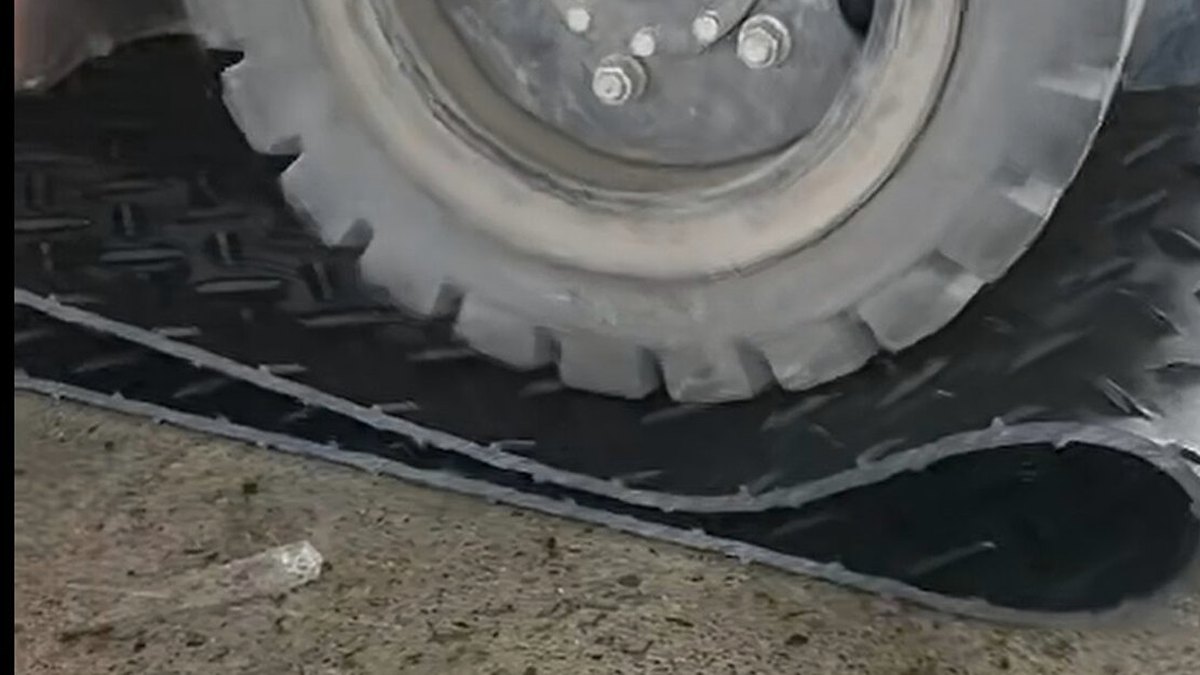
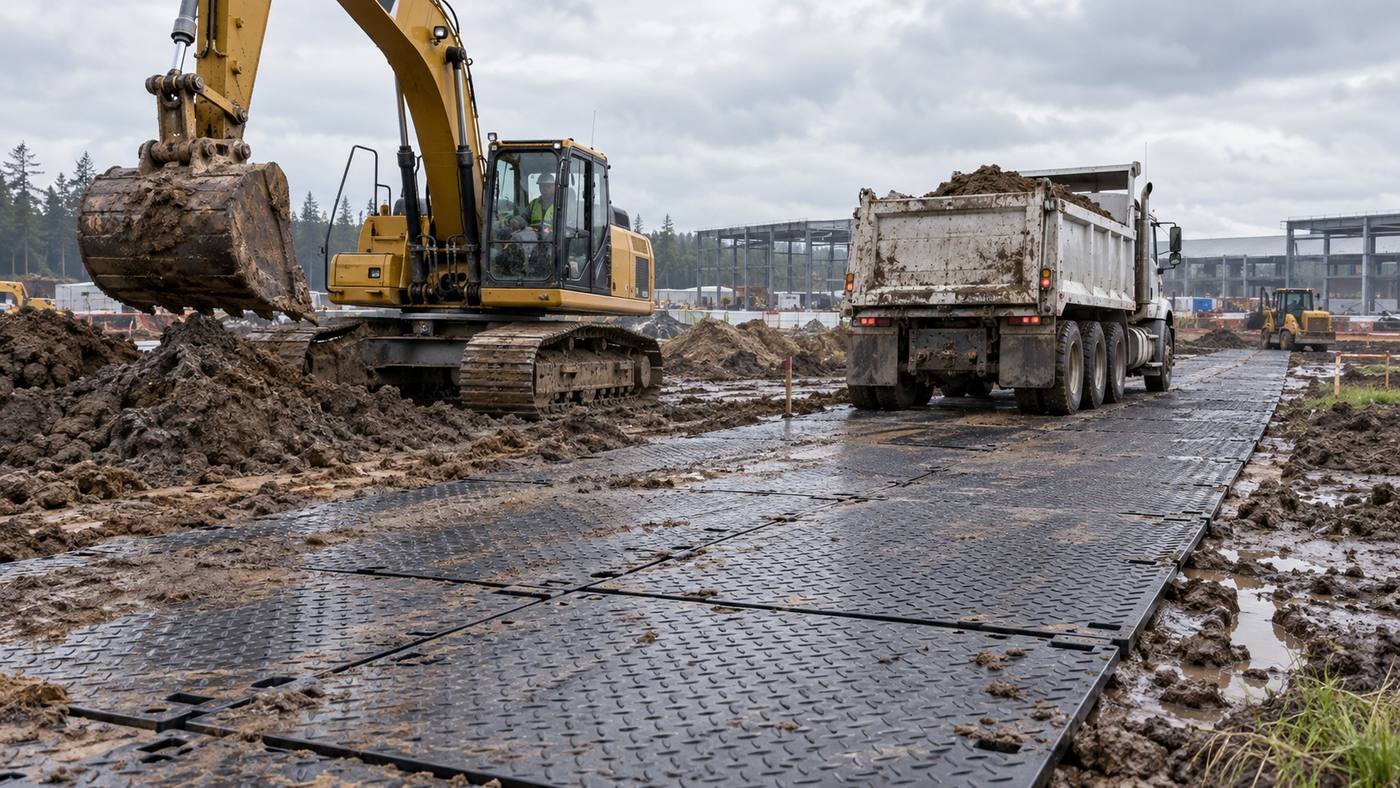
Contact and pressure status of heavy tyres on the HDPE pavement (initiative material for the plastic network).
The plate itself compares raw material, bending performance, shock, temperature, size and surface structure. Different formulations or production quality of the same thickness may not necessarily be the same for actual scalability and durability. Tattoo heights and connections affect pull and integrity, but are not a substitute for sufficient plate strength. The selection should use the supplier ' s data under clearly defined test conditions and check the proximity of the test support to the project site.
Important or border conditions can be tested in the least representative segment, from light to full-car-by-class, to record plate scratches, permanent deformations, seam transfer and ground-based deposition. If the problem arises from the soft spot under the plate, the simple upgrade from 20 mm to a thicker specification may still fail and the grass-roots level should be improved first. Conversely, an overweight would increase the costs of procurement, transportation and manual removal if the ground were solid and the number of vehicles was limited.
The request for quotations includes, at a minimum, maximum axle loads, the size of tyres, vehicle velocity and rotation, daily vehicle length, road width, ground photographs, rainy season and life cycle. The supplier can provide multiple thickness programmes and the number of individual weights, connectors and cabinets, which are ultimately confirmed by the project technicians in combination with the foundation and security residuals. The area of the axle charge and the area of the site determines the local function, and the basis and frequency of the cycle determines the long-term sustainability of this function.
Need for further evaluation of the actual project?
Applications, sizes, quantities, site photographs or drawings and delivery destinations are sent, on which we can identify more suitable products and processing programmes.