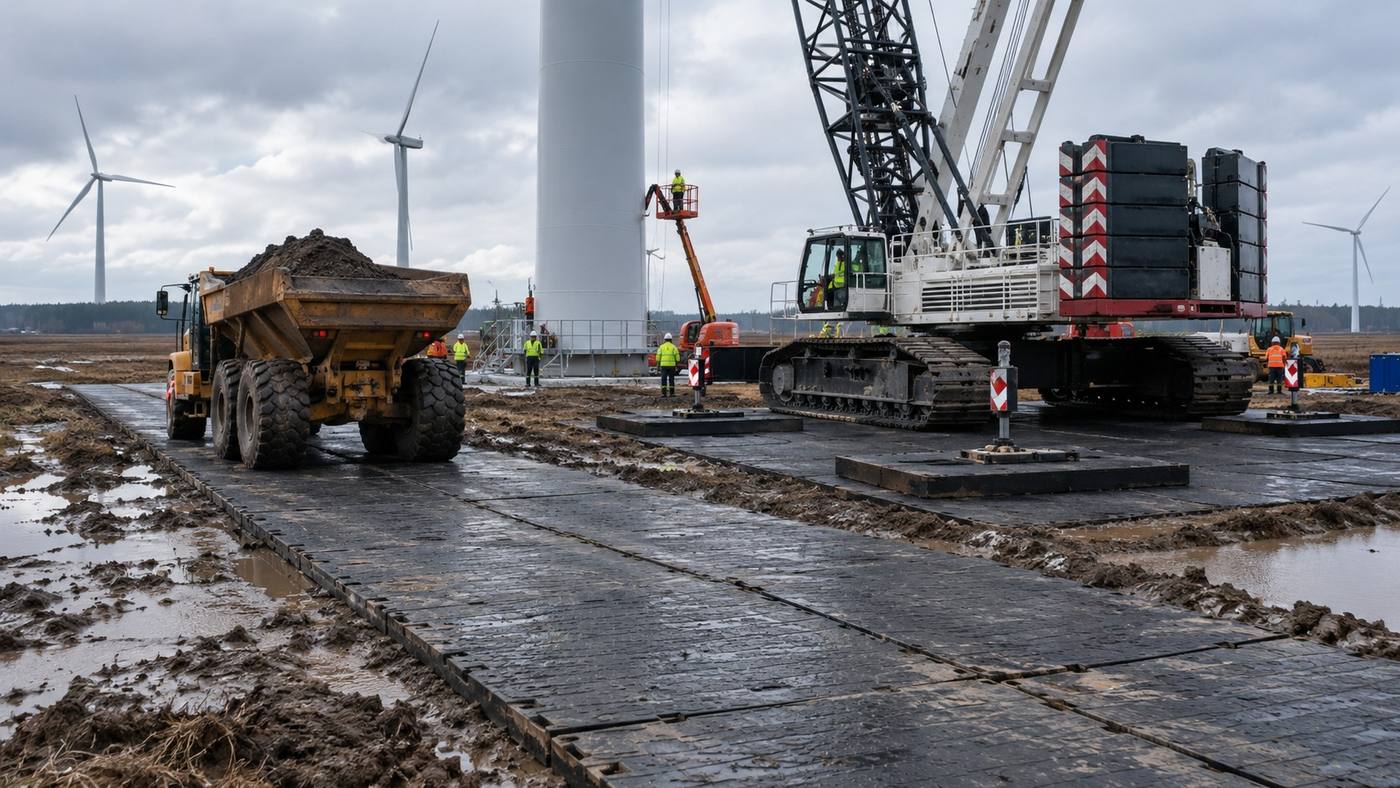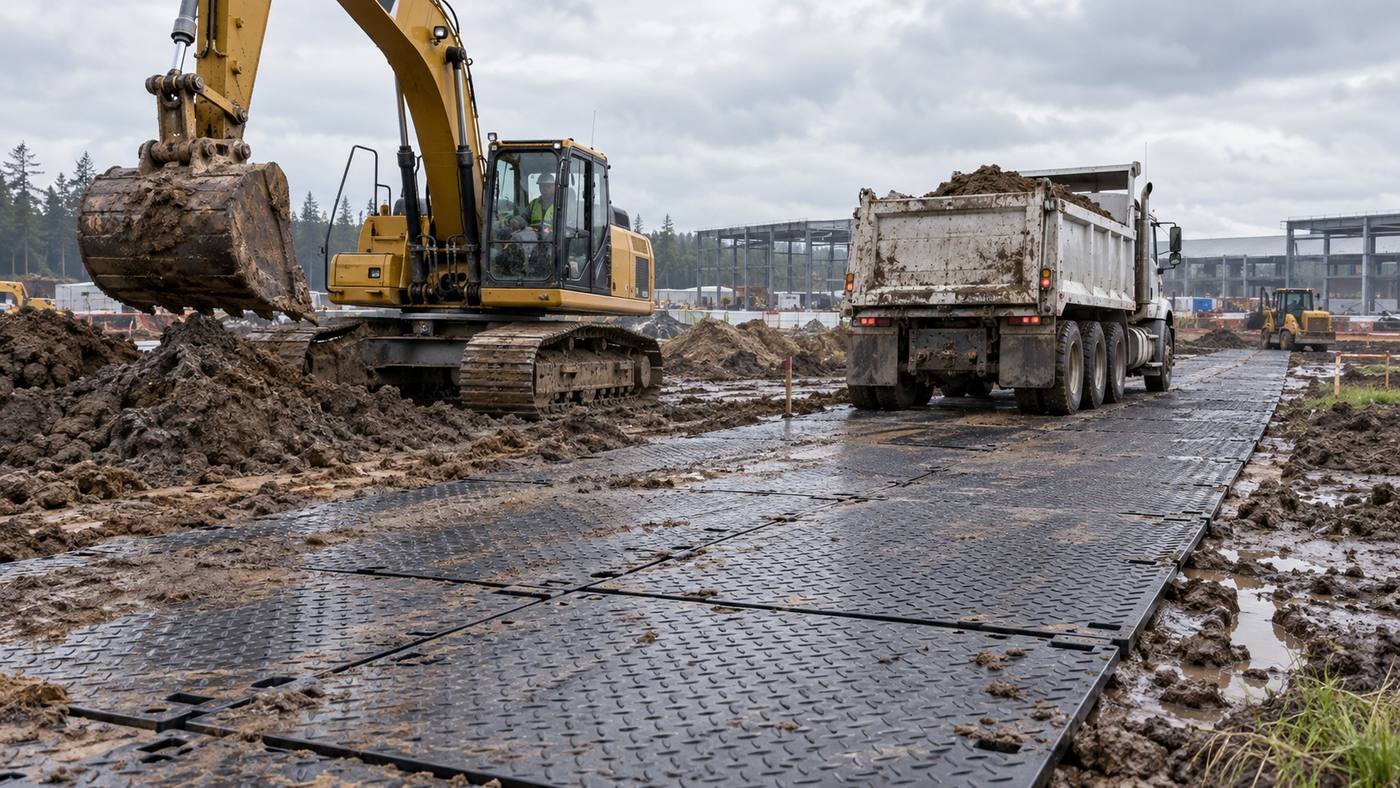
The basic idea for the size of the leg mattress is to spread the retrogressive force of the leg to a sufficiently large surface area. Preliminary estimates of the maximum design reversibility of the legs can be divided by the field-approved permitted ground-based load pressure to obtain the required effective support area. This calculation appears to be simple, but neither input assumes that the retroactivity of the legs should be derived from data from the equipment manufacturer, the suspension software or the approved suspension programme, taking into account the length, range, direction, weight and weight of the arm, and that the ground-based allowed pressure should be determined by the person in a position to do so on the basis of the actual earth layer, backfill, underground facility and weather.
For example, at different angles of rotation, the same cranes suffered unequally from each leg and could not be divided by an average of four by the overall weight of the machine. The calculated area is only the starting point, with the actual leg cushion taking into account the available shape, foot size of the leg, balance of the edge of the pad, material strength, thickness and bending. If the mat is too thin, even if the surface area is sufficient, it may be clearly bent on the soft ground, leading to concentration of pressure, and if the foot of the leg is close to the edge, the effective area will be reduced.
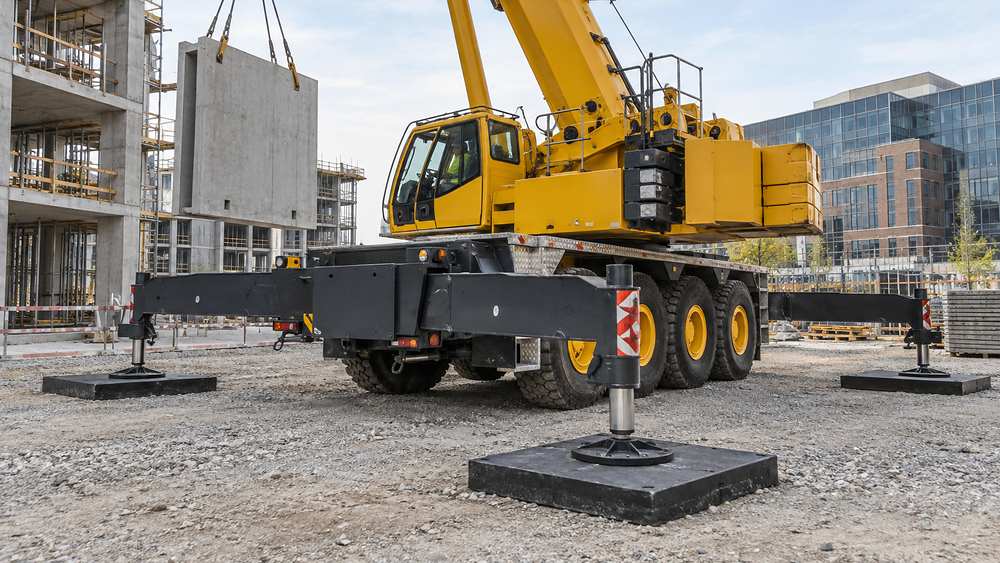
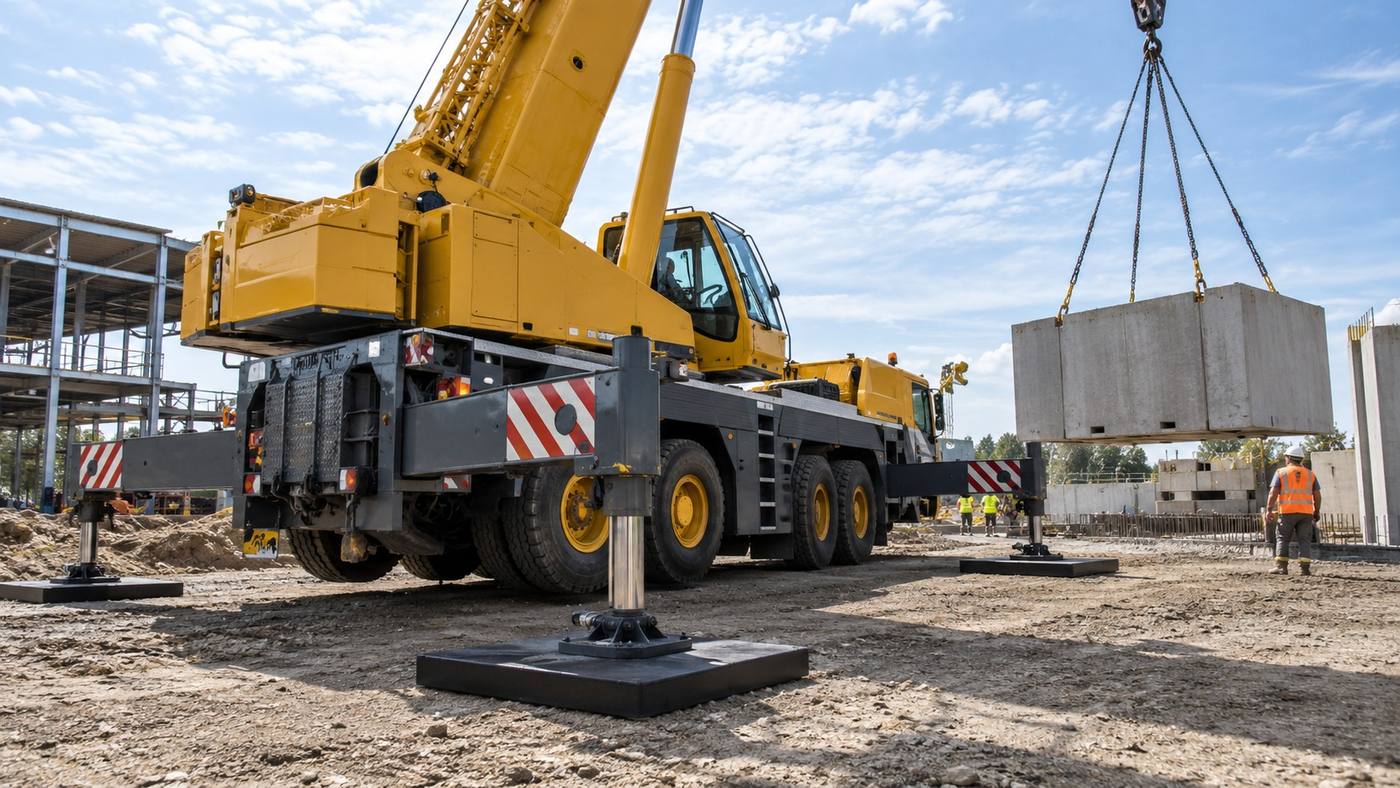
Mobile cranes mid-legged on large areas of polymer leg mats (new construction scene)
The leg cushion shall be placed on a flat, continuous, well-drained surface, and the foot shall be kept in the middle as far as possible. A loose brick, short-wood or non-matched multi-layered tablet should not be found at will, as sliding and local support change stress. Safe distances and ground-based impacts need to be accounted for separately when approaching base pits, trenches, well rooms or underground pipelines, and extended pads do not automatically eliminate the risk of border slope instability or underground structural damage.
Check the cleavages, permanent bends, surface contamination and handle state of the handle before the suspension to confirm that the surroundings were not empty. The position of the sediment, tilt and legs is observed after the test load or start of the operation and is continuously monitored by the suspension programme during the operation. After rainfall, freezing, repositioning of equipment or re-hatting changes, the reaction of the ground and legs should be reconfirmed. Any apparent sinking should be disposed of in accordance with the on-site procedures and should not be entered into the mat at will in a loading state.
The request for quotation shall provide the type of equipment, maximum retroactivity of the leg and its source, leg size, target base allowed pressure, working temperature, handling mode and required authentication or test information. On this basis, the supplier may recommend to the UHMWPE or other polymer leg pads the long width, thickness, weight and handle. The final size must be consistent with the equipment specifications, the suspension programme and the on-site ground-based assessment, and the generic tonnage table cannot be considered a project approval.
Need for further evaluation of the actual project?
Applications, sizes, quantities, site photographs or drawings and delivery destinations are sent, on which we can identify more suitable products and processing programmes.