The easiest mistake after the rain was to throw the pavement board into the mud as soon as the vehicle was trapped. While this would temporarily cover the tracks, there was no continuity of support under the plate, and the first heavy vehicle could be sunk, sewn off and muddled out of the hole after its adoption. The right goal of a rapid resumption of access is not to cover up the mud, but to create a drainable, visible and sustainable stress band, before HDPE pavements spread the wheel to a larger area. Project leaders should first close the softest sections, maintain a secure personnel corridor and confirm the location of the underground pipelines, trenches and backfilling areas.
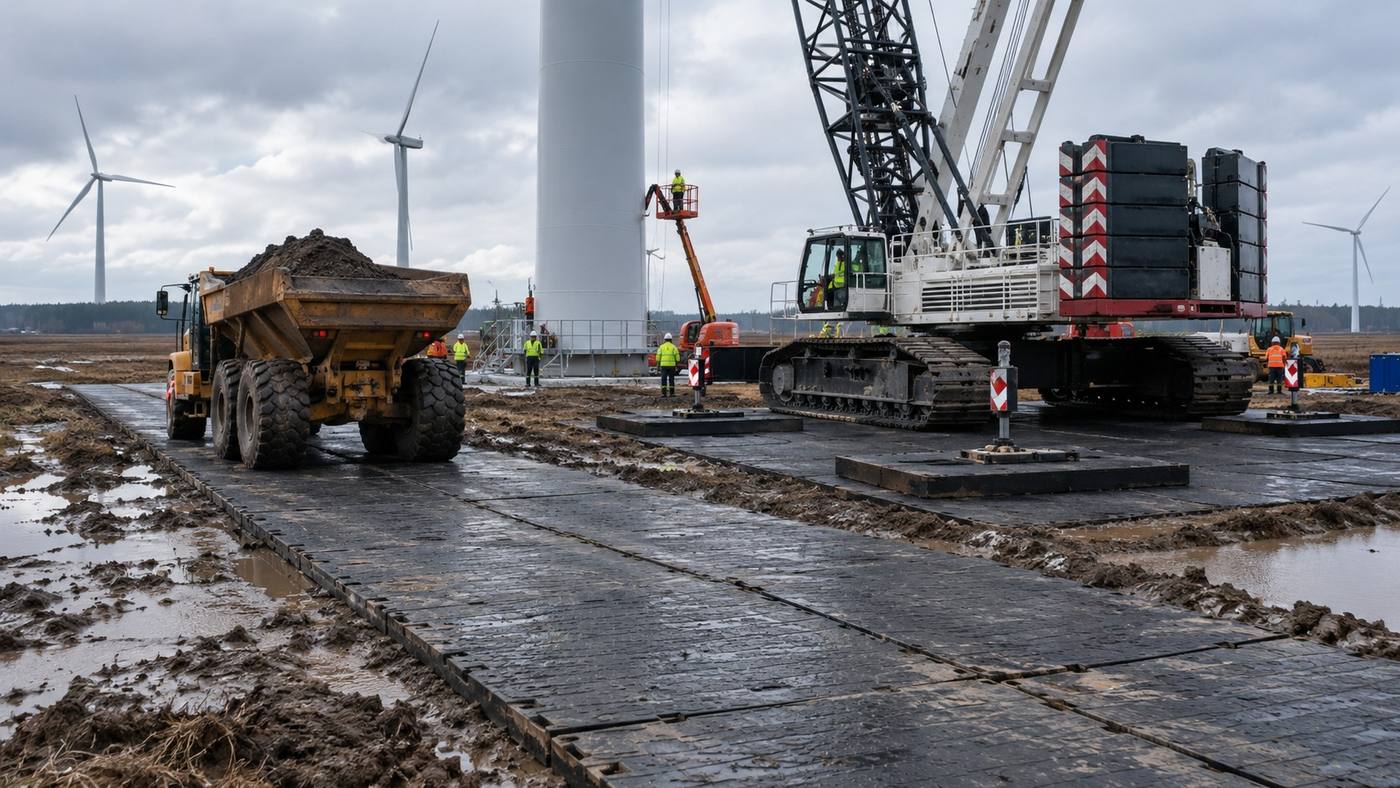
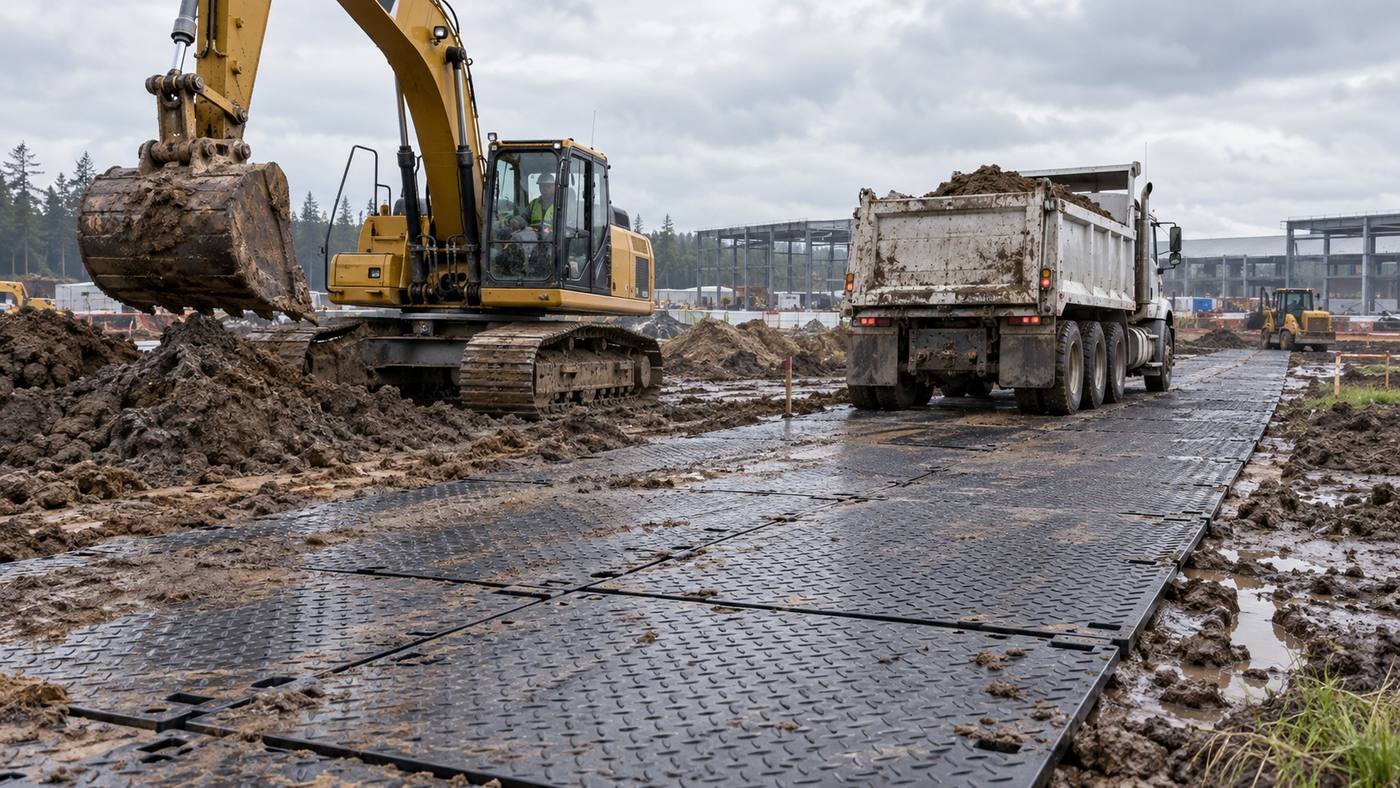
On-site treatment usually begins with interception and drainage. When surfaces are cleared of thin mud, grade-grade gravel or other materials approved by project engineers can be used to fill the deep-dwelling and allow for a gradual transition of high-level differentials at the grass-roots level; when the mosaic is deeper, the earth covers, grids or thicker floors are also assessed. The sheeting should move from a solid area to a muddy area and the transporter should not be allowed to run over the untreated entrance. The long edges of the plate are generally set in the direction of the vehicle, sutures are staggered and a matching connection is used, and a greater range of protection should be left in the bends, slopes, discharge points and brake areas.
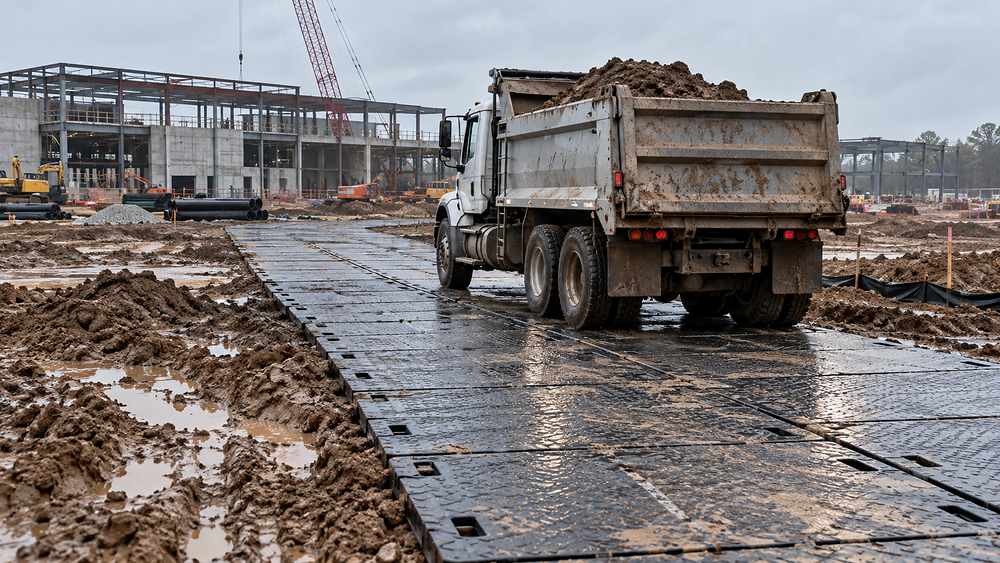
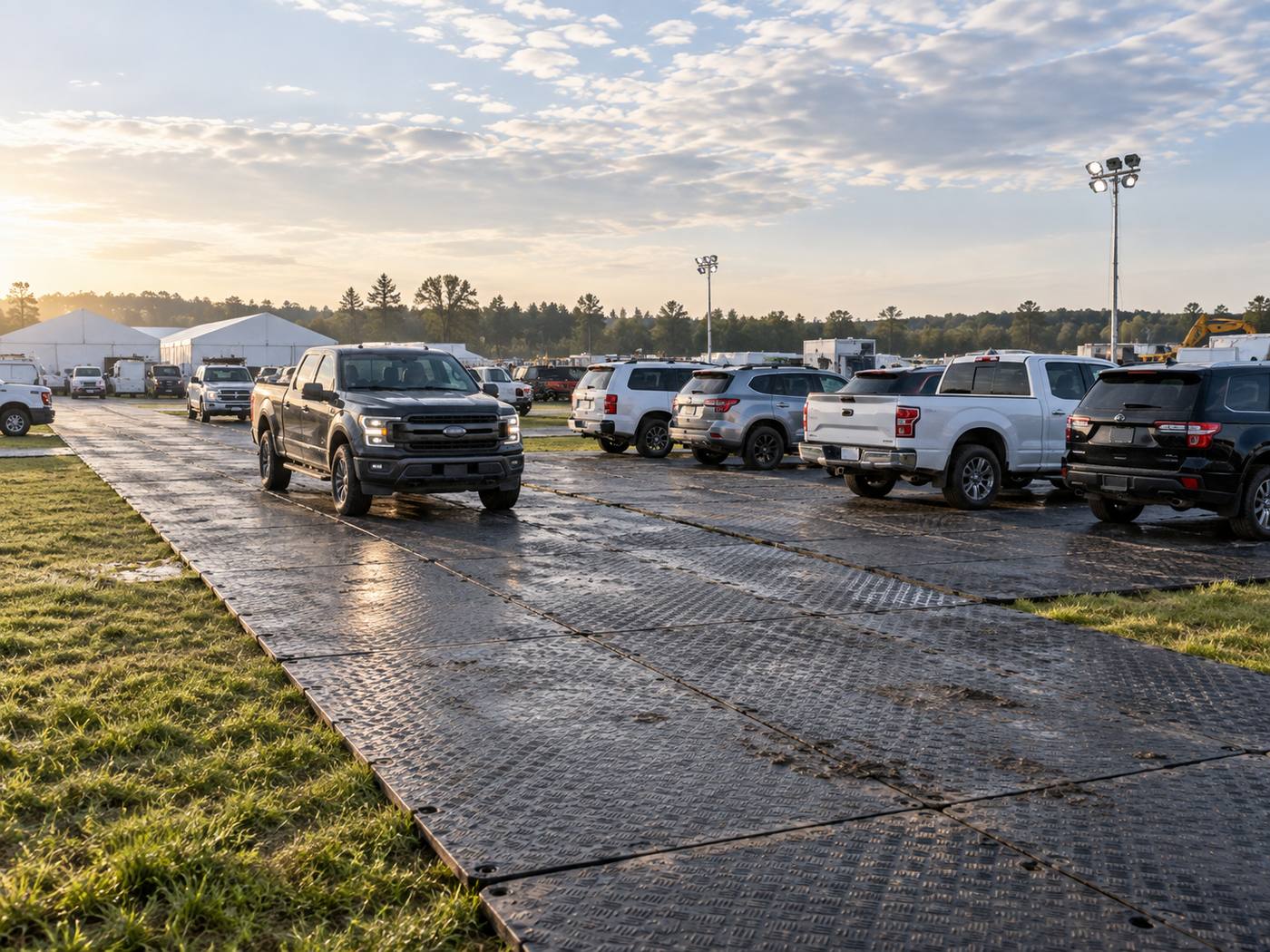
Continuous pavement of roadways (new construction site map) on site after rain
The release should be preceded by a low-speed test of a lighter vehicle to observe whether the plate is consistent, whether the connection hole is pulled, whether the edge is pierced and whether the floor is pumped with mud. This is followed by an increase in vehicle weight and number of traffic. The slag vehicles, concrete mixers, and tracked equipment have a different voltage and turn-on effect, and it cannot be assumed that all the equipment is suitable because of the smooth passage of a vehicle. When rainwater continues to enter the route, it should be made shorter and the sheet sticky should be cleared in time to avoid smoothing down.
Once the temporary roads are operational, management is more important than once. The entrance should have speed limits and one-way rules that prohibit brakes, in situ movement and two heavy vehicles from meeting in vulnerable areas. The daily recording of sedimentation points, plate transfer and maintenance positions makes it possible to determine whether the problem arises from drainage, the grass-roots level or the local load. If the same position falls repeatedly, movement should be suspended and the ground level reinforced, instead of being stacked on more; multiple layers of random stacking would create slides and mask the continued deformation of the foundations.
The request for quotations should provide the length and width of the road, the full load and axle load of the most heavy vehicle, the size of the tyre, the expected daily number of vehicles, the duration of the rainy season, and the overall and peri-view photographs of the site. The supplier may recommend the thickness of the sheet, the texture, the mode of connection, the quantity laid and the reserve ratio. The pavement boards are part of the interim road system, and the final programme will still need to be confirmed in combination with ground-based carrying, drainage and on-site safety requirements. As long as water and grass-roots levels are treated and then phased out in accordance with the condition of the vehicle, mud sites usually have a more stable impact than repeated landfill repairs.
Need for further evaluation of the actual project?
Applications, sizes, quantities, site photographs or drawings and delivery destinations are sent, on which we can identify more suitable products and processing programmes.