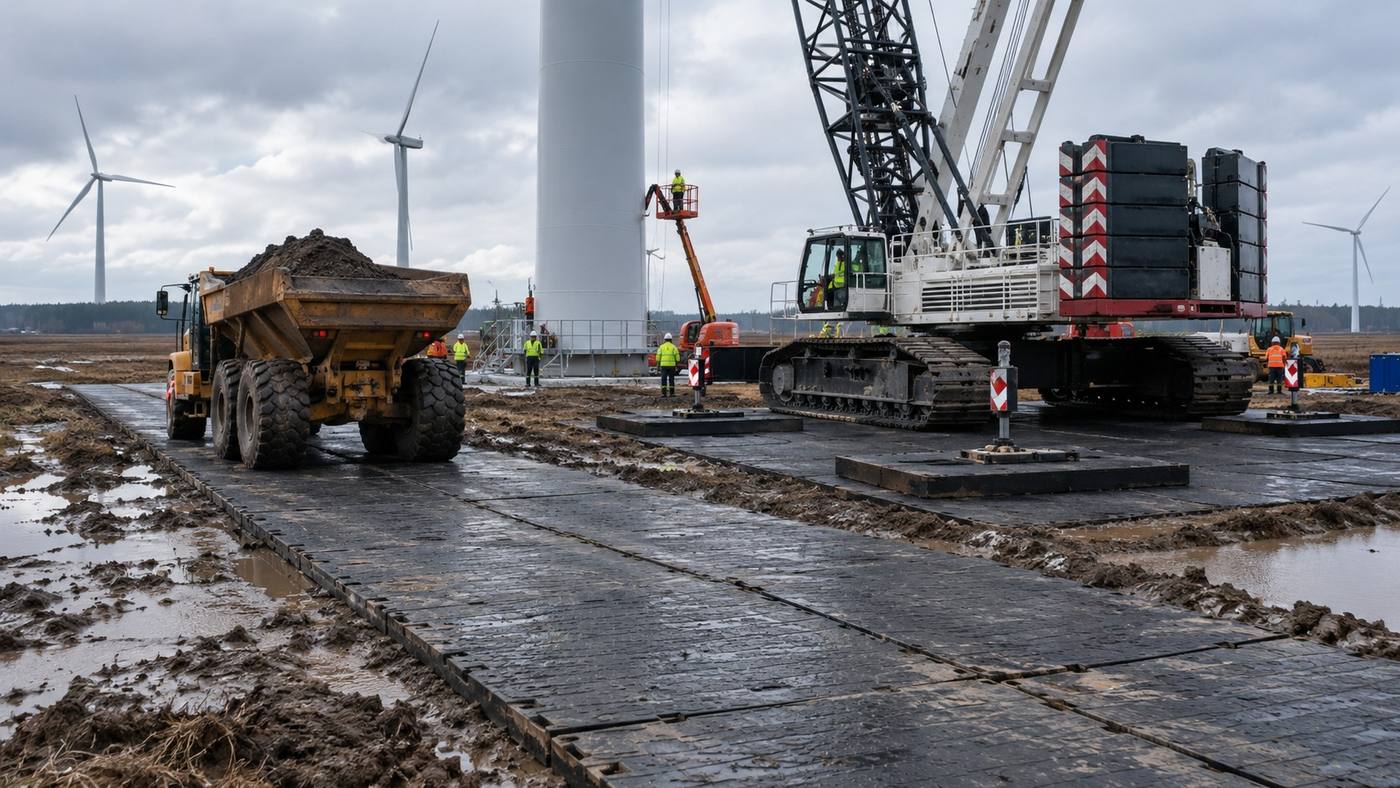
Curves and ramps are the most vulnerable to displacement and instability on temporary roads for heavy vehicles. The main test bearing is the low speed of the straight line, where the vehicle produces a side shearing in the bend, and where the ramp starts and starts and starts, and pulls up the slope. When the two conditions are superimposed, the plate may move slowly outside the bend or below the slope, even if the line segment is performing well. Therefore, the maximum slope, bend radius, vehicle axle load, driving form and direction of operation are separately designed.
The route selection should give priority to lowering the slopes and magnifying the turn radius to avoid a rapid turn or parking of vehicles in the slopes. The curve is paved to cover the internal and external parts of the wheel, and not to add a small amount to the body width. The tops of the slope and the vertical curves of the foot of the slope shall be smooth and shall prevent an instant transfer of chassis and axle charge. There is a need for reliable drainage at the grass-roots level, where water flows beneath the plate, and where the edge is close to the slope or drain, the risk of marginal loads and vehicle deviation is assessed.
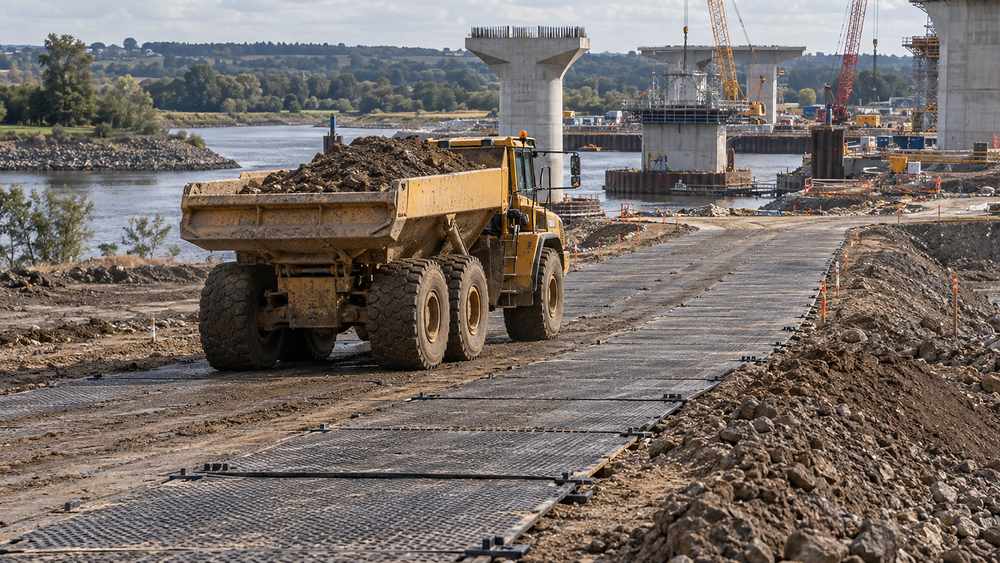
Temporary paved roads with visible slopes and shifts in demand (new construction site mapping)
Threads and connectors can only function when system conditions are appropriate. Gravity cannot be guaranteed when the slide-resistant road is covered with wet clay, oil or ice; the connector should not be used as an anchor to resist all downsides. When necessary, sub-platforms, broad-banded areas, designed end-end constraints or improvements at the grass-roots level may be used, provided that specific measures are identified by project engineers. The use of steel bars and wooden stakes, which can be fixed through the plate, may cause damage to holes, underground installations or vehicle tyres.
Operating rules should limit speed, distance and operational actions. A full-load vehicle shall pass at the required speed in the prescribed direction and shall be prohibited from overloading, brakes and mid-hills. After the rain or after cleaning, the frictions and drainage are re-examined and the tyres are found to be empty, the slabs move down the slope, the seams open or they sink on the outside side of the bend. It can be set at the edge to quantify the shift per shift, rather than to judge whether it is serious or not, without prejudice to the prevailing benchmark mark.
Procurement communication is required to provide a horizontal route, a minimum curve radius, maximum slope, vehicle load axle load, tyre type and projected number. Thus, the supplier recommends thickness, texture, pavement direction and connection programmes, while the project party is responsible for the identification of the foundation, slope, drainage and traffic control. The security of the curved slope sections comes from a combination of route, grass-roots, plate and driving, and cannot be addressed by the choice of “more smoother” products alone.
Need for further evaluation of the actual project?
Applications, sizes, quantities, site photographs or drawings and delivery destinations are sent, on which we can identify more suitable products and processing programmes.