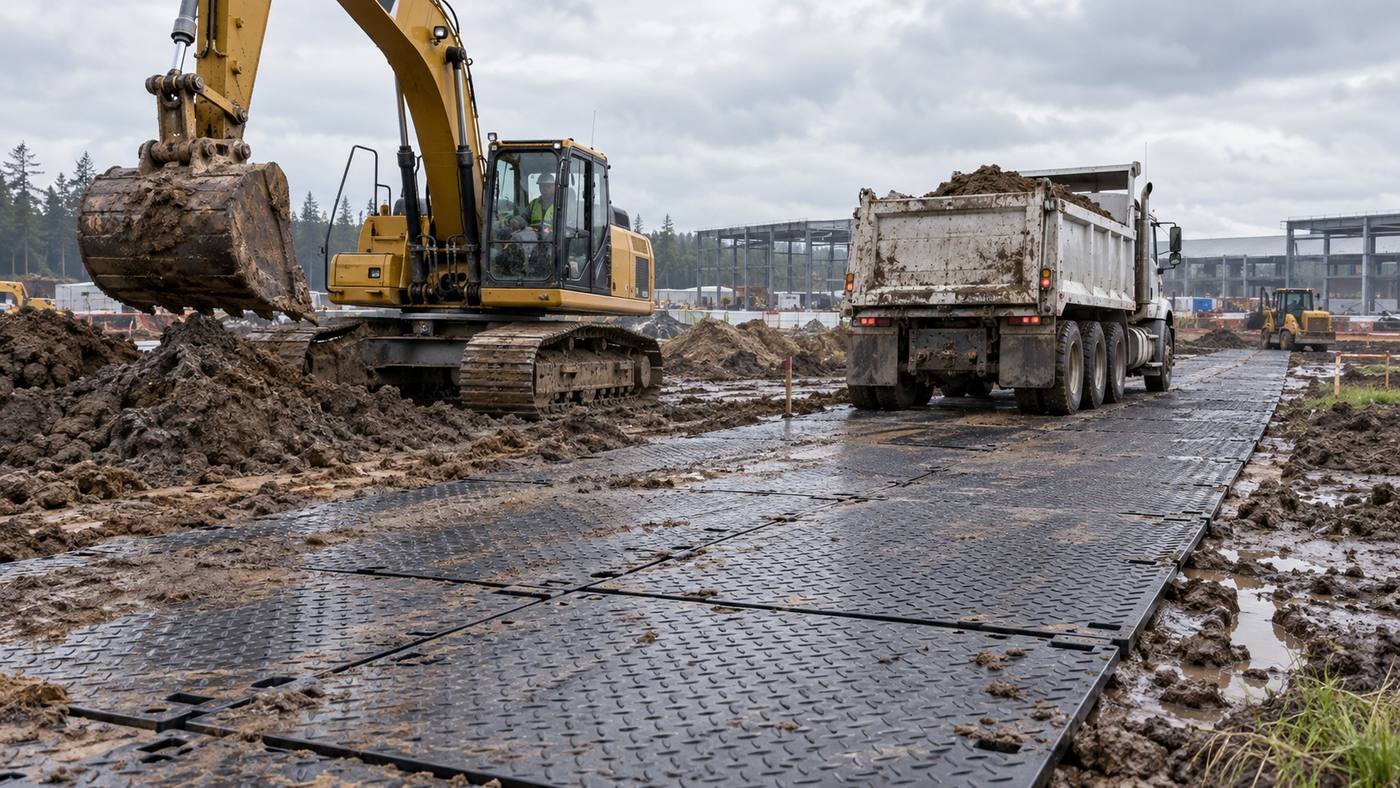
Track excavators can travel through a certified pavement system, but the “large area of the belt” cannot be understood to mean that there will be no damage to the plate. The dents, edges of the tarpaulin and the pebbles of the steel belts can produce local pressure marks or cuttings, and in-situ turns large lateral cuts to the plate and connect. The work weight of the equipment, the bandwidth, the length of the site, the shape of the tooth, the route, the mode of movement and the materials and thickness of the sheet shall be checked for application.
Pre-use removal of tripping stones, steel bars and hard building garbage, and check for non-exposed solids or highs. The basics of the road must be smooth and continuous, because when the belt passes through the gap, the pressure is concentrated on a small number of teeth and plates. The width should be laid to cover the outer edge of the belt and the driving deviation and to minimize the direction of the belt to the bite plate. The supplier may recommend special specifications, additional layers of protection or a ban on direct passage for steel tracked, stylish accessories or overweight equipment.
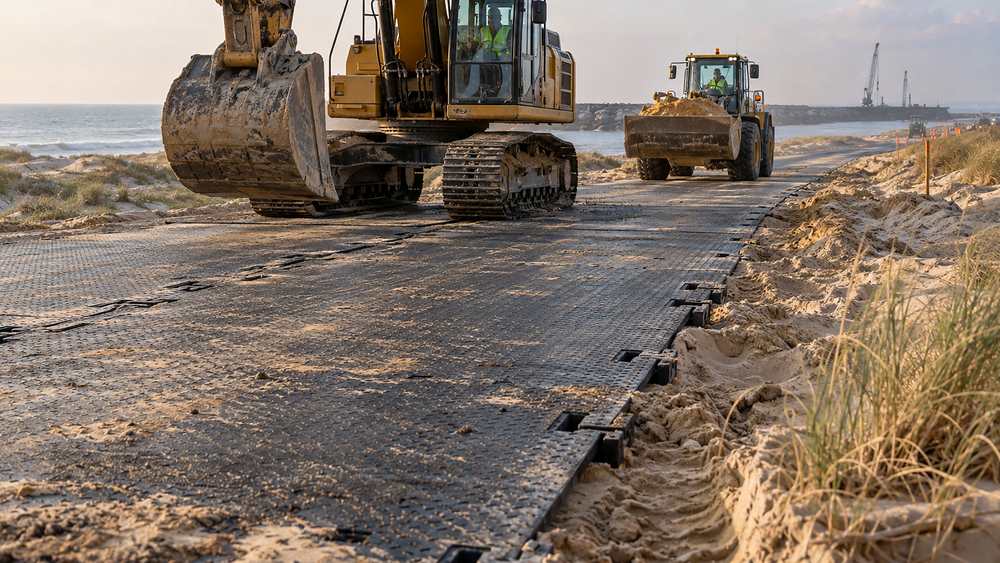
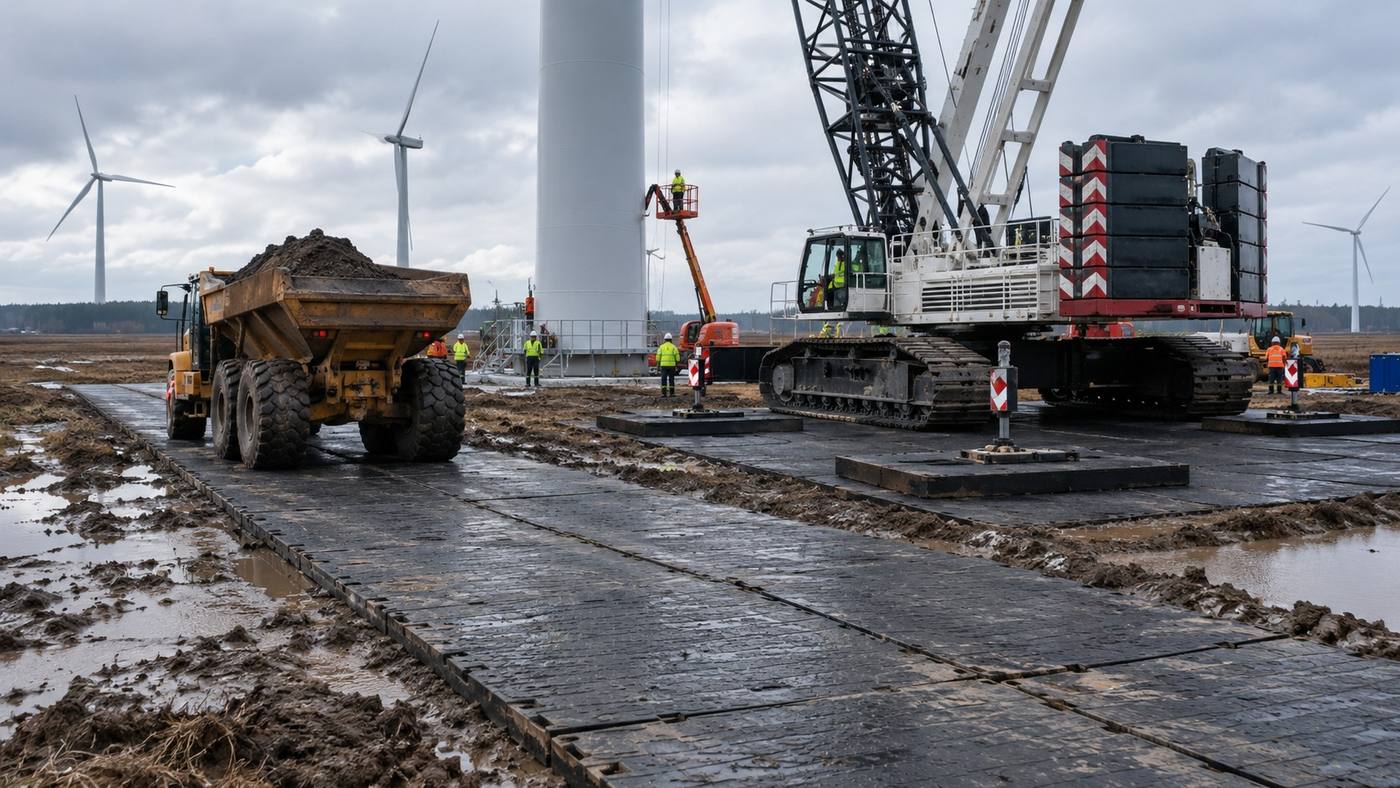
Tracker equipment and engineering vehicles were used for the continuous pavement of the construction corridor (new construction site map)
Operation is more critical than carrying in straight lines. It is advisable to keep the equipment moving at a slow and slow pace and to adjust the direction as far as possible with a large radius to avoid in situ rotation at the same point. Forklifts should be received to a safe transport position and must not be supported or towed by shovels; the transition slopes on the upper-down road should be smoothed to prevent the end of the belt from hitting the edge of the board. If the project consists of frequent earth loading and rotation, the operating platform should be designed separately from a simple tunnel, and a narrow road cannot be allowed to carry out driving and excavation at the same time.
The first use shall be controlled and tested in a representative segment. The depth of the wound, the shift of the seams, the stretching of the hole, the rise of the edges and the deposition of the grass-roots level are taken from each line and turn back. The groundbranding does not necessarily affect use, but when a crack, mouth or permanent bend occurs, the relevant plate should be stopped and judged by the supplier or project personnel. It is also important to clean up the silt on the plate, and the repeated crushing of the pebble between the belt and the plate accelerates wear and tear.
The request for quotations provides the excavator type, work weight, tracked material and size, the number of trips planned, whether or not to be diverted or in situ, ground photographs and temperature ranges. On this basis, the supplier can assess the width of the HDPE pavement, the connector and the pavement, and indicate the limitations. The use of tracked equipment as a stand-alone case review rather than as an application of tyre vehicle data allows for a balance between ground protection, plate life and equipment stability.
Need for further evaluation of the actual project?
Applications, sizes, quantities, site photographs or drawings and delivery destinations are sent, on which we can identify more suitable products and processing programmes.