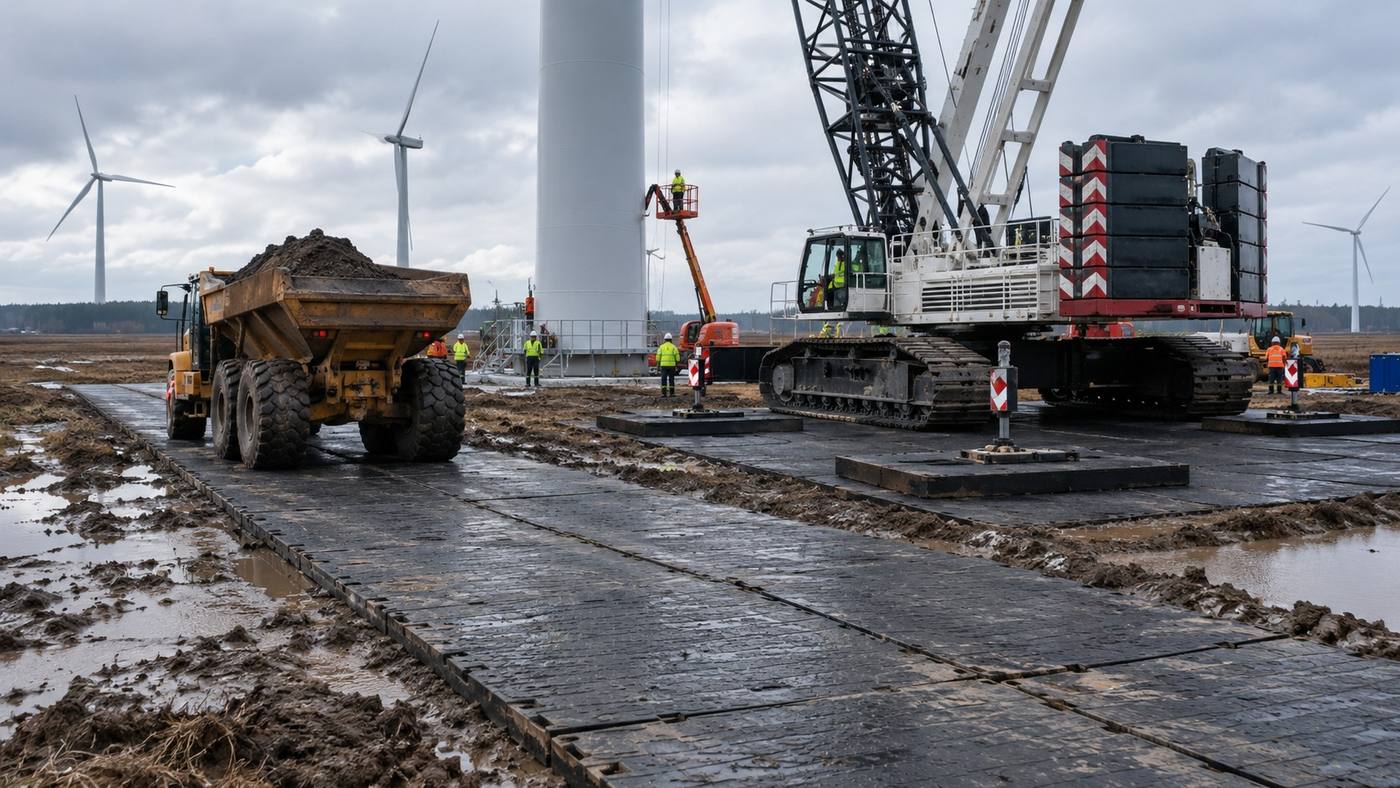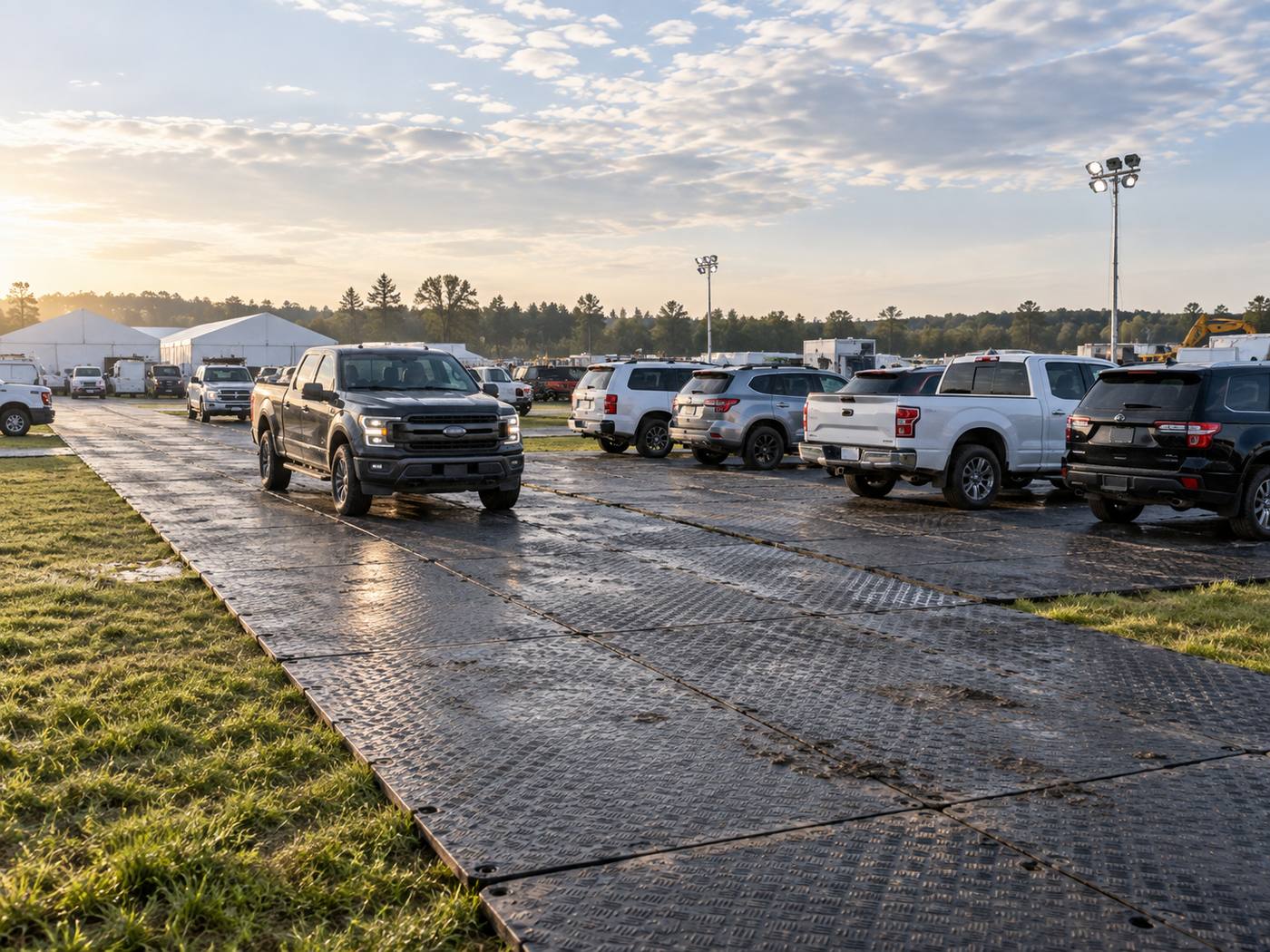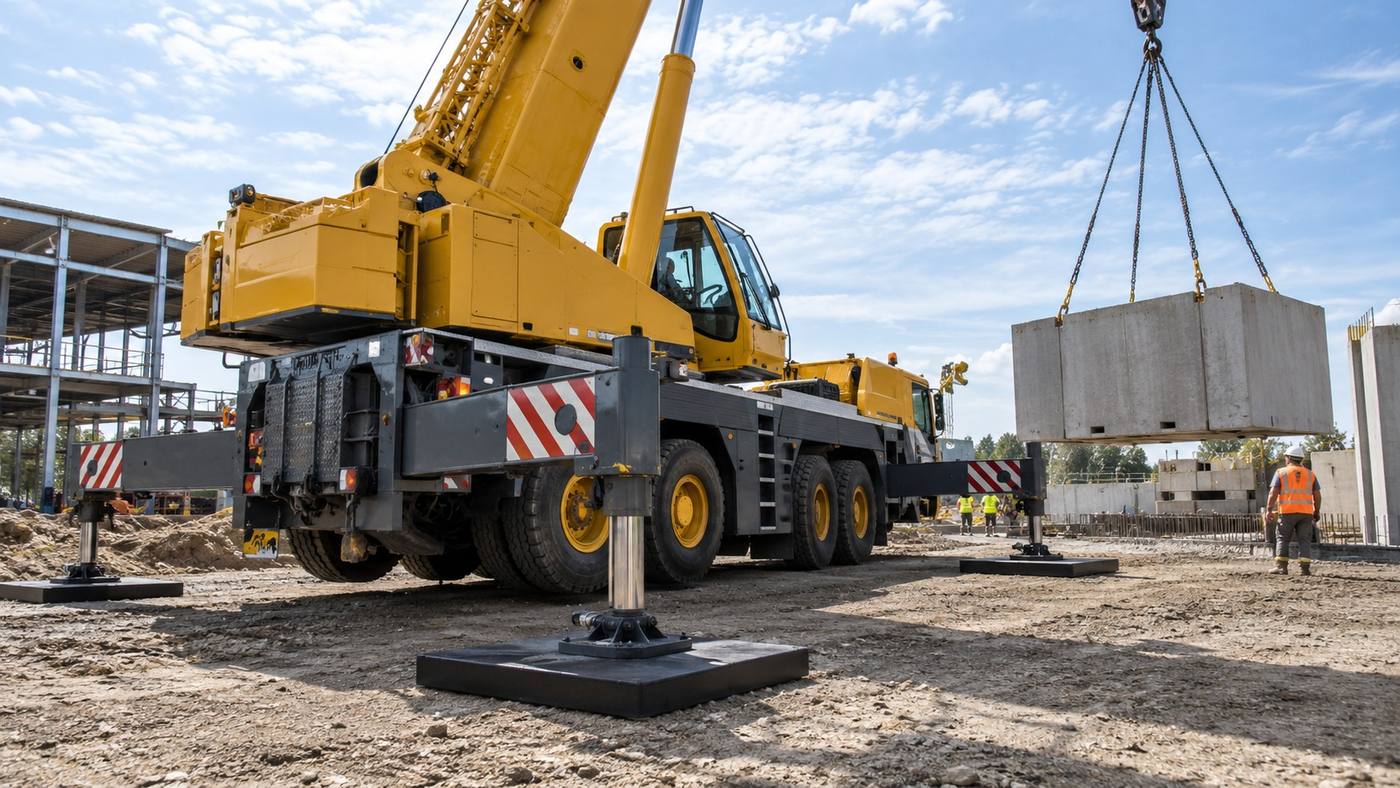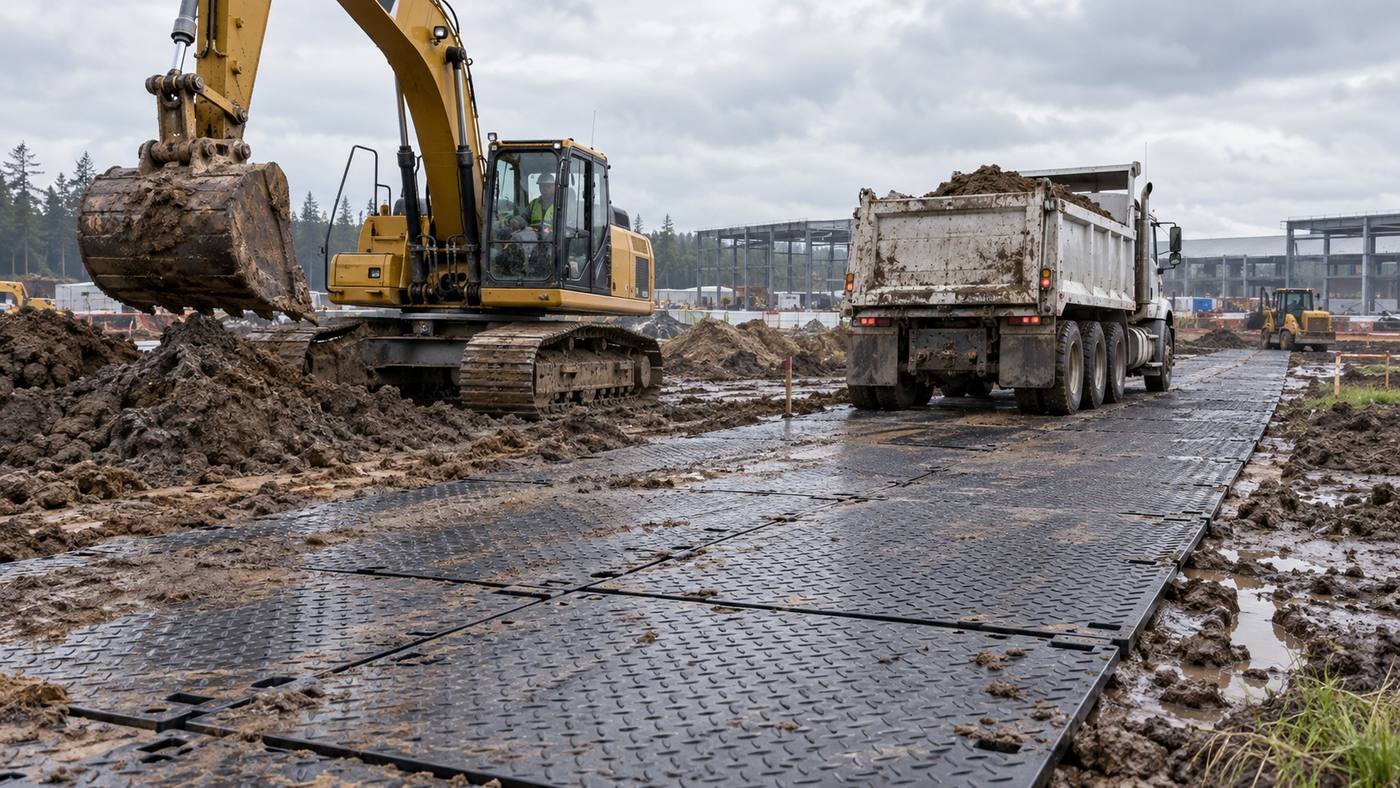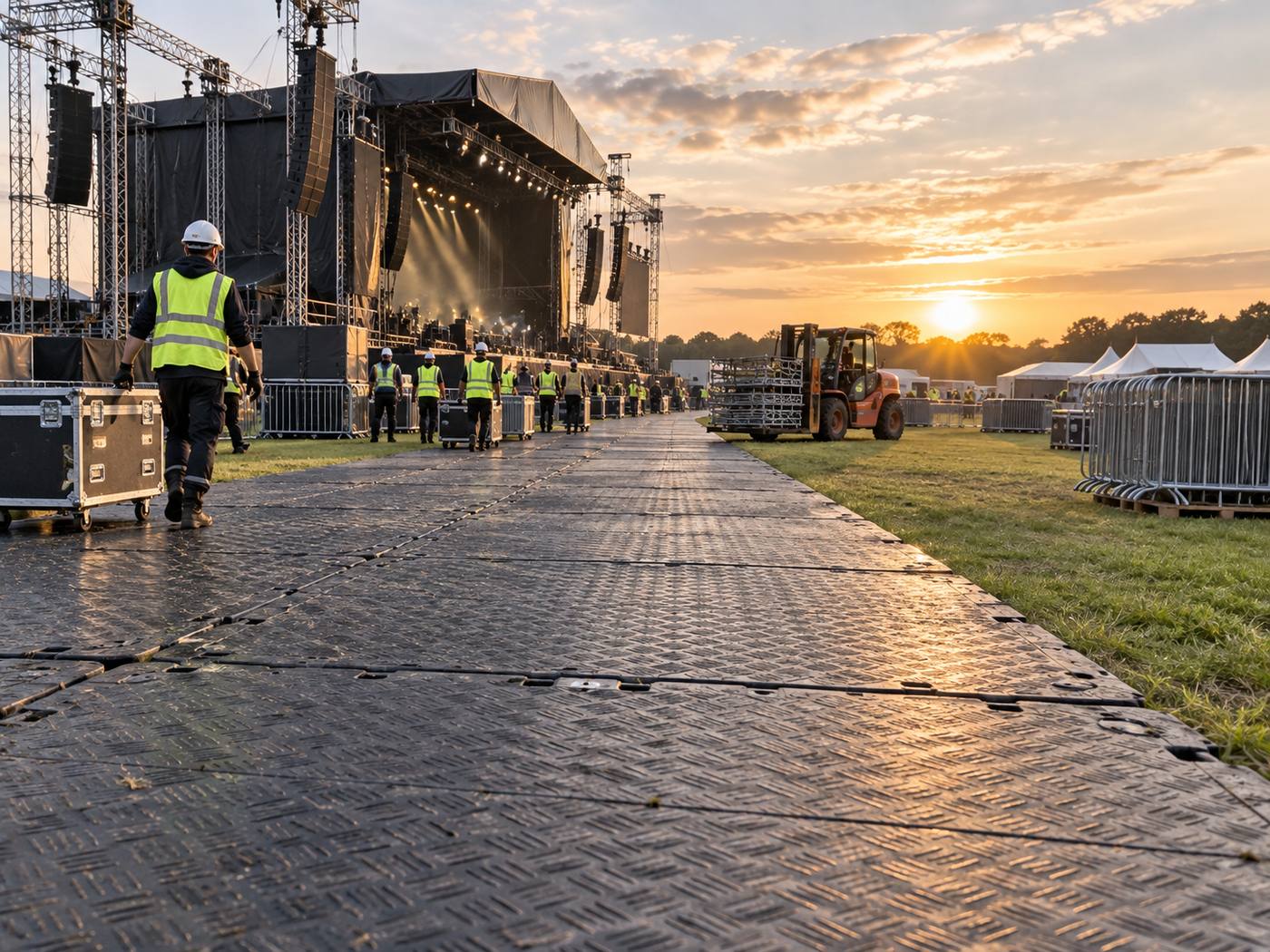
The pavements may be used for short-term parking and access to part of the lifting equipment, provided that the “tire stop” is separated from the “spreading leg”. When the equipment is collected, the load is distributed through tyres or belts; when in a state of suspension, the reversibility of the leg may be concentrated to a very small side, with a significant change in the arms, direction and weight. An ordinary road plate cannot automatically replace a special leg pad as determined by the retroactivity of the leg and the ground-based load.
The site of the parking area shall be selected in such a way as to avoid unpressed backfilling, underground pipelines, inspection wells, the edges of the base pit and low water accumulation points. The ground is drained, levelled and reinforced as necessary, and HDPE plates suitable for equipment tyres can be laid to form clear access and parking areas. The space should allow the equipment to remain in a position permitted by the manufacturer to avoid the presence of one side of the tyre outside the plate or at a high margin. If the equipment is to be stopped, repaired or used for long periods of time, the local payload will need to be assessed separately.
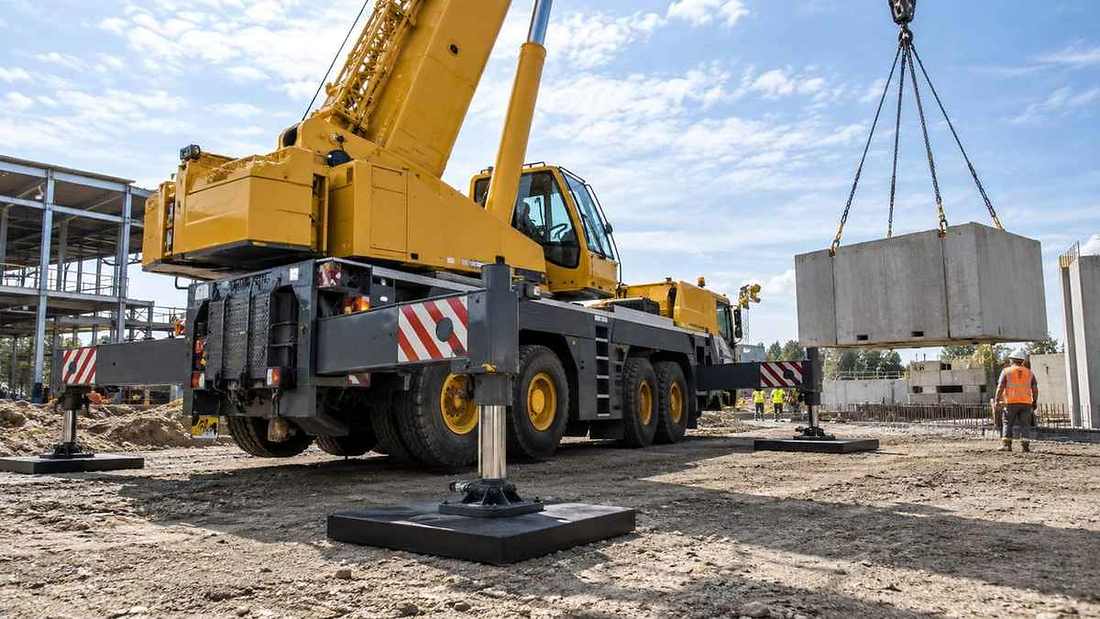
Construction scene on mobile cranes on pavements and leg mats (contribution material for the plastic network).
When the equipment requires a leg test, a crane arm or any lifting action, it shall be replaced by an approved suspension programme. The maximum reversibility of each leg, the size of the pad, the base allowed to carry the pressure and the distance from the edge of the gutter are checked, and the pads shall be medium, flat and continuous. Multiple ordinary pavements shall not be folded into leg pads at will, nor shall they be levelled under plastic mats with loose blocks, as such combinations may slide or cause local stress.
During the period of use, parking panels are inspected for deposition, tyre locations, oil spills and drainage. The ground state shall be reconfirmed after the rain or when the equipment is changed; personnel who are qualified or capable on the ground shall also be reviewed in accordance with the project system before the lifting equipment commences operations. If permanent deformation of the plate, cracks, injury to the connection hole or a visible tilt of the leg cushion are found, the operation should be stopped instead of temporarily covering it with an increased number of mats.
The request for quotations shall state the type of equipment, the weight and axle of the transport state, the time of suspension, whether or not to stretch the leg, the maximum reversibility of the leg, the type of ground and the field limitation. The supplier may make separate recommendations for the pavement of the corridor and for the mat. Clarifying the functional boundaries of the two products would protect the ground and facilitate the transition, and would avoid misusing road protection materials as suspension stabilization designs.
Need for further evaluation of the actual project?
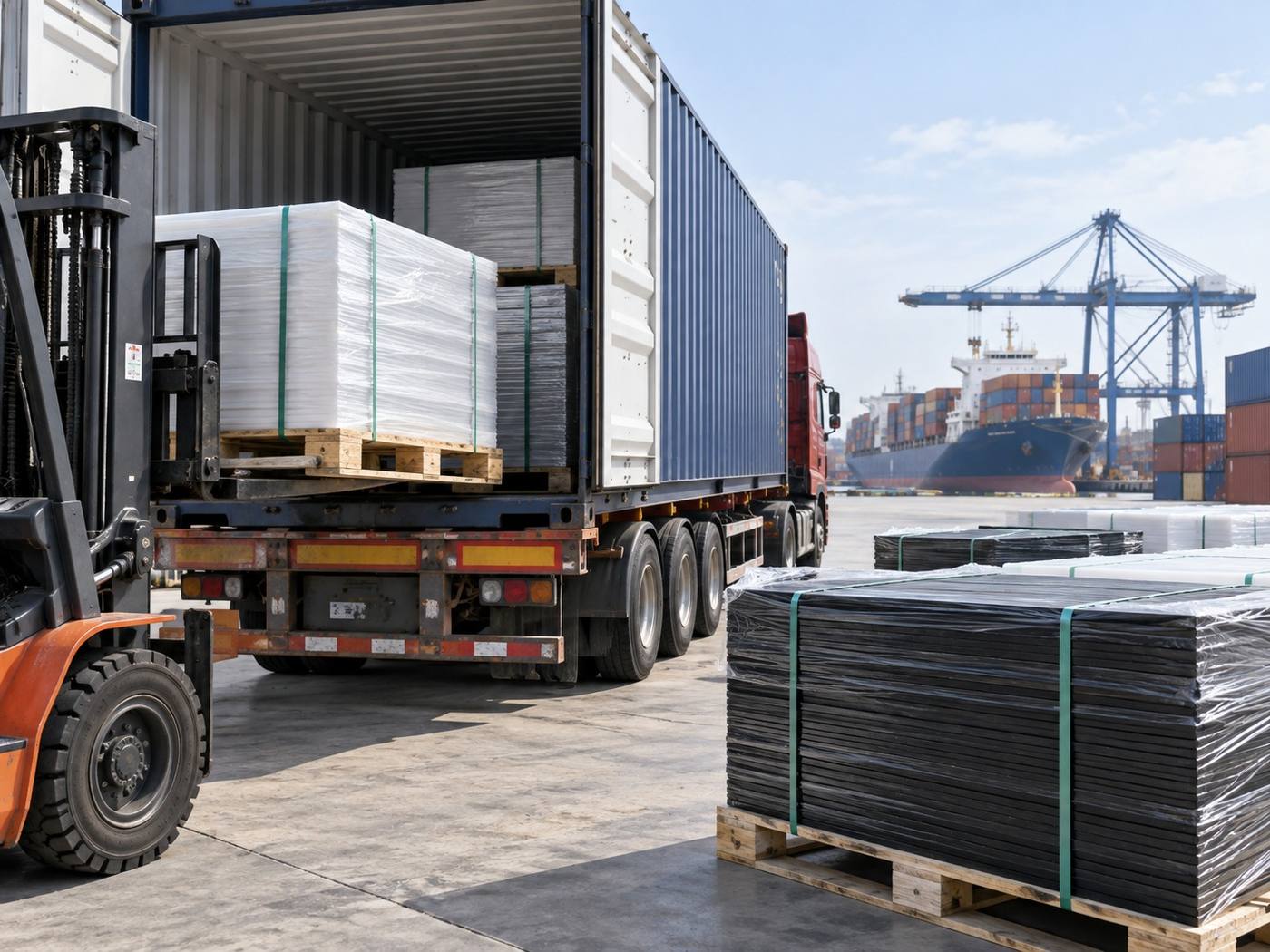
Applications, sizes, quantities, site photographs or drawings and delivery destinations are sent, on which we can identify more suitable products and processing programmes.