Wetland or high-water-bearing moistures cannot by default be paved directly. Such surfaces may have deep organic soil, surface drift, high groundwater and apparent environmental limitations, and even if the plates spread through the wheel, they may sink, drift or squeeze water and mud from the seams. The project begins with the identification of ecological and land permits, permitted scope of construction and ground-based conditions, followed by the determination by the engineering personnel of the need for earthwork materials, light fillings, special heavy access systems or other programmes.
On-site surveys should include mollusc depth, water-bearing status, vegetation and root systems, groundwater changes, established water flow paths and maximum-heavy equipment. A foot-stamping surface is not strong enough to judge heavy vehicle loads; the concealment of trenches, peat layers and old tracks can cause mutations. Routes should, to the extent possible, select areas with less impact and recoverable, avoid sensitive vegetation and open water bodies, and set measures for drainage, sedimentation and pollution prevention.
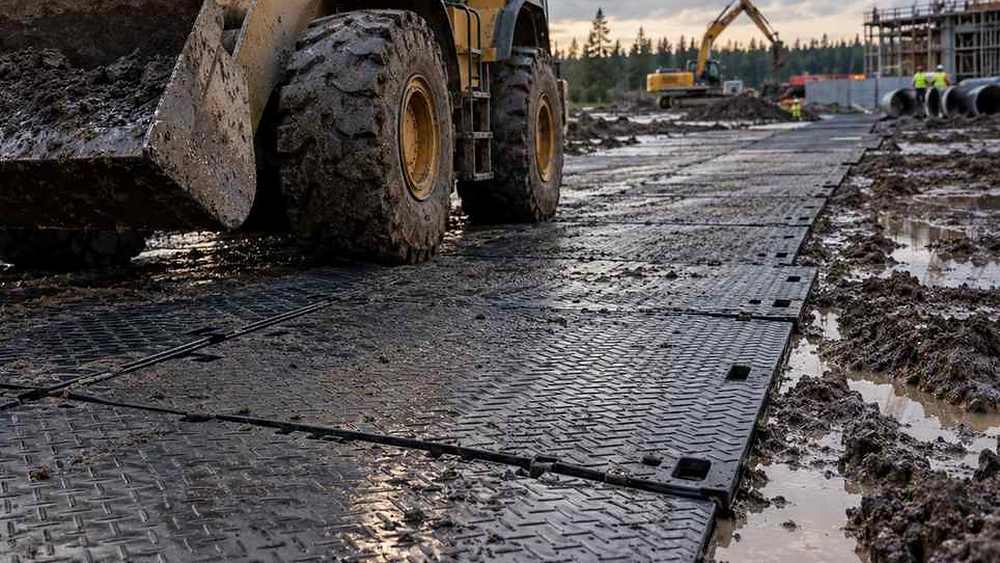
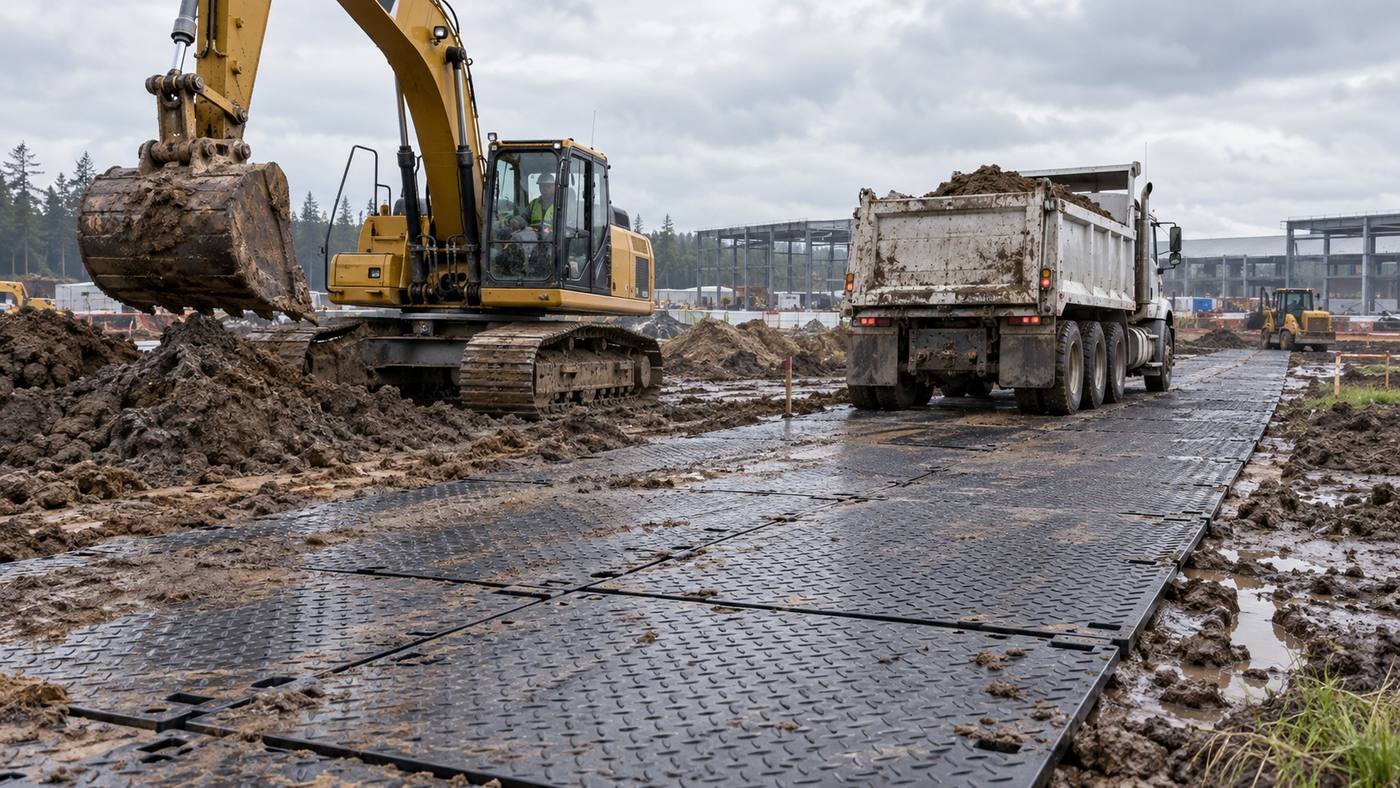
Temporary paved roads and heavy equipment at the wet and soft construction site (contribution material for the plastic network)
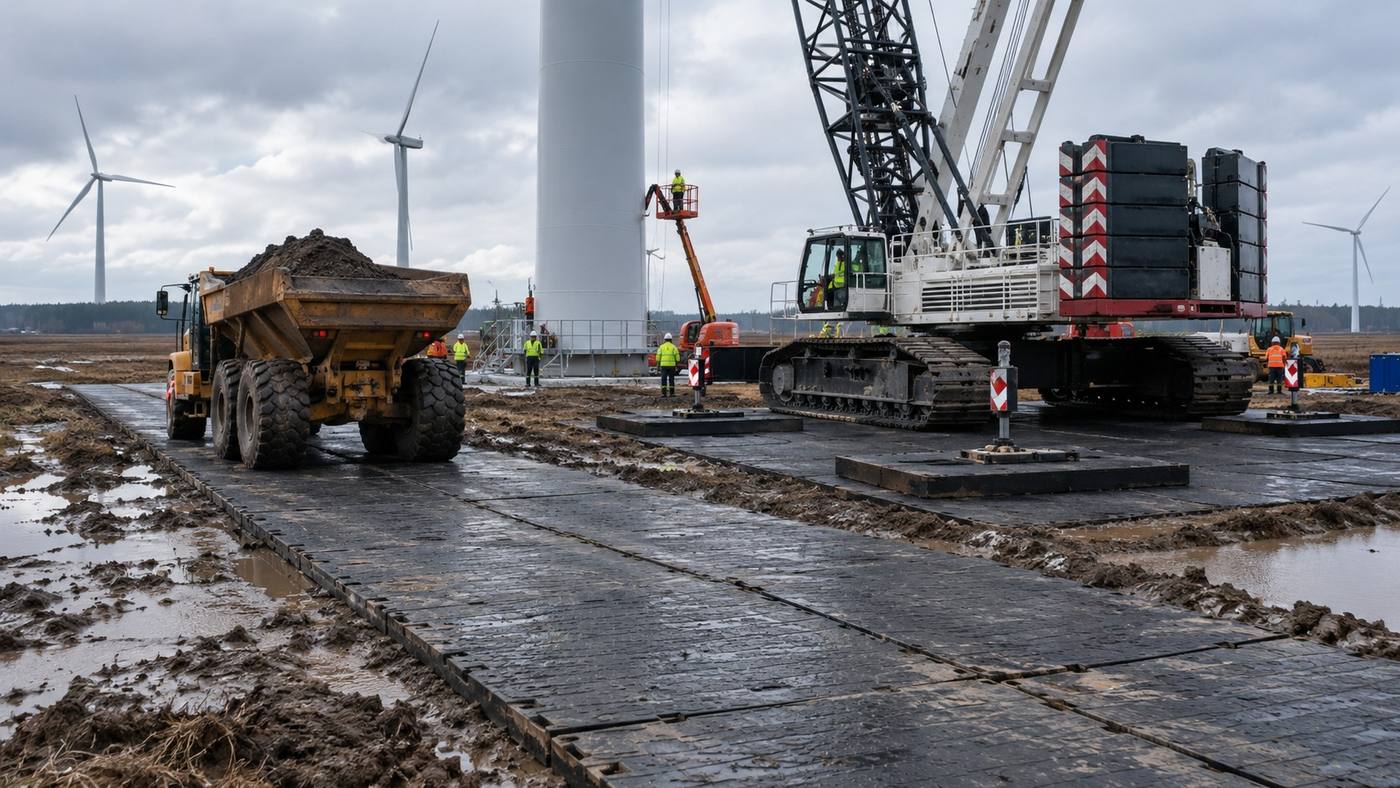
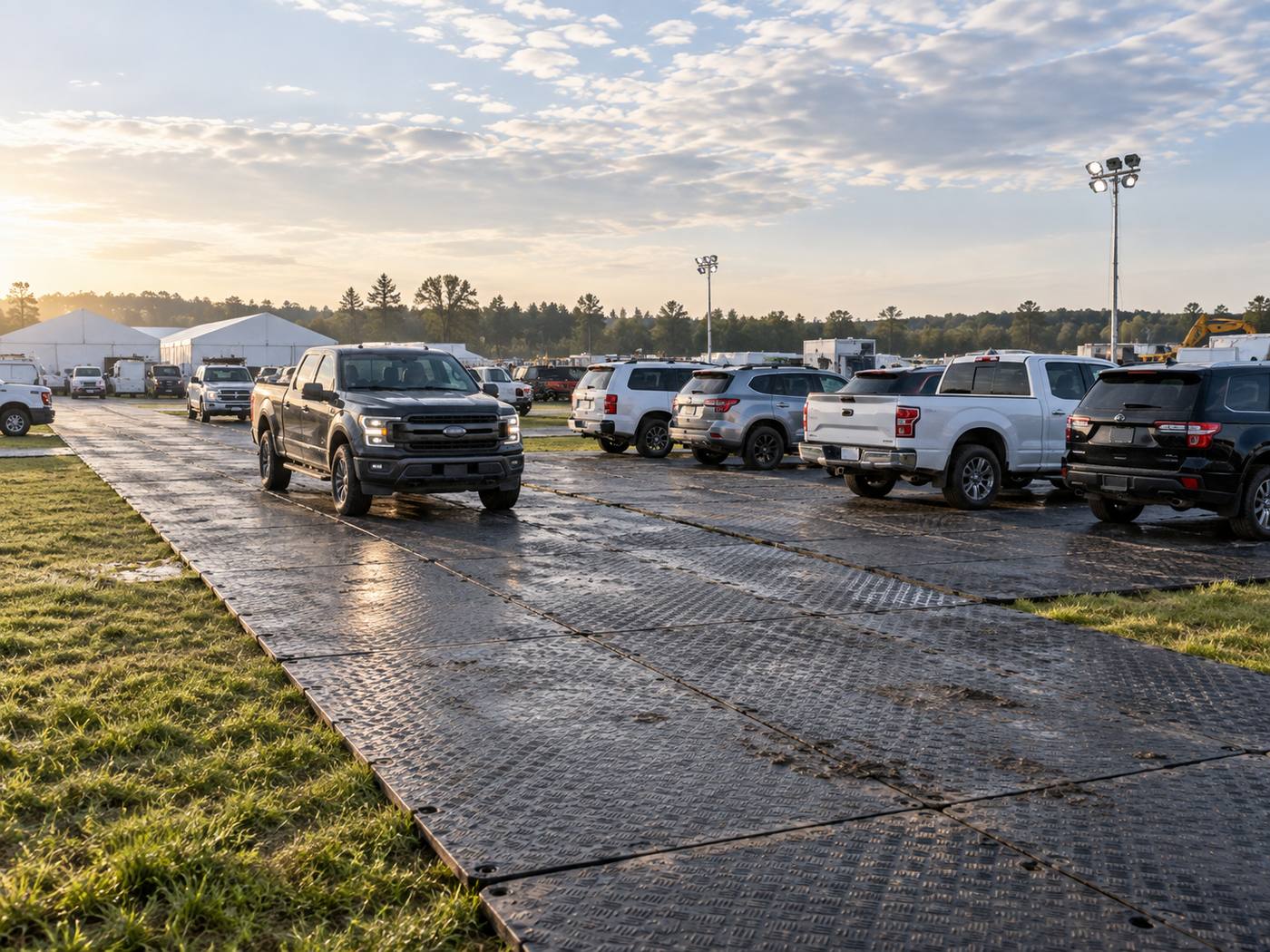
If the use of pavement boards is approved, it will normally be necessary to move forward from the stable shore and to deny transport vehicles access to unprotected areas. The sub-boarding system should be continuously supported and sufficiently wide to adapt to potential sedimentation; the curve and the equipment area of operation should be widened separately. Ordinary plates cannot cross trenches or holes, and any bridge should be specially designed. Leak control of fuel, hydraulic fluids and construction mud should also be included in the interim corridor programme.
During the period of use, the overall sedimentation, the rise of the plate, the sewing of mud, the movement of the side of the route and the obscurity of the surrounding water bodies should be checked by HF. Changes in water levels, consecutive rainfall or vehicle upgrades are conditions for reassessment. If the surface begins to rise and fall like a raft, or if the vehicle moves to cause a rise in the surrounding earth, it shall immediately be shut down and investigated and cannot be sustained by accelerated passage or stacking. All connects and miscellaneous items are to be recovered and reduced by secondary crushing, as required by the permission.
The request for quotations should include environmental restrictions, soil survey, length of route, axle load of vehicles, expected duration, seasonal water level and recovery requirements. The supplier may choose the appropriate pavement specifications, but it is up to the project professionals to decide whether or not to allow construction, infrastructure and monitoring standards. In wetlands, product selection is only part of the system and environmental compliance and ground-based judgement take precedence over the pursuit of rapid laying.
Need for further evaluation of the actual project?
Applications, sizes, quantities, site photographs or drawings and delivery destinations are sent, on which we can identify more suitable products and processing programmes.